Language
Currency
Minh Mang Tomb in Hue impresses visitors with its ancient traditional architectural beauty, deeply imbued with Confucianism. This is also an ideal destination that any traveler should not miss during their journey to visit the ancient capital to admire the architectural beauty of the tombs and gain a better understanding of each important historical period of the country. Let's follow NVK Travel for more information in the following article.
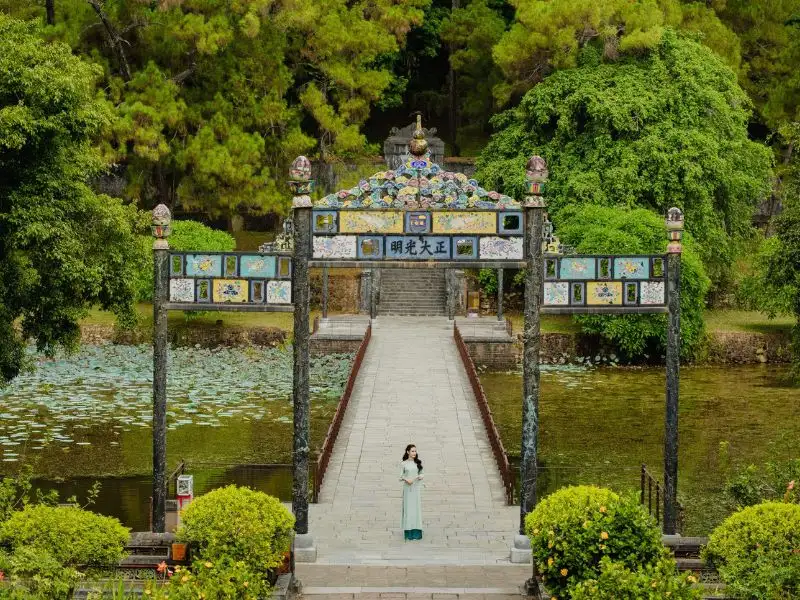
Minh Mang Tomb is also known by many as Hieu Lang. It is located on Cam Khe Mountain, Hue City. The tomb has a favorable location, surrounded by mountains and lakes, creating a very airy atmosphere. The structure has a majestic appearance, considered a standard beauty of the Nguyen Dynasty and is also an ideal destination attracting many tourists from all directions visiting during their journey to Hue.
Overview of Minh Mang Tomb
>>> See more: Tu Duc Tomb - Admiring the Elegant Beauty of Hue
Below are some shared information to help you better see the beauty of this ancient Nguyen Dynasty structure:
Minh Mang was the king succeeding Gia Long in 1820. He made significant contributions to the reform of the country. At that time, he wanted to build a tomb to serve as a resting place and relaxation after his official duties and as a place for worship after his death.
Beginning the construction plan, the officials took 14 years to find a suitable location and finally chose Cam Khe Mountain. This place has all the elements from mountains to rivers. Later, King Minh Mang renamed the mountain to Hieu Son and named his tomb Hieu Lang.
After many processes of approving designs and architectural reports, the tomb began construction in April 1840. During the construction process, King Minh Mang fell ill and passed away. A month later, King Thieu Tri ascended the throne and continued the construction, and by 1843, the project was officially completed.
The history of the formation and construction of King Minh Mang's tomb
>>> See more: Dai Noi Hue (Imperial City) Enduring Through the Years
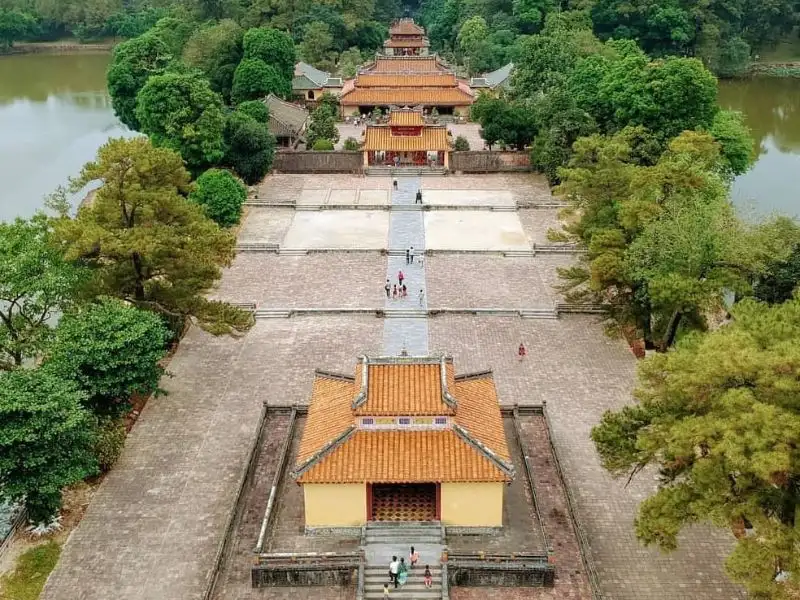
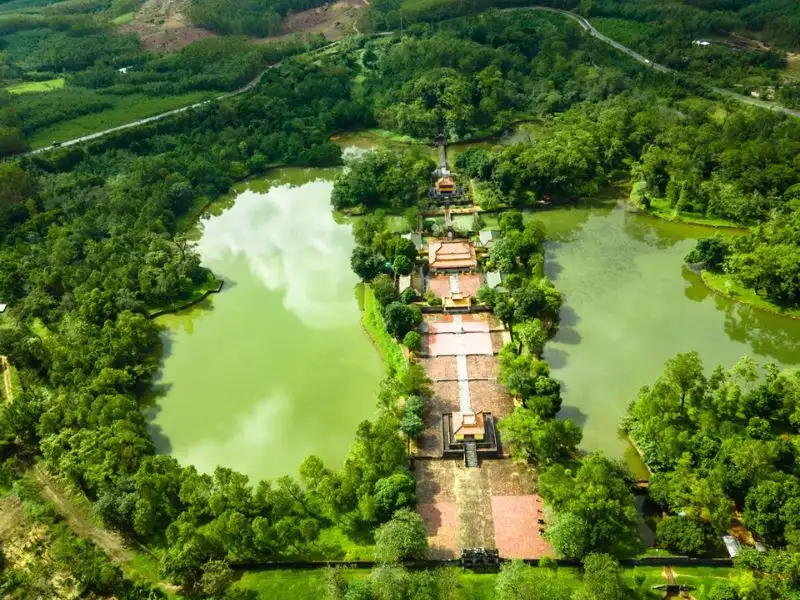
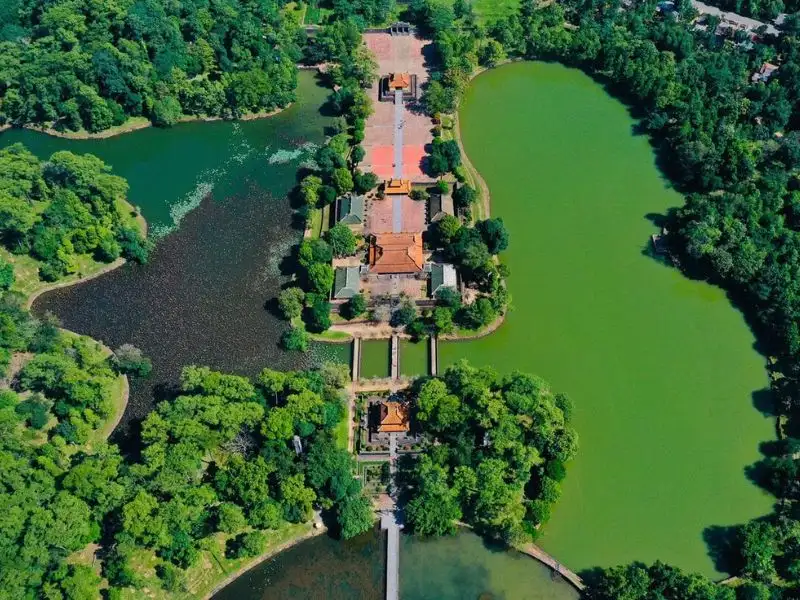
Minh Mang Tomb covers an area of over 18ha with 40 large and small structures arranged symmetrically. The structures are distributed along three main axes and parallel to each other, with the Than Dao road as the center.
The shape of King Minh Mang's tomb resembles a person lying at rest, with his head resting on Kim Phung Mountain and his feet stretching out towards the river junction in front. Following that are two halves of Trung Minh Lake resembling natural drooping arms, creating a sense of relaxation.
The tomb is also surrounded by many green trees with the peaceful, tranquil space of lakes and the solidity of mountains. This serene beauty is further enhanced by a lotus pond that blooms year-round right in the middle of the tomb's grounds.
The beauty of the ancient architectural structure
With over 40 large and small structures, visitors will be able to admire many different architectural styles. Here are 7 prominent names that you should not miss during your journey:
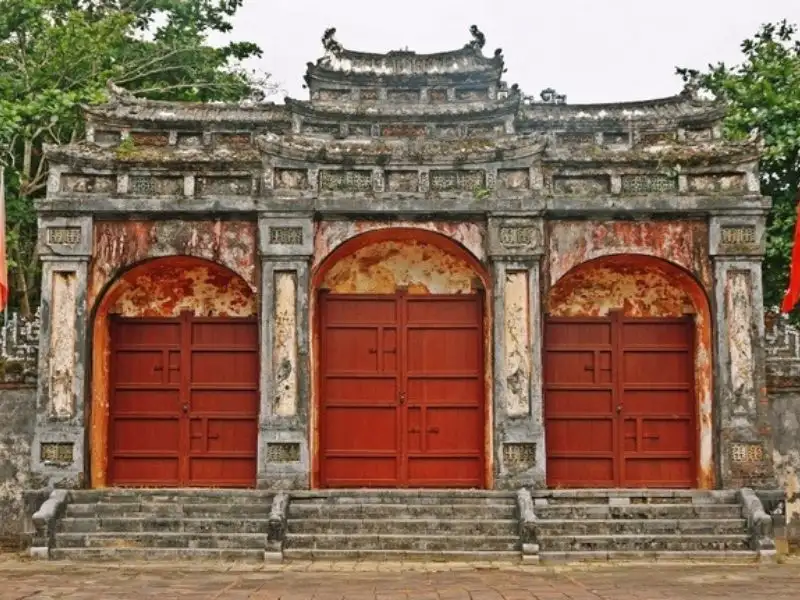
Dai Hong Mon is the main gate to enter Minh Mang Tomb. The gate is built with lime bricks and has 3 pathways and 24 intricately designed thatched roofs with decorations like carp and dragon patterns.
According to historical records, Dai Hong Mon was only opened once to bring King Minh Mang's coffin into the tomb and has remained closed ever since. To enter the tomb, tourists must pass through 2 auxiliary gates, Ta Hong Mon and Huu Hong Mon.
Exploring the main gate of the tomb, Dai Hong Mon
After Dai Hong Mon is a spacious courtyard paved with Bat Trang bricks called Bai Dinh. On both sides of the courtyard are rows of stone statues of warriors, elephants, and horses standing in attendance. The highlight is the stone tablet Thanh Duc Than Cong inscribed by King Thieu Tri, commemorating the achievements and biography of the father king.
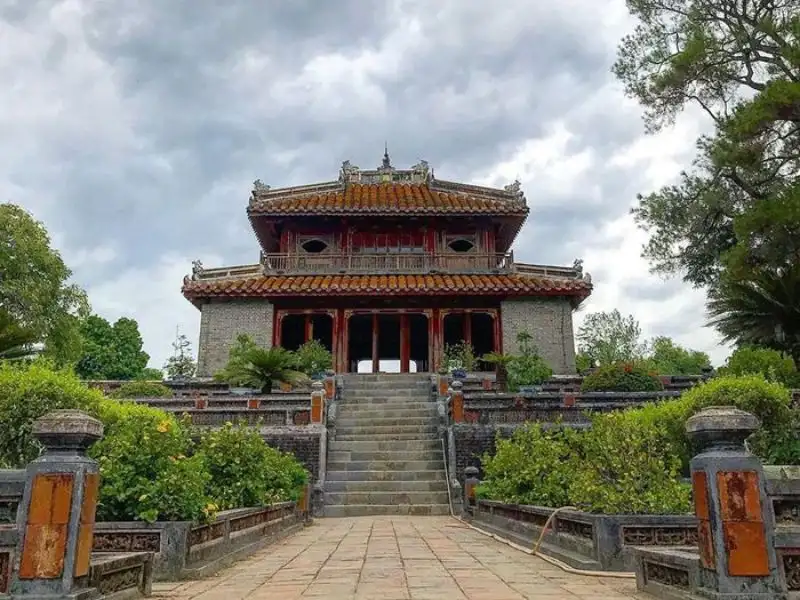
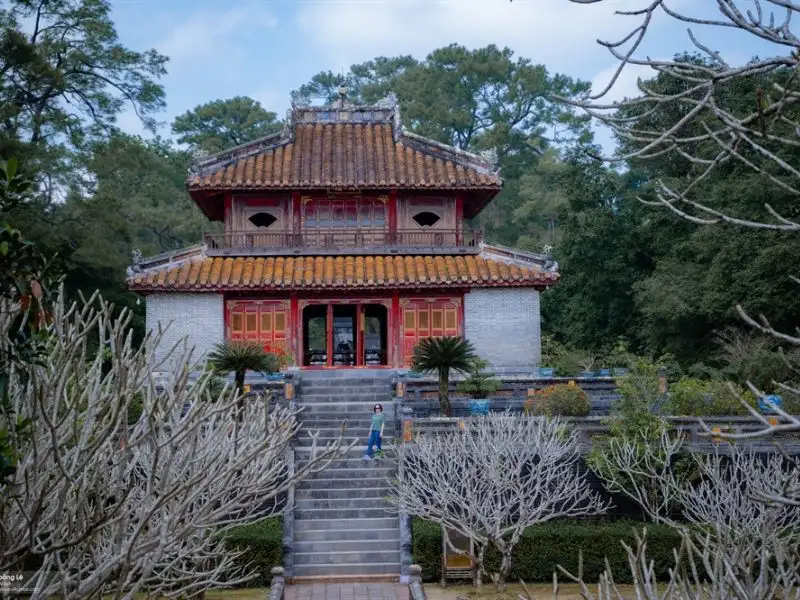
Minh Lau, located within the grounds of Minh Mang Tomb, means the bright pavilion. This is the area where the king would reflect on tranquil nights under the moonlight.
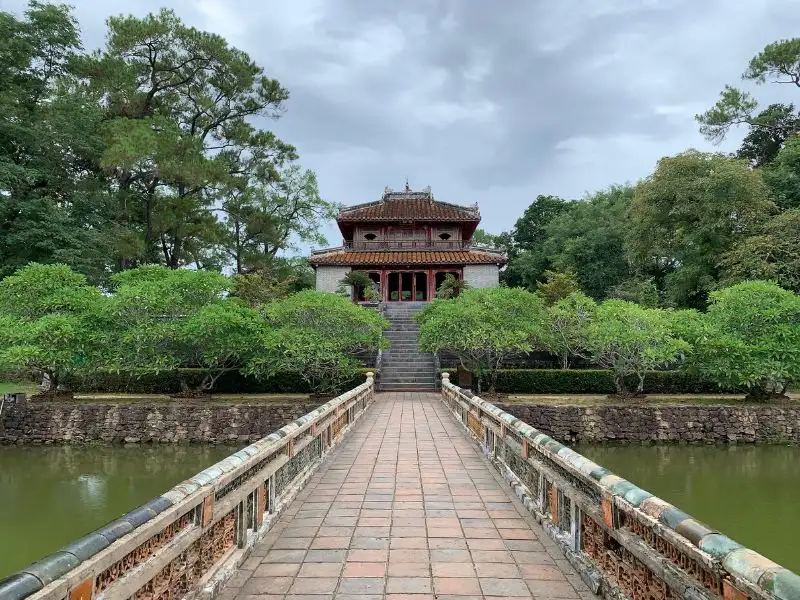
The architectural structure is square-shaped, with 2 floors and eight roofs situated on Tam Dai Son hill, with a flower garden shaped like the character Tho behind it. Minh Lau is also beautifully decorated, reflecting Confucianism and human philosophy.
Visiting Minh Lau where the king often took a rest
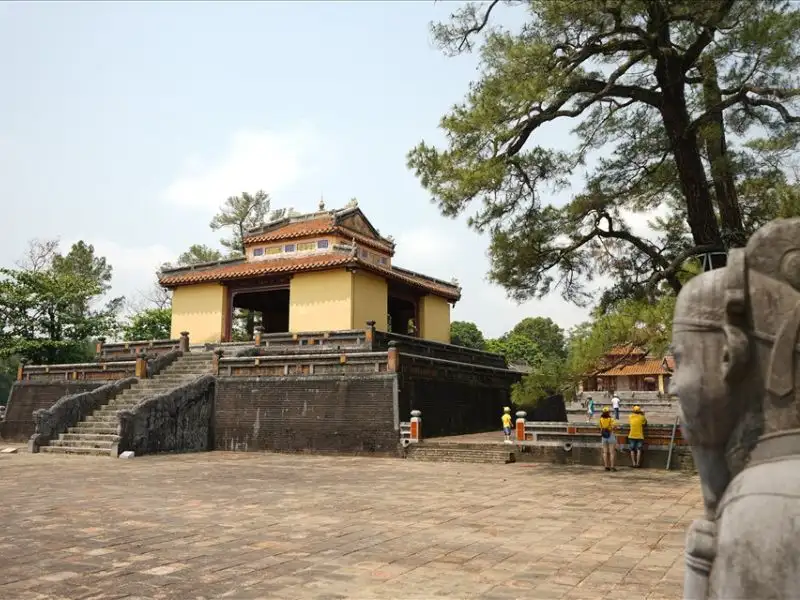
The Tam Dien includes Hieu Duc Mon and the Sung An temple. This is where the altars of the king and the Ta Thien Nhan Queen are worshipped. Stepping into the temple, you will feel the sacredness and antiquity. The structure has 17 stone steps leading visitors into Hoang Trach Mon under the cool blue sky of greenery and flowers interspersed with the softness of small lotus ponds.
Ho Tan Nguyet is the next stop you can visit while exploring Minh Mang Tomb. The structure is shaped like a crescent moon embracing the sun symbol, reflecting the ancient people's concept of transformation in the universe.
Exploring the poetic beauty of Ho Tan Nguyet
Crossing Ho Tan Nguyen is a bridge named Thong Minh Chinh Truc that takes visitors to Minh Lau. The bridge features ancient architecture with 33 steps, presenting a gentle and close connection with nature.
Hien Duc Mon is built in the Tam Dien area. The structure is situated on a square piece of land symbolizing the God of Earth. It also possesses a majestic, ancient appearance with an extremely sacred atmosphere.
To ensure your journey to explore Minh Mang Tomb in Hue goes smoothly, you may refer to the following tips:
The weather in Hue is most beautiful and pleasant at the beginning of the year from January to February with a cool climate, no sun, and no rain. This is also a convenient time for traveling and visiting Minh Mang Tomb along with other tourist attractions in the ancient capital.
It is best to visit Hue at the beginning of the year
Visitors can reach the Minh Mang Tomb through the following 2 ways:
There are 2 ways to get to the tomb of King Minh Mang
Since the tomb is a sacred place, you need to pay attention to some things during your journey to explore the Minh Mang Tomb:
Visitors should note to dress modestly and respectfully when visiting the tomb.
The Minh Mang Tomb is a national heritage site and an ideal destination for those who love Vietnamese history. This is a place you should not miss when visiting the ancient capital to admire the entire scale of the ancient architecture, in accordance with the standards of the Nguyen era. If you haven't planned a detailed itinerary for your trip to Hue, you can contact NVK Travel for detailed advice.
Fill out the form and we will contact you