Language
Currency
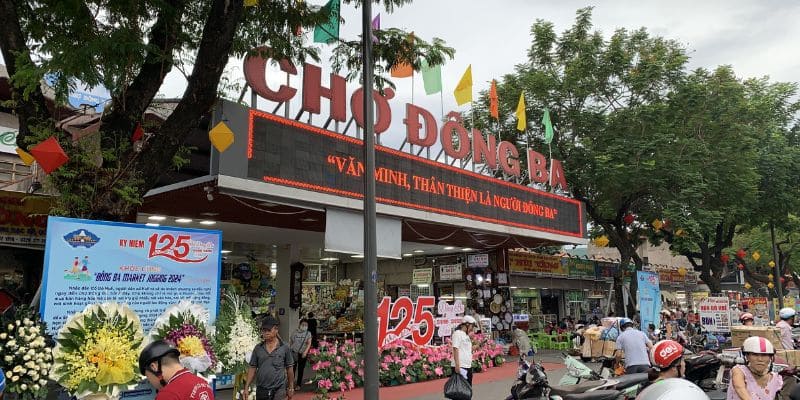
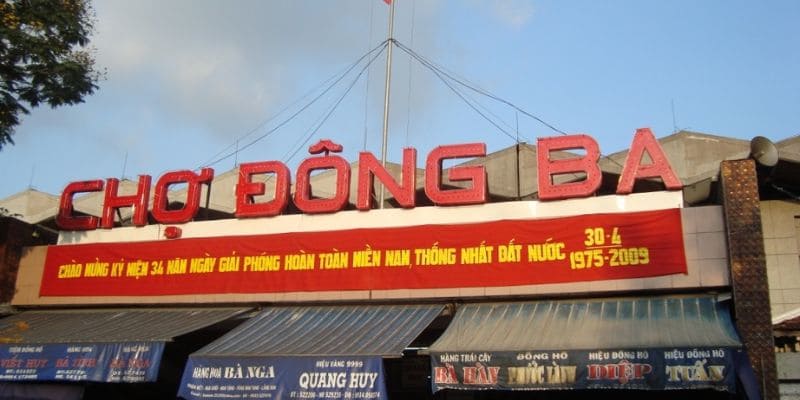
Located right in the center of Hue city, Dong Ba market is the largest market, considered a symbol of culture, commerce, and cuisine of the ancient capital. Here, you will find all kinds of specialty products, souvenirs, and delicious dishes. Let's explore every little corner of this market with NVK Travel so you don't miss out on the interesting things in the article below!
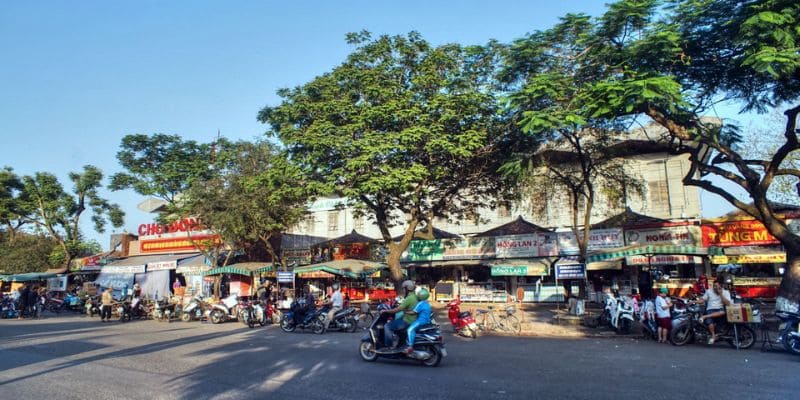
Dong Ba market is located on the north bank of the Huong River, on Tran Hung Dao street in Dong Ba ward, Phu Xuan district, Hue city. With an area of up to 47,614 m2, the market stretches from the foot of Truong Tien bridge to Gia Hoi bridge, including a wharf, parking lot, and a garden area on Chuong Duong street. This is a long-standing traditional market with over 100 years of development history, regarded as one of the characteristic symbols of the ancient capital of Hue.
This market was originally called Dong Gia, originating from the southeast area of Dong Gia bridge in Huong Tra district. According to documents from Dai Nam Nhat Thong Chi, during the reign of King Gia Long, the market was located just outside the East Gate of the imperial city, with a two-story shrine called Quy Gia in the center, hence it was often referred to as Quy Gia market.
In 1885, when the capital Hue fell, the market was burned down during an attack. By 1887, under the reign of King Dong Khanh, the market was rebuilt after the establishment of Cua Dong street. The team leader Nguyen Dinh Nen volunteered to build the market shrine along with two rows of tiled shops on either side. At this time, the court decided to exempt him from taxes for 6 years, at 1,300 quan per year.
In 1899, King Thanh Thai decided to move the market to Truong Tien street - which is its current location. The old market shrine outside the East Gate was later converted into the Dong Ba French-Vietnamese primary school.
This market has historical origins dating back to the late 19th century
>>> See more: Ming Mang Tomb Hue - The Beauty of Ancient Nguyen Architecture
However, in 1967, the government of the Republic of Vietnam decided to demolish the market to rebuild it. During the construction process, the structure was damaged by bombs during the Tet Mau Than battle in 1968. After that, the market was temporarily repaired so that traders could continue their business.
In 1987, the government of Binh Tri Thien province carried out a renovation of Dong Ba market with many modern improvements. The new construction included upgrading the bell tower, building four two-story houses at the four corners of the market, and five new kiosks. The total expanded area is 15,600 m2, providing a more spacious and convenient space for trading activities.
It can be said that, besides being a trading hub, Dong Ba market is also a distinctive cultural symbol of Hue city, preserving many historical marks through various periods.
Inside the market, there is a wide variety of goods ranging from agricultural products, forestry products, seafood to handicrafts from Hue and neighboring areas, as well as items from all over the Vietnamese market. Before 1975, the market provided 56 different items, and by 1985, it added 8 new items such as seeds, watch repair services, bundled firewood, rubber sandals, bicycle parts, milling services, paint, and nets.
Since its establishment, Dong Ba market has attracted a large number of Vietnamese traders. The traders sell many types of goods, displayed at stalls in the market.
According to information from the Market Management Board, before 1975, the market had 2,614 officially registered stalls, 300 unregistered stalls, and over 400 street stalls. In 1977, nearly 400 street stalls in the area north of Truong Tien bridge were moved to Tay Loc market. By 1985, the number of registered business stalls had increased to 3,122 from 54 wards and communes in the province.
This place is a bustling trading center,
>>> See more: Tu Duc Tomb - Enjoying the Elegant Beauty of Hue
As of 2020, Dong Ba market has over 2,700 stalls and more than 1,800 business households, distributed across 6 areas on a total area of 22,749 m². The market is currently operating with about 60 different types of goods, providing everything from high-end to affordable items, creating jobs for thousands of workers. Each day, the number of visitors to the market ranges from 7,000 to 10,000 people, including both tourists and local residents shopping.
Dong Ba market is located at 2 Tran Hung Dao street, Hue city, next to Truong Tien bridge. The market is right in the city center, making it quite convenient to move around. Depending on the distance from the starting point, visitors can choose suitable means of transportation to reach the market.
The market opens from 5:00 AM to about 7:00 PM daily throughout the week. During holidays and Tet, the operating hours may be extended to meet the shopping needs of everyone.
The market opens from 5 AM to 7 PM daily for visitors to stop by.
If you are staying near the river, you only need to walk a few dozen meters to reach the market, enjoying the poetic scenery of Hue city while breathing in the fresh air. Additionally, you can also travel by motorbike if you wish. After visiting the market, you can continue to explore other tourist attractions such as Quoc Hoc Hue school and Thien Mu pagoda nearby.
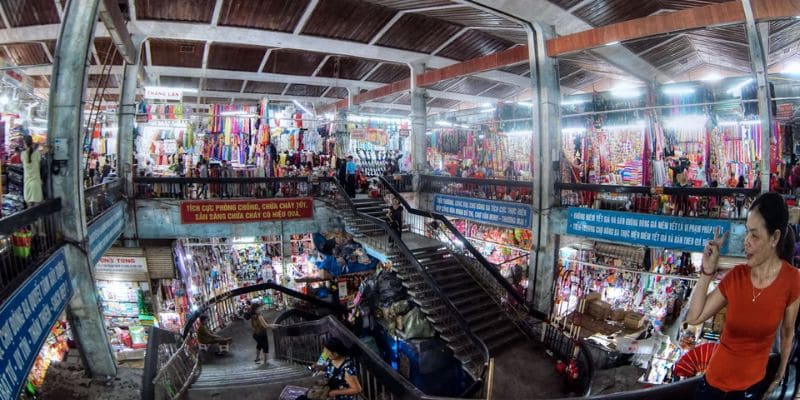
Dong Ba market has an area of about 15,600 m2, divided into 3 floors with hundreds of stalls selling a variety of goods. Including:
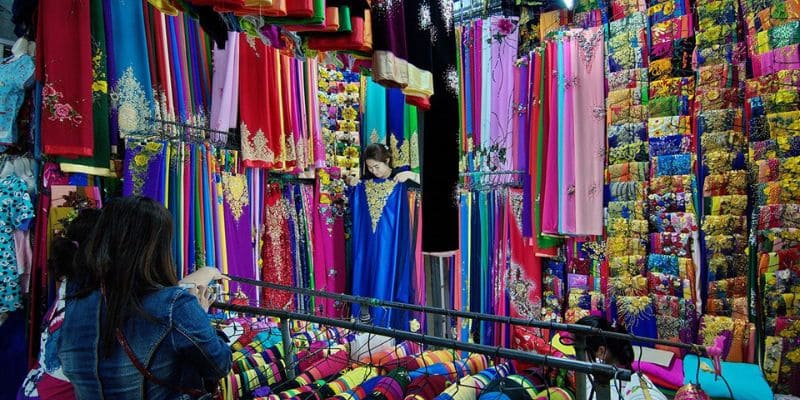
The highest floor of the market (3rd floor) is a colorful space of clothing, fabrics, and countless supplementary products such as hats, wallets, bags,... It is not an exaggeration to say that this is the ideal destination for fashion and shopping enthusiasts.
Colorful fabric and clothing area
When you come here, you will easily find shops specializing in selling fabric to make ao dai - the distinctive symbol of dreamy Hue. Besides fabric shops, you can also meet skilled and talented tailors to make unique and graceful ao dai. If you are looking for gifts for your mother or grandmother, this floor is the ideal destination for you.
When you step down to the 2nd floor, visitors will be overwhelmed by stalls filled with exquisite handicrafts. The handicraft products and traditional items here will surely amaze you.
Some of the most notable products here include incense, Hue eucalyptus oil, and paper flowers from Sinh village. Along with the delicate jewelry products from Ke Mon village or the famous conical hat from Phu Cam village,...
Admire the exquisite handicraft products
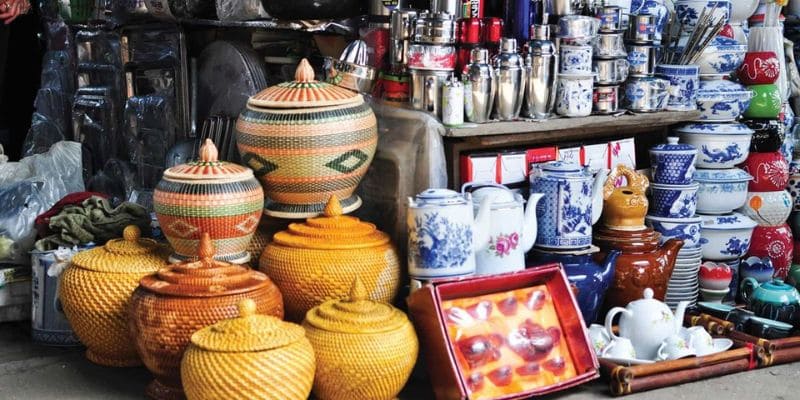
In addition, this area displays products made from bamboo such as baskets, trays, beds, and mats, all of which reflect the culture of the villages of Da Le, Bau La, and Phu Thu. In particular, ceramic items like bowls and vases are also intricately carved, showcasing the characteristic nostalgic style of the ancient capital.
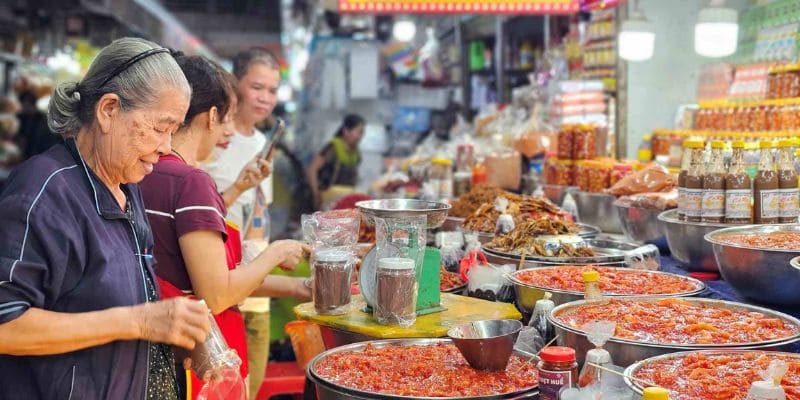
The first floor of Dong Ba Market is the food area, featuring delicious specialties of Hue and considered the most attractive area in the entire market. Here, you will encounter a variety of dried seafood from the Central region along with famous fish sauces like ruoc sauce, sour shrimp paste, snakehead fish sauce, and dipping sauce.
Explore the diverse food area and dry goods of Dong Ba Market
Besides being an attractive trading and tourist destination, this market also reflects the culture and daily life of the people of Hue. When visiting here, tourists will have many extremely interesting experiences such as:
At Dong Ba Market, you can freely search for specialty products and souvenirs for your loved ones and friends. The products that bear the mark of this land include various fish sauces like ruoc sauce, dipping sauce, sour shrimp paste, or specialties like sesame candy, ginger candy, and mung bean cake. Everything is sold abundantly at reasonable prices, making it accessible for everyone.
Shop for specialty products at the market
In addition, tourists can also consider purchasing traditional handicraft products such as conical hats, ceramics, bamboo and rattan items, paper fans, and embroidered paintings,... These gifts not only have high aesthetic value but also contain the unique cultural significance of the ancient capital of Hue, making them meaningful gifts not to be missed.
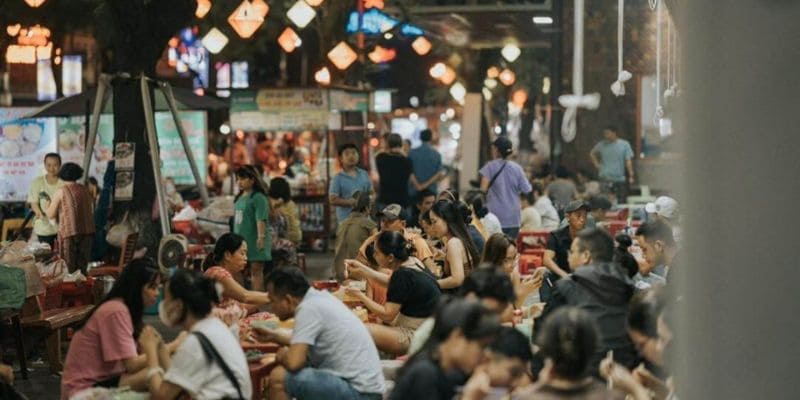
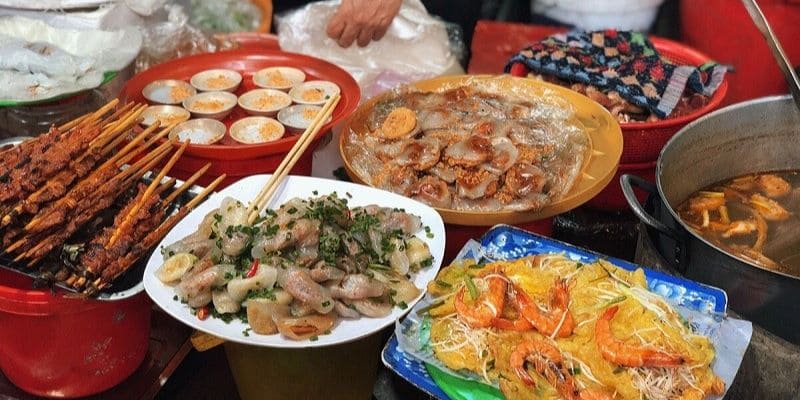
In addition to specialty products and souvenirs, the market is also famous as a culinary paradise, gathering delicious dishes of Hue at affordable prices. When coming here, tourists should consider trying extremely attractive dishes such as:
Enjoy the delicious dishes of Hue cuisine
To have wonderful travel experiences at Dong Ba Market, tourists should pay attention to some issues as follows:
Prepare thoroughly for a complete Dong Ba Market stroll
Besides being a trading and culinary center, Dong Ba Market is also a cultural symbol reflecting the daily life of the people of Hue. If you have the opportunity, visit this traditional market to experience the simple, close-knit lifestyle and taste the famous dishes of Vietnamese cuisine. Contact NVK Travel now for advice on Hue travel tours and receive attractive offers!
Fill out the form and we will contact you