Language
Currency
Indochina Junction has long been an attractive destination for those who love to explore and experience lands with unique characteristics. Nestled among the majestic mountains of the Central Highlands, it creates a space that is both mysterious and captivating. The journey to the junction offers the opportunity to conquer an interesting trekking route, allowing visitors to deeply appreciate the natural beauty and culture of the area.
Indochina Junction is the meeting point of the borders of three countries: Vietnam - Laos - Cambodia, and is located in the western border area of Kon Tum province. This location falls within the territory of Bo Y commune, which is considered the "gateway" connecting Vietnam with its two neighboring countries. The landmark marking the territorial intersection was initiated in 2007 and completed two years later.
Indochina Junction is the gateway for exchanges between three countries
>>> See more: Yok Don National Park - Unique Ecotourism Experience
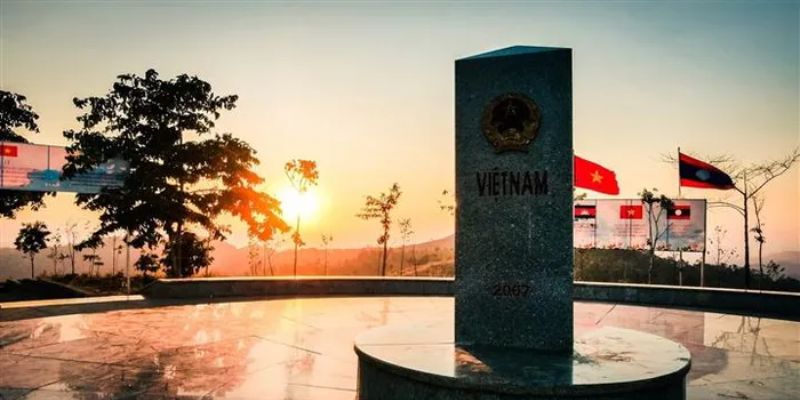
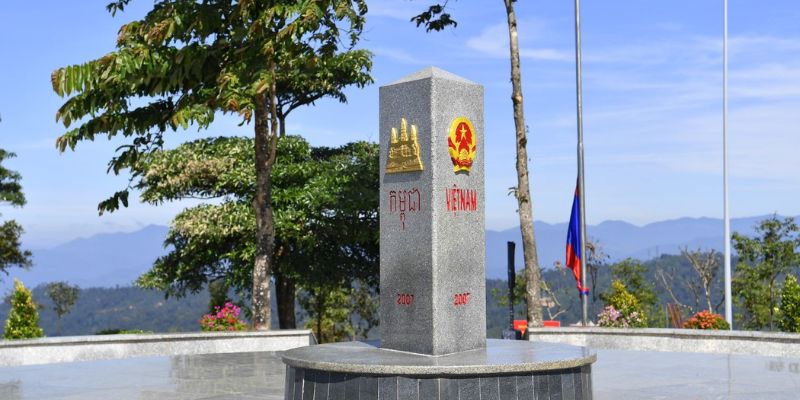
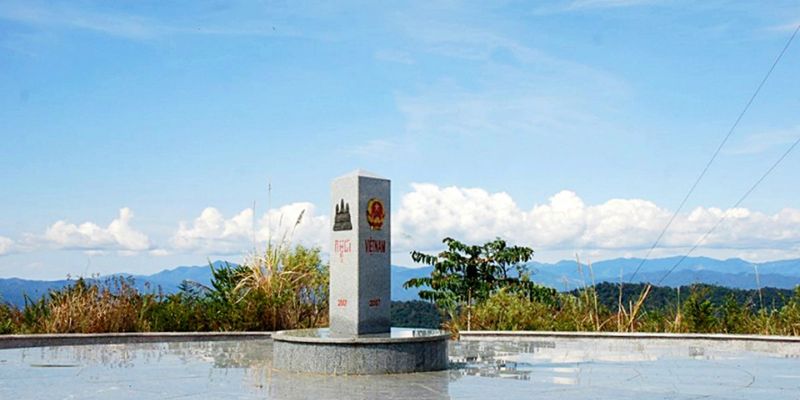
Since its establishment, this landmark has quickly become a favorite stop for adventurous travelers and is also a source of pride for the local people. The landmark is situated on a hilltop 1,086 meters above sea level, about 3km from the actual border intersection and approximately 14km from Plei Kan. The granite stone is crafted into a triangular pillar, with each face facing a different country, while also engraved with the national emblem and corresponding country name.
From the Vietnamese side is the territory of Kon Tum province (now Quang Ngai), while the other side is the territory of Ratanakiri province in Cambodia. The remaining face faces Attapeu province of Laos. Although it is just a border marker, Indochina Junction has a unique charm. Many young people and backpackers often say that standing here allows you to hear the "rooster crowing across three countries."
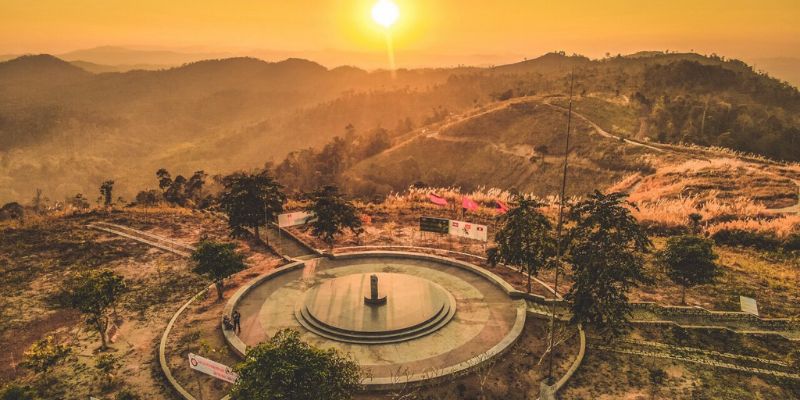
Standing here, visitors can see the entire surrounding landscape
>>> See more: Thuy Tien Waterfall - Immerse Yourself in the Enchanting Beauty of the Great Forest
The journey to explore Indochina Junction is truly complete when you set foot on the landmark area atop a windy mountain. To reach this high point, visitors must trek for about 20-40 minutes, depending on their fitness level and pace.
Although it is not a particularly difficult route, the path still poses enough challenges with gentle slopes and trails winding through lush green forests. Occasionally, you may encounter layers of clouds floating as if they are brushing against your face. As you approach the three-faced granite landmark, a feeling of excitement often rises naturally.
The journey to conquer the special coordinates in Kon Tum
With just a gentle turn, you can touch the symbolic boundary of three countries, a truly unique experience that moves many people. From this position, the entire landscape of Kon Tum's mountains and forests and the border area opens up: endless mountain ranges. If you are there in the early morning, you can also admire the delicate sea of white clouds drifting over the mountains.
Not only famous for the three-country landmark, the area around Indochina Junction also boasts a series of interesting destinations. Visitors can spend one to two days fully exploring the pristine beauty and unique cultural features when traveling in Kon Tum.
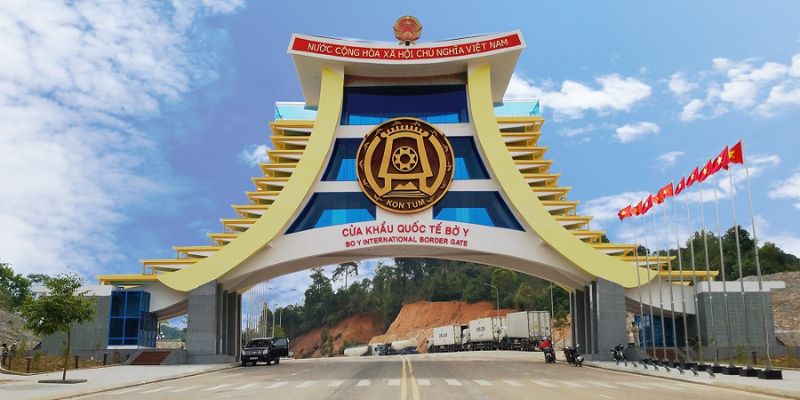
Bo Y International Border Gate is an important trading point for Vietnam
Located near the Indochina Junction landmark, Bo Y International Border Gate is a bustling trading hub between Vietnam, Laos, and Cambodia. The border area is modernly constructed, spacious, and features many iconic architectural works. Visitors can stroll around the premises, take photos with the signposts, border markers, or observe the lively atmosphere of immigration and customs.
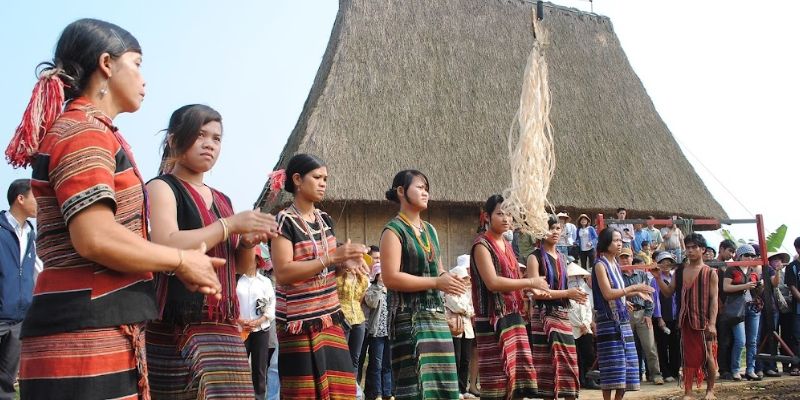
Located in Bo Y commune, the Brao people's village is a unique cultural space for those who want to understand more about the lives of one of the smallest ethnic groups in Vietnam. The village still retains many traditional values, such as tall communal houses and the sound of gongs echoing through the village.
Visit the Brao ethnic village to experience local culture
Along with that are unique musical instruments exclusive to the Brao people and distinctive customs. The locals here are gentle and friendly, always willing to chat, introduce their culture, or take photos with visitors. You will have an interesting experience in the ethnic village when visiting Indochina Junction.
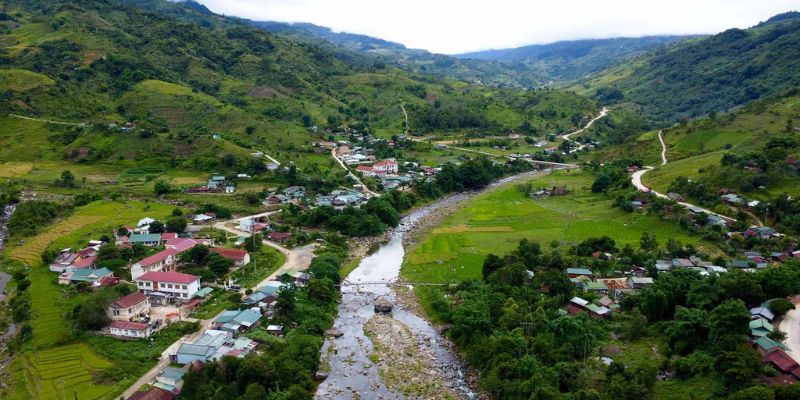
For nature lovers, the highland communes like Muong Hoong or the Ngoc Linh area are ideal choices. The road up the mountain requires weaving through the forest, with a cool climate year-round, pristine landscapes, and is very suitable for exploration trips or light trekking after visiting Indochina Junction. This is also the capital of Ngoc Linh ginseng - a medicinal herb considered a treasure of Vietnam.
Immerse yourself in nature in the Muong Hoong - Ngoc Linh area
The journey to explore Indochina Junction will be much more complete if you take the time to enjoy the special dishes rich in Kon Tum flavor. In addition to familiar dishes, this Central Highlands region also offers countless local flavors that anyone who tries once will find hard to forget.
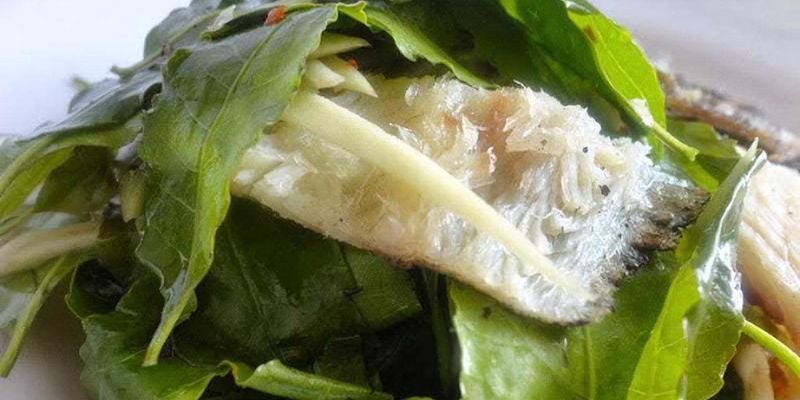
Among the most unique dishes in Kon Tum, sour fish is always the first name mentioned. This dish originates from the Gier Trieng people and is made from nieng fish, a species that lives in the rivers and streams of the Central Highlands, with a small body resembling the fish commonly found in the area. The fish is marinated with salt, roasted rice, wild pepper, leftover rice, and many characteristic spices of the mountains. After a period of natural fermentation, the fish has a light sour taste, salty, and a very unique aroma.
Sour fish is an attractive specialty of the Gier Trieng people
For those who love grilled dishes, grilled beef in bamboo tube is a flavor not to be missed. Tender beef is marinated with local spices, then stuffed into fresh bamboo tubes and grilled over hot coals. When cooked, the aroma of young bamboo blends with the sweetness of the meat, creating an irresistible fragrance. This dish is best enjoyed in the cool chill of the mountains, sitting by the fire and breaking off pieces of bamboo to savor.
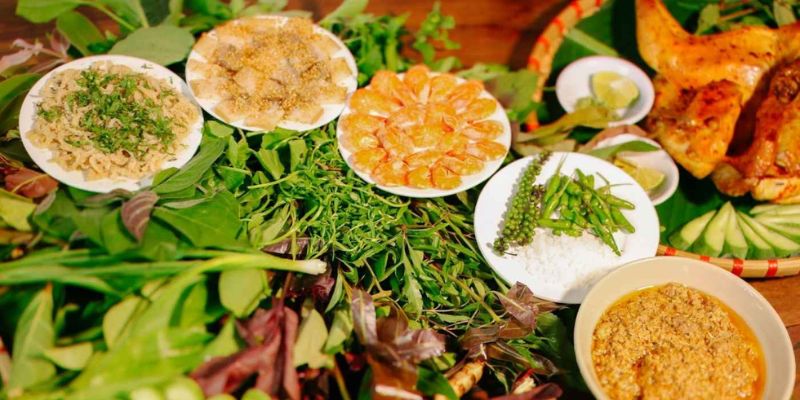
Visiting Kon Tum to conquer Indochina Junction without tasting leaf salad would be a significant oversight. This dish includes more than 40 different types of leaves: sour, spicy, astringent, sweet, etc., picked from the forest or home gardens. It is served with thinly sliced boiled pork, shrimp, and especially a "secret" dipping sauce made from fermented sticky rice, satay, fermented rice, fried shallots, and many Central Highlands spices.
Leaf salad offers an extremely explosive taste experience
To ensure a smooth and fulfilling exploration of Indochina Junction, you need to prepare carefully from the itinerary, weather to personal equipment. Here are some important tips for everyone.
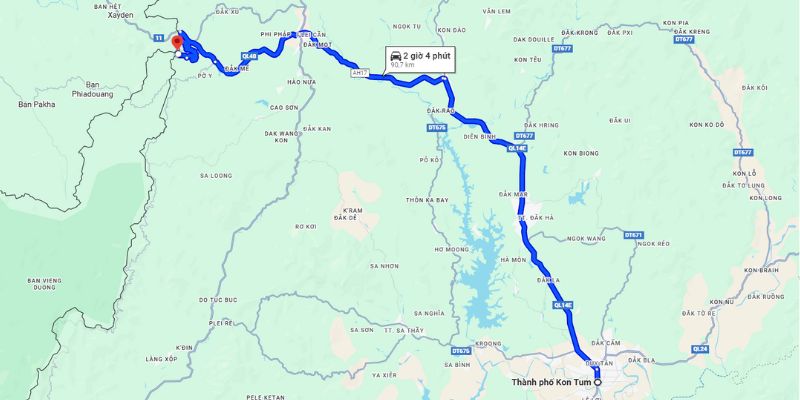
From the center of Kon Tum, you start by following National Route 14E, continuing to head northwest. This is the main road leading to the Bo Y International Border Gate area. When you reach the intersection with National Route 40, turn left and continue along the road towards the border. Shortly after, you will see the entrance to Bo Y border gate - an important checkpoint before reaching the three-country landmark.
Route from the center of Kon Tum to the junction
Here, visitors need to stop at the border station, present identification documents to request permission to enter the Indochina Junction landmark area. After being granted permission, you continue along the winding small road for more than 10km around the hills. Although the road is not too difficult, there are many winding and gentle slopes, so visitors should maintain a steady speed and observe carefully to ensure safety.
Indochina Junction can be visited year-round, but to make the trip more complete and emotionally rich, you should choose the following times:
The ideal time to explore the landmark is at the end of the year
The Indochina Junction is an emotional travel journey, perfect for those who love adventure, exploration, and the majestic nature of the Central Highlands. To make the trip as safe, convenient, and complete as possible, travelers can choose quality Kon Tum travel tours. With experience in organizing journeys to explore the border areas of the Central Highlands, NVK Travel will accompany you, turning every trip into a valuable memory.
Fill out the form and we will contact you