Language
Currency
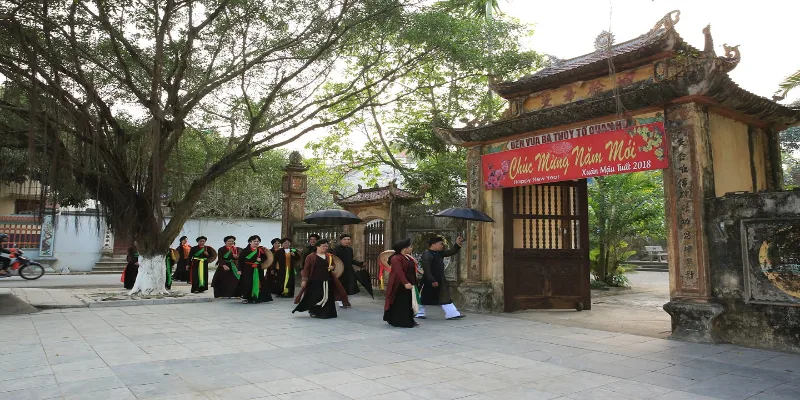
When mentioning Diem Village, many people immediately think of a countryside known for its sweet Quan họ folk songs, ancient communal houses, and the distinctive cultural atmosphere of Kinh Bắc. If you are looking for a place to experience the traditional scenery of the Northern Vietnamese countryside, listen to Quan họ, visit communal houses and temples, and enjoy rustic local dishes, Diem Village in Bac Ninh is a destination worth considering. Let's explore!
Diem Village is the familiar name of Viem Xa, a long-established locality in the Kinh Bac region. Today, the Viem Xa area belongs to Kinh Bac Ward, Bac Ninh Province. As part of the local cultural tourism development plan, this area has been identified as a tourist destination associated with the Quan họ Founding Ancestor relic complex.
What makes Diem Village special is the blend of modern life and cultural values preserved through generations. Here, you can not only visit several ancient structures but also have the opportunity to experience how Quan họ culture remains a part of community life.
Bac Ninh City was previously identified by the local authorities as the birthplace of Quan ho folk singing, with many original Quan ho villages concentrated in the area. Viem Xa stands out among them because it is associated with the legend of Vua Ba, a figure revered by the Quan ho community as the Founding Ancestor.
What makes Diem Village famous is its close connection with Quan ho folk singing of Bac Ninh. Quan ho is not simply a form of musical performance. It is a cultural space encompassing communication etiquette, friendship customs, the ways male and female singers interact, and the rules of call-and-response singing that have been formed and passed down within the community.
Quan ho folk singing of Bac Ninh was inscribed by UNESCO as an Intangible Cultural Heritage of Humanity. Bac Ninh City also recognizes Viêm Xá as the homeland of Đức Vua Bà, the Founding Ancestor of Quan họ. Many traditional Quan họ melodies have been collected from artisans in Viêm Xá and other Quan họ villages in the region.
Therefore, when visiting Diềm Village, the interesting experience is not simply "listening to a Quan họ song." More importantly, it is about experiencing the cultural environment where these melodies have been passed down from one generation to the next.
A trip to explore Diềm Village will be more complete when combined with visits to the notable historical sites within the Viêm Xá complex.
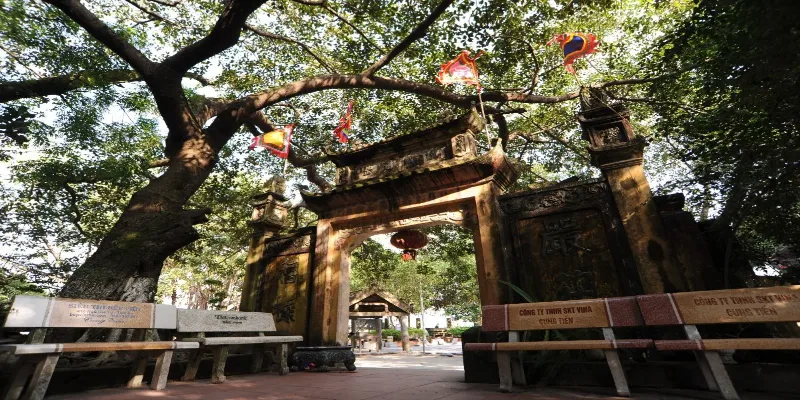
Vua Bà Temple is the most important site when mentioning Diềm Village. It is dedicated to Vua Bà, a figure revered by the Quan họ community as the Founding Ancestor of this folk singing tradition.
According to a local folk legend passed down through generations, Vua Bà was a benefactor of the villagers who taught them singing techniques and contributed to the development of the local cultural life. Since then, the story of Vua Bà has been preserved through generations and has become an important part of Quan họ culture.
Local authorities have identified the Vua Bà Temple area as one of the centers for promoting the cultural values of the Quan họ Founding Ancestor site. Activities such as learning Quan họ singing, experiencing local culture, and organizing exchange programs with artisans are also being developed here.
When visiting the temple, tourists should take time to observe the architecture and temple grounds and learn about its cultural stories rather than simply making a quick visit.
Within Diềm Village itself is Diềm Communal House, a valuable architectural and artistic work of the Kinh Bắc region.
According to local records, the communal house was built in 1692, during the Nhâm Thân year. The structure is impressive for its traditional Vietnamese communal house architecture and intricate wooden carvings. In particular, the ceremonial screen at Diềm Communal House is a valuable artifact and is currently recognized as one of Bắc Ninh's national treasures.
This is a place well worth spending time at if you are interested in traditional Vietnamese architecture. By taking a close look at the carvings, roof trusses, wooden columns, and spatial arrangement, you can more easily visualize the architectural art of old communal houses in Northern Vietnam.
The communal house is also closely associated with community cultural activities and Quan họ. Therefore, the value of Diềm Communal House lies not only in its tangible architecture but also in the cultural life that continues to be maintained around the structure.
Cùng Temple - Ngọc Well is a site often included in itineraries exploring Diềm Village.
The temple is located within the Viêm Xá historical site complex and is associated with the spiritual life of local residents. The area features many green trees, creating a relatively peaceful atmosphere that feels quite different from the urban areas outside.
Ngọc Well is a site that attracts the attention of many visitors. In addition to its significance in folk spiritual life, this place also appears in many oral stories associated with the land of Viêm Xá.
An interesting point is that the visit becomes more meaningful if you learn about the cultural stories behind the temple and well, rather than simply stopping by to take photos and leaving. It is the legends, rituals, and the way the community preserves this site that create the appeal of a cultural heritage site.
Cùng Temple - Ngọc Well is also a site frequently featured in festivals and traditional rituals in Diềm Village.
In addition to the communal house and temples, the Diềm Village area is also home to Hương Sơn Pagoda, contributing to a diverse complex of spiritual and religious heritage sites.
The pagoda has the characteristic atmosphere of a traditional Northern Vietnamese village pagoda and holds significant value for the spiritual life of the local community. During your visit, you can combine learning about the pagoda's history with exploring the surrounding heritage sites to gain a more comprehensive understanding of Diềm Village's culture.
An interesting aspect of this journey is that the cultural sites are not too far apart in terms of the overall travel experience. You can walk from the communal house to the temple, from Quan họ spaces to spiritual sites, while still sensing the connections between these places.
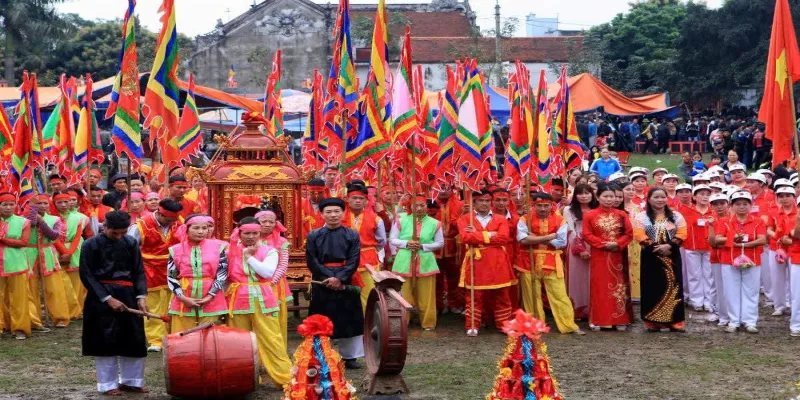
One of the most appealing times to explore Diềm Village in Bắc Ninh is during the festival season. The festival associated with Vua Bà Temple is held annually on the 6th day of the second lunar month. This is an occasion for the community to commemorate the Founding Ancestor of Quan họ and perform various traditional rituals. According to local authorities, the Diềm Village Festival is one of the notable festivals associated with the Quan họ culture of Bắc Ninh.
The ceremonial portion often leaves an impression with community-oriented rituals such as processions, incense offerings, and commemorative activities honoring Vua Bà. The festival portion is livelier, featuring Quan họ exchanges, cultural activities, and traditional folk games.
One notable aspect is that Quan họ during the festival is not limited to the stage. Singing spaces can extend to the communal house courtyard, temple grounds, and other community spaces.
Among the festival activities that have been documented, Quan họ melodies are performed by liền anh and liền chị, along with processions and recreations of the atmosphere of traditional spring festivals.
If you want to experience the festival atmosphere, you should check the specific festival schedule before your trip because the date is based on the lunar calendar.
For many visitors, listening to Quan họ is the most memorable part of the journey.
One interesting way to experience it is to visit Quan họ houses or community spaces where local clubs and artisans gather. Here, visitors can learn more about how the liền anh and liền chị interact, sing in response to one another, and preserve the traditional practices of Quan họ.
Local authorities are also orienting community-based tourism activities such as learning Quan họ singing with artisans, experiencing Quan họ cuisine, making bánh khúc, and organizing Quan họ singing sessions.
For those who love Quan họ, a trip that includes an opportunity to interact with artisans will be more worthwhile than simply visiting historical sites.
These are religious and cultural heritage spaces, so modest and respectful clothing is an appropriate choice.
Ancient structures contain many wooden elements, worship objects, and valuable artifacts. Visitors should observe and take photos only within permitted areas, avoiding touching or moving objects without authorization.
Temples, communal houses, and pagodas are solemn spaces. Avoid speaking loudly or using sounds that may disturb others.
When listening to Quan họ or taking part in cultural experiences, treat it as an opportunity for cultural exchange rather than simply a performance. If you want to photograph local residents or artisans, it is best to ask for permission first.
Festivals or Quan họ programs for visitors are not held every day. If experiencing the local culture is your main goal, check the schedule in advance to avoid missing out.
>>> Read more: Tiêu Pagoda - Discover a Place Preserving the Cultural Values of the Lý Dynasty
Diềm Village is located within Bắc Ninh's rich cultural tourism landscape. If you have more time, you can plan an itinerary that combines the village with other historical sites and attractions in the area.
According to the local tourism development plan, the Thủy tổ Quan họ area and Bà Chúa Kho Temple are key destinations being connected as part of cultural, historical, and spiritual tourism development.
You can choose an itinerary based on a specific theme instead of trying to visit too many places in one day:
Diềm Village → Vua Bà Temple → Diềm Communal House → Cùng Temple - Ngọc Well → Quan họ experience
Alternatively, you can expand the itinerary into a Bắc Ninh cultural exploration trip by adding destinations such as Bắc Ninh Temple of Literature, Bắc Ninh Ancient Citadel, and other Quan họ villages.
This approach is more suitable for those who genuinely want to learn about Kinh Bắc culture rather than simply check in at a single destination.
The most valuable aspect of Diềm Village is not the number of ancient structures found here. More importantly, its cultural heritage continues to be actively practiced by the community.
According to the local authorities, the Viêm Xá area is being oriented toward developing experiential activities such as learning Quan họ singing with artisans, practicing traditional cuisine, making bánh khúc, and organizing Quan họ community programs. This approach helps ensure that the heritage is not only preserved in records or artifacts but continues to be part of everyday life.
For an intangible cultural heritage, this is particularly important. If preservation is limited to displays, visitors may be able to see the heritage but find it difficult to feel its vitality. In contrast, when local people continue to sing, pass the tradition down, and visitors can participate directly, the heritage becomes more accessible and engaging.
If you are planning a Bac Ninh tour, want to combine a visit to Diềm Village with other notable destinations, or need a convenient itinerary, explore the tours and services at NVK Travel. You can discover more journeys exploring Bắc Ninh and other attractive destinations, suitable for individual travelers, families, or groups of friends at nvktravel.com.
Fill out the form and we will contact you