Language
Currency
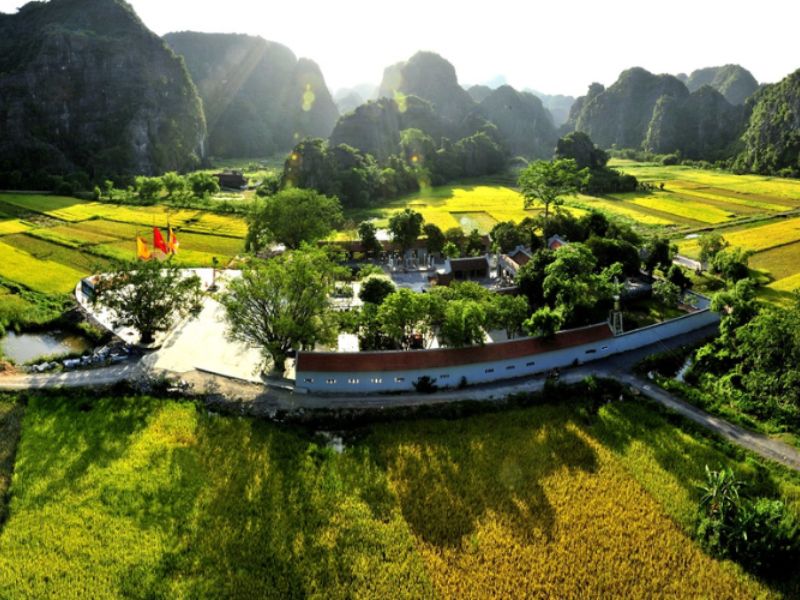
Thai Vi Temple is an ancient temple built in 1958 when King Tran Thai Tong decided to become a monk and retreat to the mountainous area for rest. The natural scenery here is majestic and magnificent, with surrounding mountains and vast rice fields stretching endlessly. Join NVK Travel to explore more about the peaceful beauty of this land below.
To better understand Thai Vi Temple, visitors should know the following basic information:
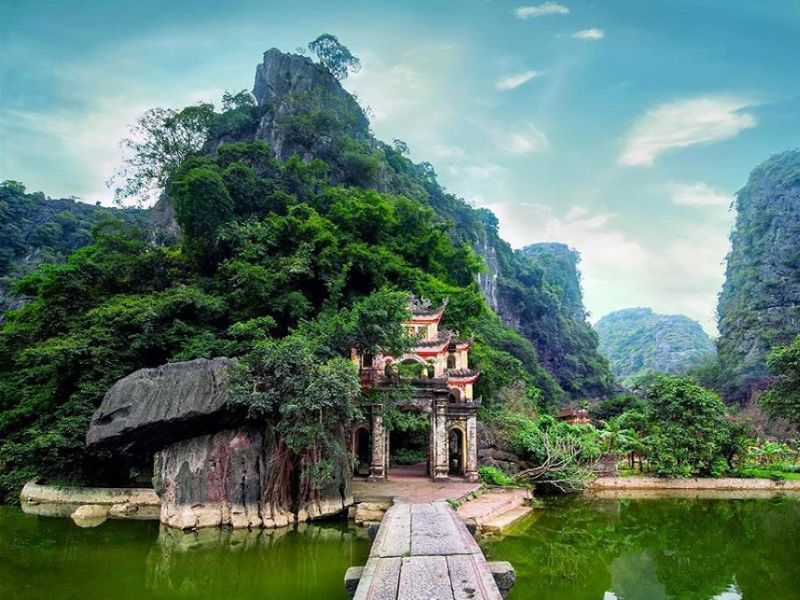
Thai Vi Temple is located in Ninh Hai, Hoa Lu, Ninh Binh, featuring a spacious and airy setting. This is also a cultural and historical relic as well as one of the prominent tourist attractions in Ninh Binh. Located within the Tam Coc - Bich Dong eco-tourism complex, the temple attracts millions of visitors every year. The temple mainly worships the early Tran Dynasty kings, including Tran Thai Tong, Tran Thanh Tong, Tran Nhan Tong, Tran Anh Tong, along with generals Tran Hung Dao, Tran Quang Khai, and Queen Thuan Thien.
All of them were people who contributed to establishing the Vu Lam royal palace and served as important figures in the resistance against the Mongol invasions. During Lunar New Year or annual festival seasons, people from all over the country visit Thai Vi Temple to participate in solemn ceremonies and many traditional activities.
Overview of Thai Vi Temple
>>> Read more: Tam Quan Gate - Unique Architecture in Kien Giang
Unlike other temples with magnificent and heroic histories, Thai Vi Temple has a much simpler origin. This is the place where King Tran Thai Tong retreated for meditation and recovery after many years of hard work governing and protecting the country.
The first temple here was built by the king in 1258, immediately after the resistance against the Mongol invaders ended. The king passed the throne to his son and then retreated to the Tam Coc mountainous area, establishing Thai Vi Temple to become a monk. Later, other kings such as Tran Thanh Tong and Tran Nhan Tong also came here to practice.
History of the temple's formation and development
>>> Read more: Phat Diem Stone Cathedral: The Most Beautiful Catholic Architecture in Vietnam
Visitors coming to Thai Vi Temple will have the opportunity to experience the following special highlights:
Currently, there are two simple ways to reach Thai Vi Temple. Visitors can travel by road through Van Lam wharf, then turn onto the path parallel to Ngo Dong River to reach the temple, or they can travel by boat along the river. However, entering through the waterway route is an extremely interesting experience. You will feel like a tiny “dot” in the vast and immense space of Tam Coc, surrounded by layers of blue-gray mountains intertwined with each other.
Taking a boat through the waterway route to the temple
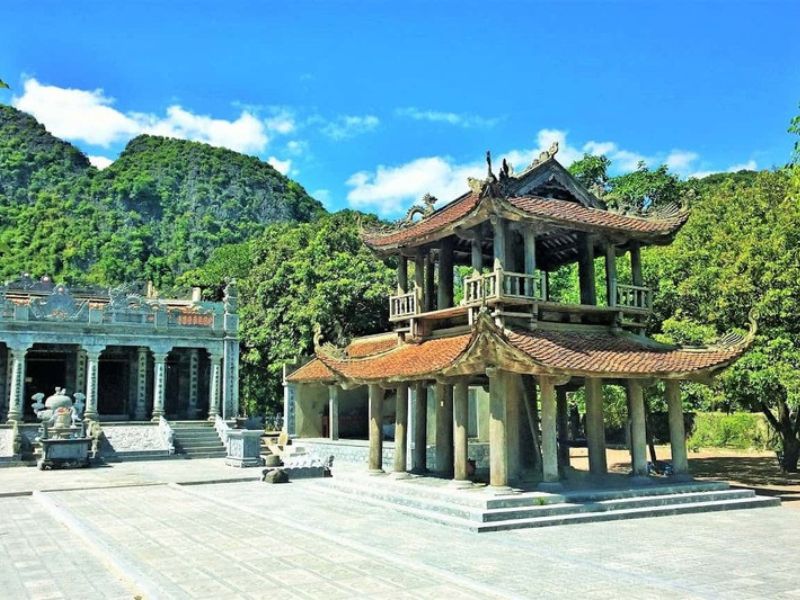
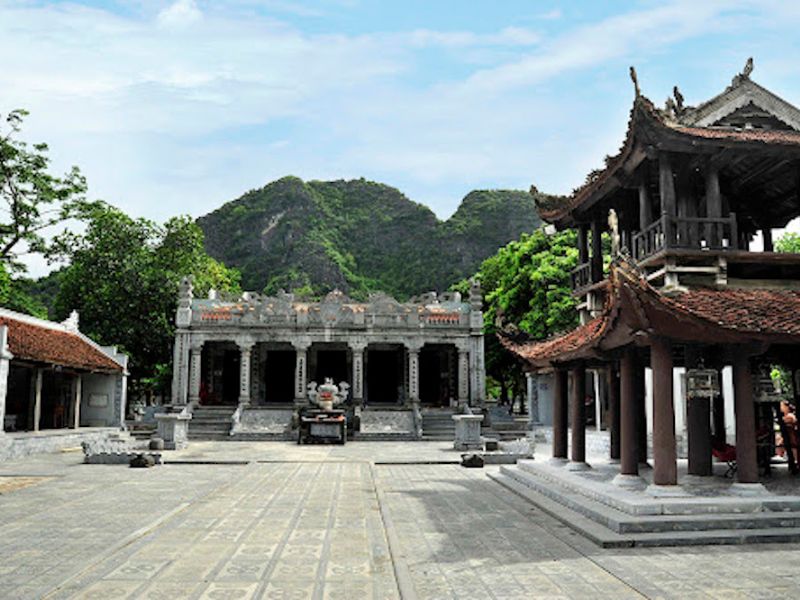
Nestled harmoniously in the natural landscape like a beautiful painting, Thai Vi Temple features an architectural style known as “Inner Gong, Outer Country”. All columns inside and outside the temple are made from solid green stone. The exterior surfaces are meticulously carved with beautiful patterns and elegant, flexible designs that are no less impressive than traditional wood carvings.
At the front of the temple is a jade well, also built from green stone, which maintains its emerald color throughout the year. Behind the temple is the majestic and towering Can Son limestone mountain. Inside Thai Vi Temple, there are many valuable ancient stone steles and bronze bells. The stele tower records the merits of those who visited, worshiped, and contributed to the construction of the temple.
Stepping into the courtyard, visitors will be impressed by its spacious area of more than 40m², completely paved with green stone. The main pathway and royal courtyard are also paved with green stone. On both sides are two rows of Vong houses, where elders used to discuss ceremonial matters in the past. In addition, there is also the Ngu Dai Mon gate with an especially impressive carved architectural style.
Ancient architectural style of the temple
Outside the stone columns, there are Chinese characters carved as parallel sentences, surrounded by stone porch beams featuring delicate dragon-and-moon carvings. From the spacious courtyard, visitors can walk up 1.2m-high stone steps to reach six rows of parallel round stone columns, all decorated with embossed carvings of Dragon Kings facing toward the main hall. The porch beams are also made of stone and carefully carved.
Every three years, in the years of the Rat, Horse, Rabbit, and Rooster according to the lunar calendar, Thai Vi Temple organizes a major festival lasting three days, from the 14th to the 16th day of the third lunar month. Many local people believe that after defeating the Mongol invaders, on the 15th day of the third lunar month, the king returned to Thien Truong, now located in Nam Dinh, to worship ancestors and celebrate the victory.
Therefore, this festival is also a celebration of the king’s victory and a tribute to the brave soldiers who sacrificed themselves for the nation. The Thai Vi Temple Festival is traditionally organized on the afternoon of the 14th day of the third lunar month by Van Lam village.
Many people believe that in the past, this was also the place where mandarins reported before entering Vu Lam royal palace and where announcements were made to later Tran Dynasty kings. On the morning of the 15th day of the third lunar month, villages organize processions carrying sacred palanquins representing their villages to Dinh Cac communal house for the ceremonial rituals.
Many people believe that in the past, this was also the place where officials came to report before entering Vu Lam royal palace, as well as the place to announce important matters to the Tran kings in later periods. On the morning of the 15th day of the third lunar month, villages organize a sacred palanquin procession representing their community to Dinh Cac communal house to carry out the worship ceremony.
Thai Vi Temple will surely be an ideal destination for your upcoming trip to Ninh Binh. Its charm lies not only in the breathtaking natural scenery, reminiscent of traditional ink wash paintings, but also in its unique architecture steeped in history. Check out NVK Travel’s Ninh Binh tour to make your journey truly meaningful.
Fill out the form and we will contact you