Language
Currency
Thien Mu Pagoda also known as Linh Mu Pagoda. This is one of the famous scenic spots in Hue. With its unique architecture and prime location, the pagoda has become a symbol of the ancient capital. Let's explore more interesting things you may not know about this ancient pagoda with NVK Travel.
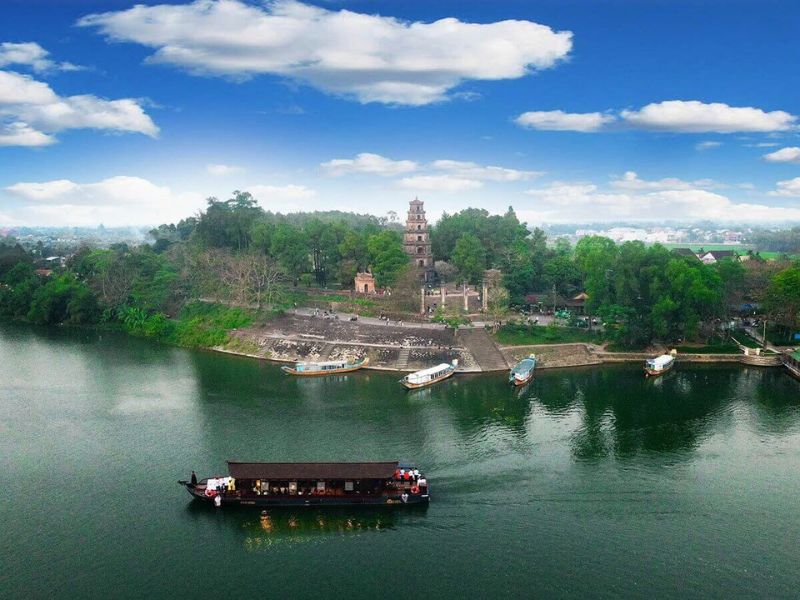
Thien Mu Pagoda is located on Ha Khe Hill, Nguyen Phuc Nguyen Street, Huong Long Ward. This area is situated on the north side of the Perfume River, about 5km from the center of Hue. Built around the late 17th century during the reign of Lord Nguyen Hoang, the structure has witnessed many ups and downs in history and has become a cultural symbol.
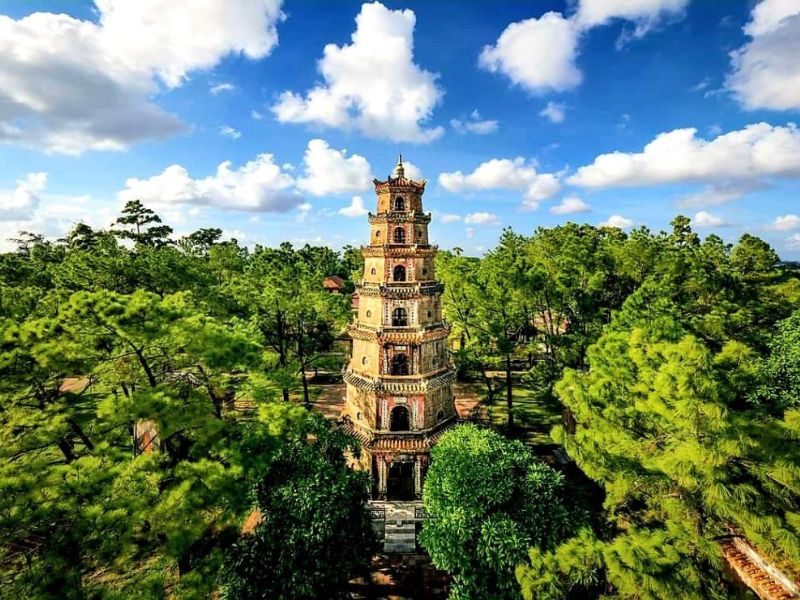
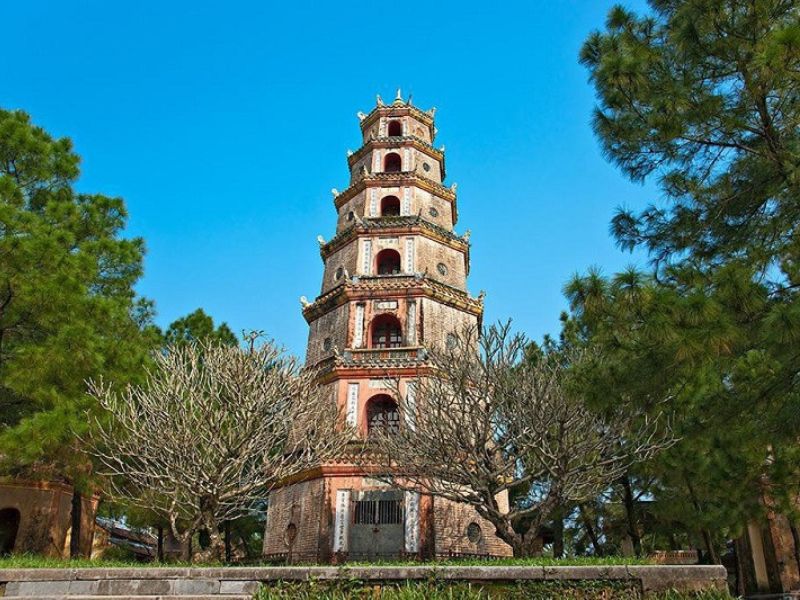
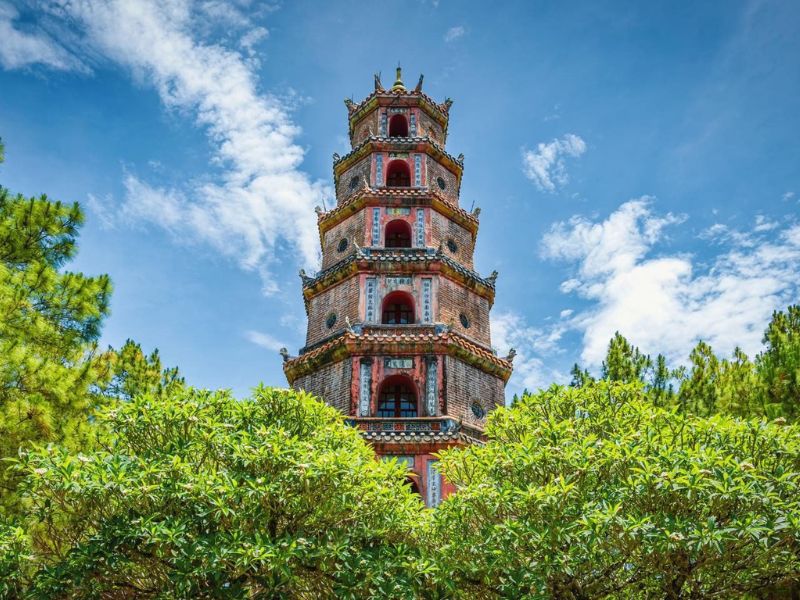
The pagoda embodies the beauty of cultural, historical, and spiritual values. Thus, it has become a must-visit destination whenever tourists come to Hue. The most prominent feature of Thien Mu Pagoda is the Phuoc Duyen Tower, which stands tall in front of the pagoda, attracting all eyes. With 7 stories, the tower is considered a symbol of enlightenment and a prayer for peace.
The tourist area is open all day, so you can comfortably visit. If you want to take beautiful photos, you should come here between 6:00 AM and 8:00 AM. At this time, there are few tourist groups, and if you want to enjoy a romantic sunset by the Perfume River, you can come around 5:00 PM.
Sharing some summarized information about Thien Mu Pagoda
>>> See more: Khai Dinh Tomb - The Harmonious Beauty of Eastern - Western Architecture
The pagoda is about 5km from the center of Hue
To get to Thien Mu Pagoda, you can choose various types of transportation such as motorbike, car, taxi, etc. Below are specific ways to travel that you can refer to:
Tourists can start their journey from Toa Kham Wharf to Thien Mu Pagoda. After a relaxing 30-minute boat ride, you can admire the beauty of the Perfume River and explore the list of famous sites in the ancient capital of Hue.
Travel to the pagoda by Dragon Boat
>>> See more: Hoai River Square - The Cultural Breath of Hoi An Ancient Town
If you travel by car or motorbike, it will take about 15 minutes. From the city center, follow Le Loi or Hung Vuong streets, then turn onto Nguyen Phuc Nguyen. Continue straight, and you will see Thien Mu Pagoda on your right.
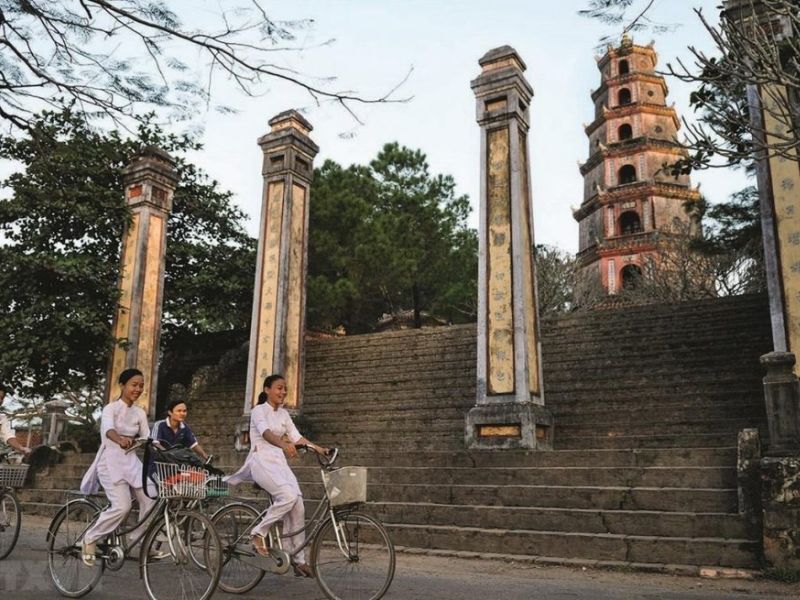
Tourists can rent bicycles to ride around the pagoda as the road is very beautiful and quite short. You can also visit Van Mieu Hue and Huyen Khong Pagoda. However, if cycling, it's best to go early in the morning to avoid the heat and crowds.
Cycling around the pagoda to feel the tranquility
Thien Mu Pagoda is one of the two National Temples built earliest in the Central region, not only serving as a spiritual destination for the community but also as a place to hold national ceremonies and important Buddhist rituals since the early 17th century.
According to historical records, when Lord Nguyen Hoang became the governor of Thuan Hoa and Quang Nam, he accidentally discovered Ha Khe Hill, which resembled a dragon turning its head back. Therefore, in early 1601, Lord Nguyen Hoang decided to build Thien Mu Pagoda right here, a place rich in spiritual energy, praying for peace and prosperity for the Nguyen family.
By 1665, Lord Nguyen Phuc Tan had renovated the structure. In 1710, Lord Nguyen Phuc Chu commissioned a giant bronze bell weighing 2 tons named Dai Hong Chung, which was inscribed with a verse as a declaration of prosperity for the entire family.
Moreover, in 1714, following the flourishing of Buddhism in the Central region, Lord Nguyen Phuc Chu continued to renovate Thien Mu Pagoda, making it the most magnificent structure of that time. In 1844, to show respect to the Empress Dowager, King Thieu Tri built a magnificent octagonal tower named Tu Nhan along with the Huong Nguyen pavilion to commemorate her contributions.
The history of Thien Mu Pagoda spans various periods
Thien Mu Pagoda stands as a historical witness right by the Perfume River. The structure seems to live on in the consciousness of the people of Hue in particular and the cultural life of the Vietnamese in general. If you visit the pagoda, you should not miss:
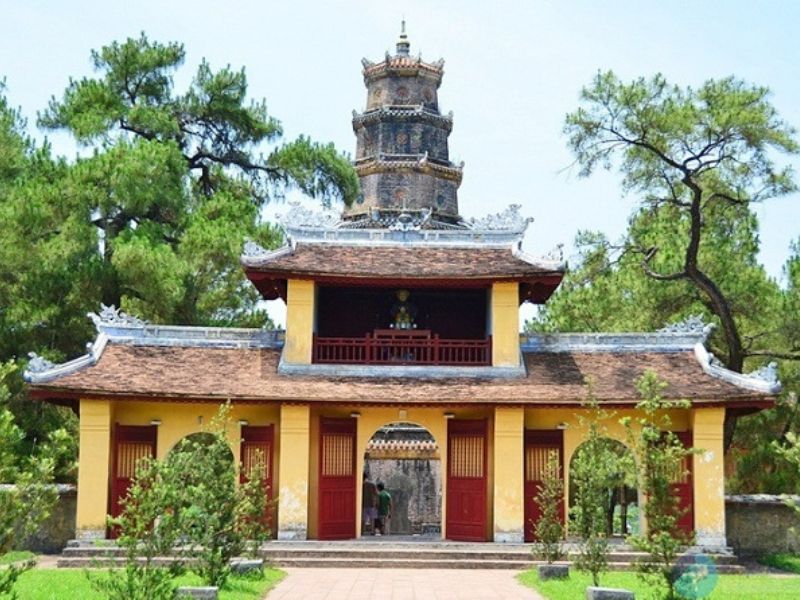
The Tam Quan Gate is one of the architectural symbols rich in cultural significance for the people of the ancient capital. As the name suggests, the gate has 3 entrances with one main entrance and 2 side entrances. The main entrance is usually higher and wider, elaborately decorated, reserved for kings or important figures in the court.
The two side entrances are simply decorated and meant for officials or the public. This structure of 3 entrances not only signifies a clear distinction of social classes but also symbolizes the 3 important paths in Eastern philosophy: Humanity, Justice, and Ritual.
Not only does it hold symbolic value, but the Tam Quan Gate in Thien Mu Pagoda is also considered a work of art. The structure is built in traditional architectural style, combining brick, stone, and wood with soft tiled roofs. Prominent on the gates are intricate decorative patterns such as Dragons, Phoenixes, Unicorns, Tortoises, and various other folk motifs.
Explore the 3 entrances at the Tam Quan Gate
Phuoc Duyen Tower is also a symbol accompanying the history of Thien Mu Pagoda. Built in 1844, the tower stands 21m tall and has 7 stories. Each floor features a statue of Buddha, and inside is a spiral staircase leading to the highest level, where a gold statue of Buddha was previously placed.
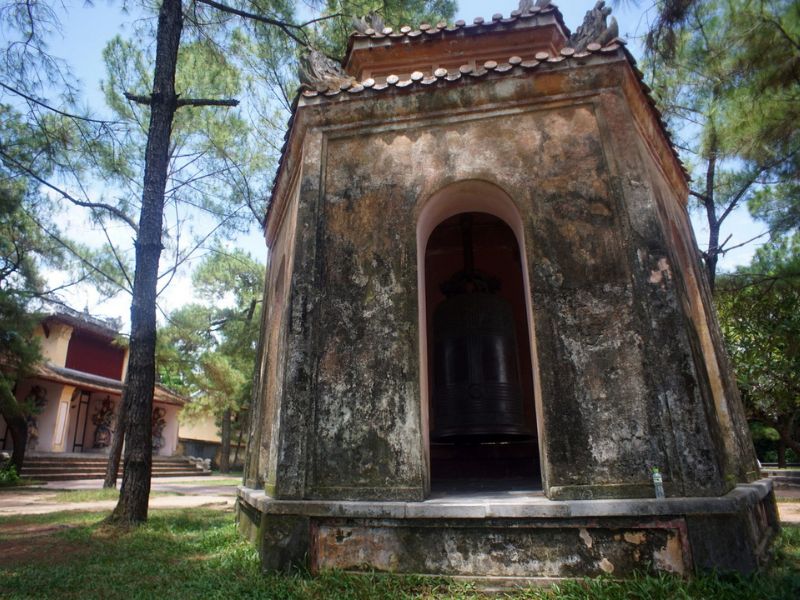
On either side of the tower are two quadrangular houses, each housing a stele from the reign of Thieu Tri. Further inside are two hexagonal houses, one for the stele and one for the bell cast during the reign of Lord Nguyen Phuc Chu.
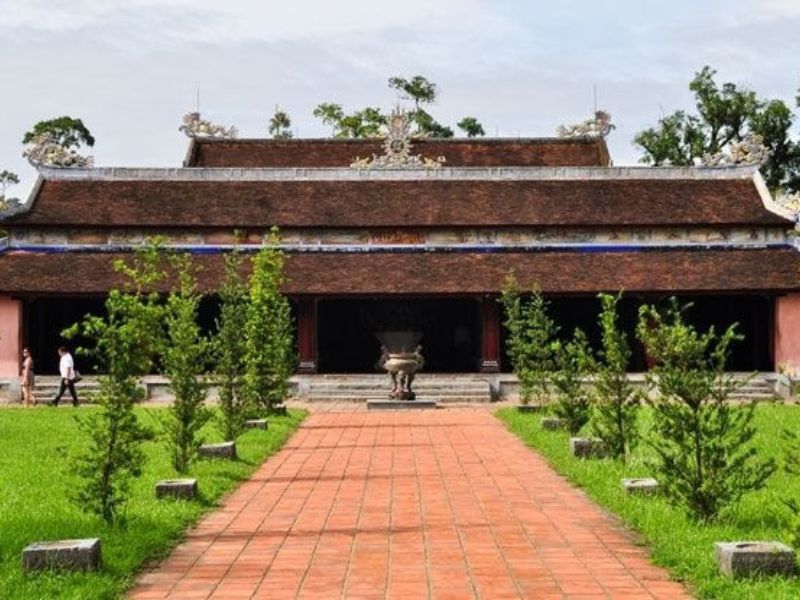
This magnificent architectural structure is the main hall within Thien Mu Pagoda. During the renovation in 1957, all columns, beams, and rafters were constructed of concrete and covered with a wood-like paint, replacing the wooden structure during the renovation phase from 2003 to 2006.
Inside the hall, besides the bronze statue of Buddha, there hangs a large bronze bell intricately carved with images of the sun, moon, and stars, along with information stating that this bell was commissioned by a Quang Tri official named Tran Dinh An in 1677 to be offered to the pagoda. Additionally, there is a wooden plaque painted in red and gold, personally inscribed by Lord Nguyen Phuc Chu in 1714.
Admire the majestic beauty of Dai Hung Hall
Located right behind Dai Hung Hall is the Di Da Hall, separated by a spacious courtyard filled with greenery. It is situated on the old site of the old Di Lac Hall and the path to the left of Dai Hung leading into the pagoda.
Since 1907, the hall has been built to worship Quan Cong, which is relatively common in other pagodas in Vietnam due to the influence of Chinese Buddhism. It is believed that Quan Cong is very sacred and understands the yin and yang, capable of predicting good and bad omens.
The highlight within Thien Mu Pagoda is the Dai Hong Chung - a large bronze bell symbolizing the sophistication of bronze casting art and carrying spiritual significance. It was recognized as a national treasure in 2013. Currently, the bell is regarded as a ritual instrument of the pagoda and is not used for ringing.
In 1710, Lord Nguyen Phuc Chu requested the casting of Dai Hong Chung to be offered to the national temple. Although it has been over 300 years, the bell still retains its original beauty. This is also a very large bell, measuring 2.5m in height and 1.40m in diameter. The bell is inscribed with a verse from Lord Nguyen Phuc Chu praying for favorable weather and peace for the nation.
Admire the largest bell of the temple
Since this is a temple, when visiting, you need to pay attention to wear simple, polite, and modest clothing. This not only shows your respect for the sacred area but also maintains the solemn appearance of the temple. When entering, you should walk lightly and speak softly, avoiding noise or profanity that could disturb the sacred atmosphere.
Important notes to keep in mind when visiting Thien Mu Temple
Thien Mu Temple possesses architectural and historical beauty that captivates countless visitors each time they come. Here is some information about this ancient structure that NVK Travel wants to share with you; if you have any questions about the upcoming trip to Hue, please contact us immediately to receive detailed advice.
Fill out the form and we will contact you