Language
Currency
Khai Dinh Tomb is one of the prominent tourist destinations, loved by many visitors. This is a unique and sophisticated architectural work with meticulously crafted and beautiful designs. To learn more interesting information about this place, let's follow the article right below from NVK Travel!
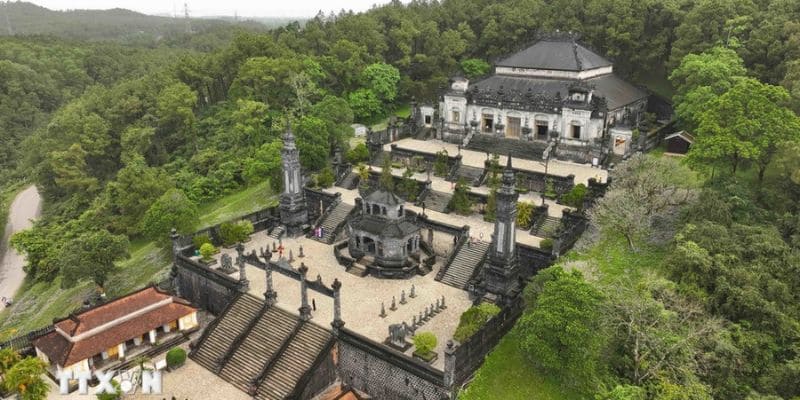
Aerial view of Khai Dinh Tomb
>>> See more: Hoai River Square - The Breath of Hoi An Ancient Town
Khai Dinh Tomb, also known as Ung Tomb, is the resting place of King Khai Dinh - the 12th king of the Nguyen dynasty, the last feudal dynasty of Vietnam. This is one of the most prominent tombs in the ancient capital of Hue with a unique architecture that blends Asian and European styles, classical and modern. The decorative details and materials used here clearly reflect high artistic value, elevating the tomb's worth.
The tomb is located on the slope of Chau Chu Mountain in Thuy Bang Ward, Thuan Hoa District, about 10 km from the center of Hue City. The location of the tomb was meticulously chosen according to feng shui principles, with a low hill in front forming a protective barrier. Along with that are the two mountains Chop Vung and Kim Son, known as "Thanh Long on the left" and "Bach Ho on the right", creating a solid and harmonious landscape.
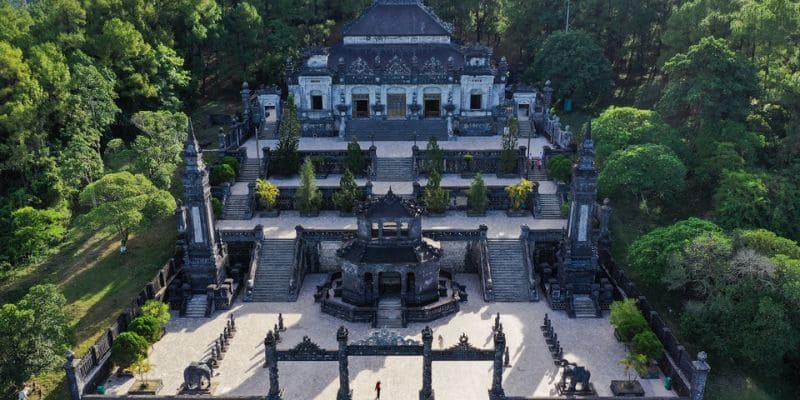
The majestic and grand beauty of the tomb complex
>>> See more: Hoi An Ancient Town - Discover the Timeless Beauty
Especially, Khai Dinh Tomb is the most unique tomb in the system of tombs of the Nguyen kings. The architecture of the tomb bears the strong imprint of traditional Vietnamese culture while also reflecting distinctly Western styles such as Gothic, Roman, and Baroque. This fusion showcases the high aesthetic taste of King Khai Dinh and clearly indicates the strong influence of French culture on our country in the early 20th century.
The tomb began construction in 1920, when King Khai Dinh decided to build his final resting place amidst a turbulent national context. Unlike the traditional architecture that is close to nature of previous kings, Khai Dinh chose a completely new direction: a modern tomb, distinctly personal, reflecting a sophisticated aesthetic and the ability to absorb Western culture.
The project was carried out continuously for 11 years, until 1931 - by this time Khai Dinh had passed away and his successor, King Bao Dai, continued to oversee its completion. To build the tomb, the royal court mobilized craftsmen and artisans from across the three regions, using precious materials such as concrete, steel, marble, Chinese porcelain, and French glass to create a tomb that is both magnificent and unique.
Unique beauty, harmonious combination of Asian and European styles
The special highlight that sets Khai Dinh Tomb apart is the innovation in architectural thinking. Instead of merely pursuing the traditional Eastern tomb style, King Khai Dinh incorporated elements of French, Roman, Gothic architecture, and even Hinduism, creating a whole that is both classic and modern, the most unique in the history of the Nguyen dynasty.
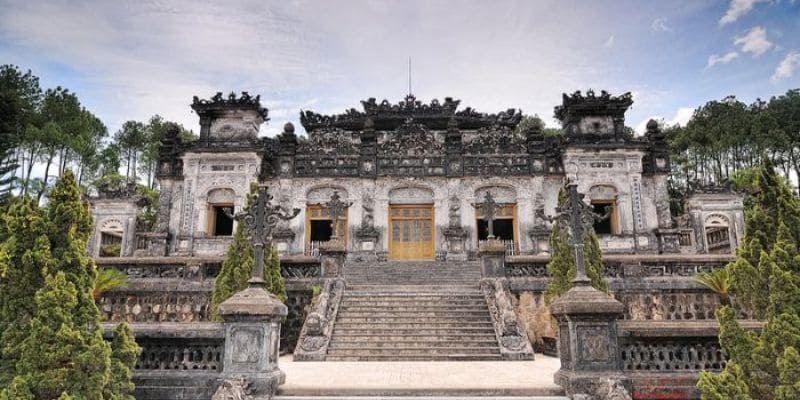
Although it has the smallest area among the tombs of the Nguyen dynasty, Khai Dinh Tomb stands out the most due to its elaborate and meticulous design. As mentioned, this tomb area features architecture that combines Eastern and Western styles. The elements of French, Roman, and Gothic styles have been skillfully blended with the characteristics of Eastern temple architecture, creating a new and unique style.
Khai Dinh Tomb has the most unique architecture among Nguyen dynasty tombs
In addition, this is also one of the constructions with the highest construction costs among the tombs of the Nguyen dynasty. The imported materials along with exquisite construction techniques have turned this project into a work of art, where every small detail is meticulously executed. The opulence further affirms the status of King Khai Dinh, while clearly expressing the unique cultural fusion of the time.
Khai Dinh Tomb is a unique architectural work, symbolizing the cultural fusion between Vietnam and Western countries during an important historical period. The overall design of the tomb is rectangular, consisting of 127 steps leading through the following constructions:
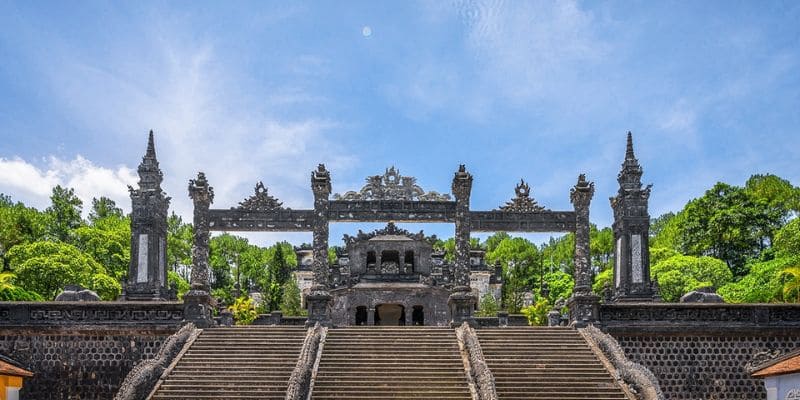
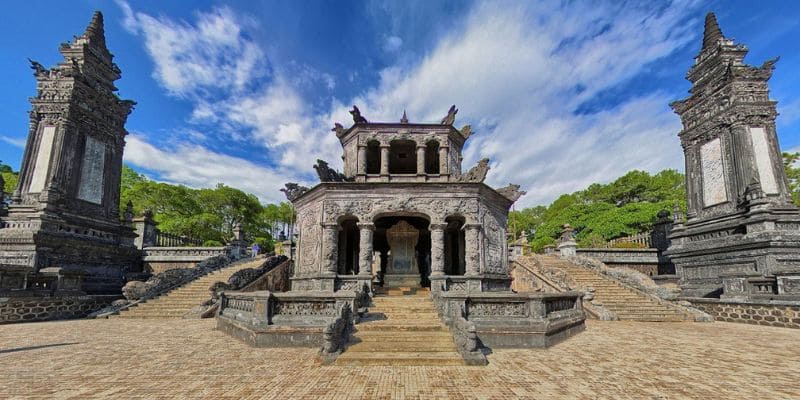
Tam Quan Gate impresses tourists with its solid and majestic architecture. This is the main entrance to the tomb, and to get here, you must go through the first 37 steps. The pillars in this area are designed in the Hindu style, clearly reflecting the cultural fusion and unique architectural style between Vietnam and India.
The entrance to the tomb - Tam Quan Gate
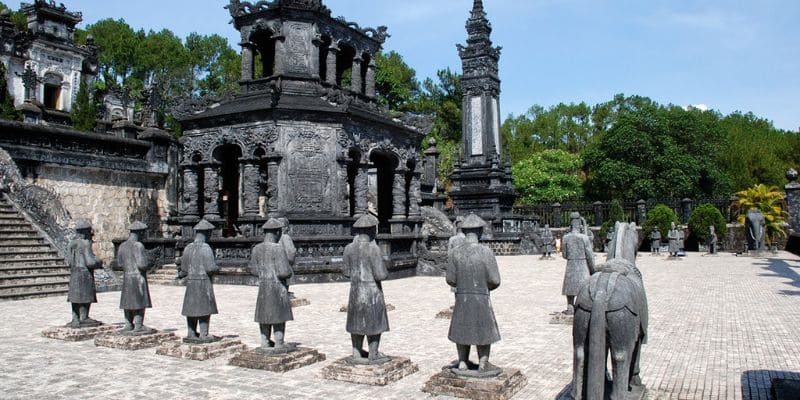
From Tam Quan Gate, tourists continue to climb another 29 steps to reach Nghi Mon and Bai Dinh Courtyard. Here, you will be amazed by a series of statues of courtiers and warriors arranged symmetrically in four rows. Each statue is intricately carved, showcasing the high artistic level of artisans of that time.
A series of courtiers' statues depicting the scene of the king's audience in Bai Dinh Courtyard
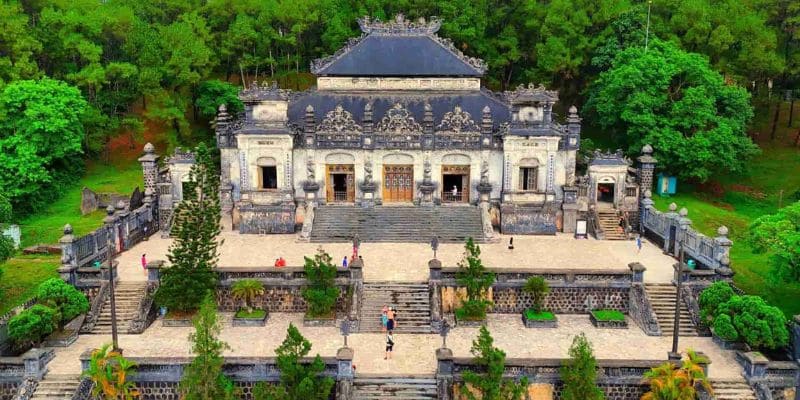
Thien Dinh Palace is the central structure and also the highest place in the Khai Dinh Tomb complex, and it is also the resting place of the king. After passing through two transition levels (levels 3 and 4), you will reach the fifth level, which is the location of the palace. This place symbolizes the creativity and love for art of the Nguyen dynasty king.
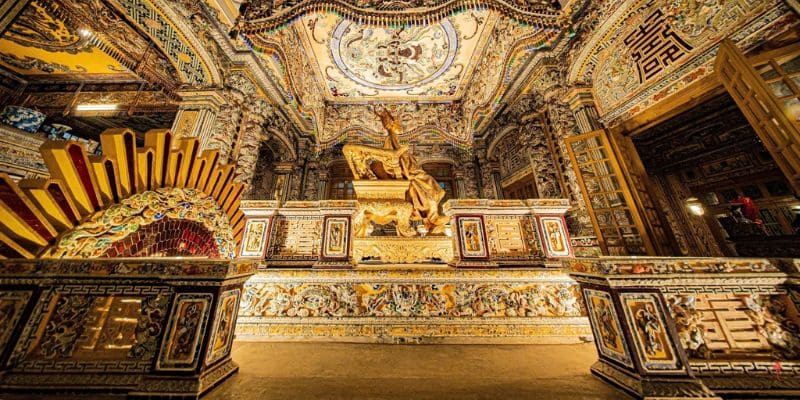
Thien Dinh Palace includes five main spaces: on either side are the left and right rooms, while in the middle at the front is Khai Thanh Palace where the king's altar is placed. Inside is the main tomb - where the king's body is placed, with a gold-plated bronze statue of King Khai Dinh crafted in a 1:1 ratio. At the innermost part is the worship area, where the long coffin, long seat, and important offerings are kept.
Meticulous and luxurious architecture in Thien Dinh Palace
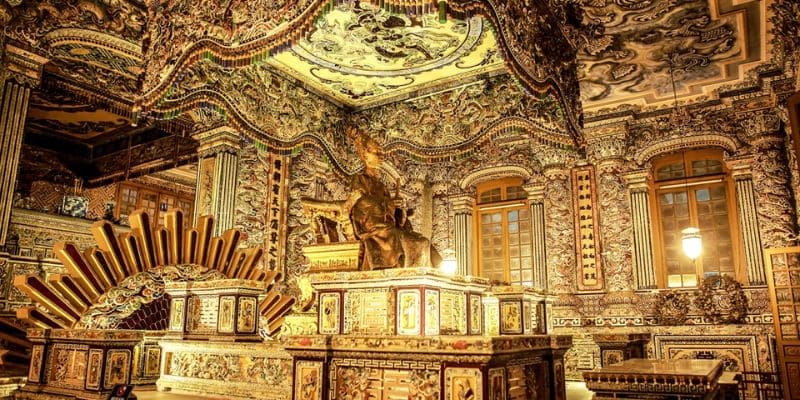
The interior of Thien Dinh Palace reflects a high standard in royal decorative art with exquisite ceramic mosaic techniques. Artisans used thousands of pieces of ceramics, porcelain, and colored glass to create thousands of vivid patterns, such as images of the Four Seasons, Five Blessings, along with images of tea and five fruits. All these elements combine to create a sparkling and elaborate space, reflecting a sophisticated and unique aesthetic.
Khai Thanh Palace is the architecture belonging to Thien Dinh Palace, where the altar and the king's body are placed. Here, the king's body is placed under the palace, while above is his bronze statue.
Notably, on the ceiling of the three central compartments of Khai Thanh Palace is the painting "Cuu Long An Van" - that is, the painting of nine dragons hidden in the clouds - created by artisan Phan Van Thanh using both hand-drawing and foot techniques. Additionally, another noteworthy detail is the Buu Tan - the canopy over the king's statue - weighing about 1 ton, made of bronze but with soft lines, creating a feeling as if it were made of silk.
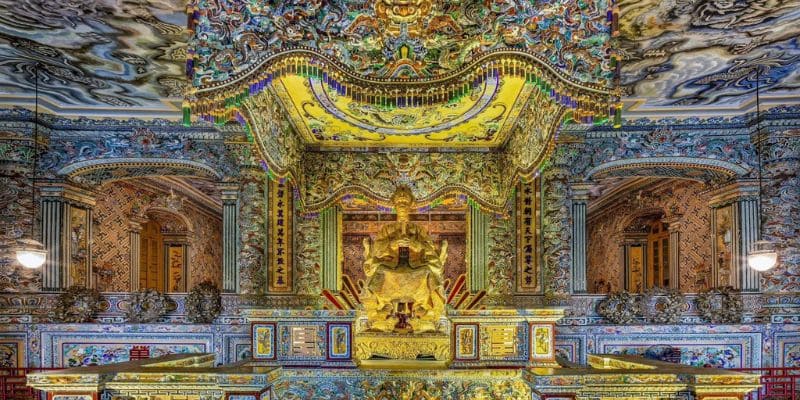
Khai Thanh Palace - The main worship area and where King Khai Dinh's body is placed
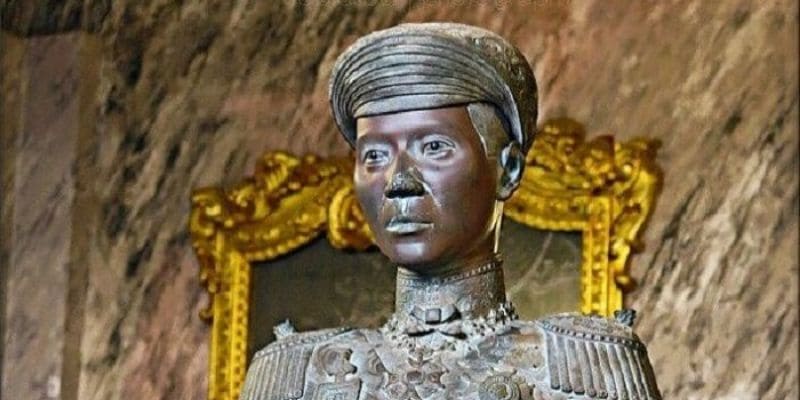
Inside the tomb, there are two bronze statues of King Khai Dinh in a 1:1 ratio, which no other tomb has. The two statues at Khai Dinh Tomb include one sitting on the throne in Khai Thanh Palace and one standing.
The statue sitting on the throne was created by two French artisans in 1920, while the gold plating was done by an artisan from Hue. The standing statue was made by a craftsman from Quang Nam, initially placed in An Dinh Palace, but was moved to Thien Dinh Palace in 1975.
The bronze statue was sculpted by skilled artisans
To have a complete tour, visitors need to grasp the following travel guide:
Khai Dinh Tomb is only about 9 km from the center of Hue City, so traveling is quite easy. From the center, head west along Hanoi Street, then to Ngo Quyen Street, continue along Dien Bien Phu and Minh Mang Streets to reach the tomb. You can choose from the following means of transportation:
Opening hours: 06:30 - 17:30 daily
Ticket prices:
Visitors can buy tickets directly at the entrance of Khai Dinh Tomb
The ideal time to visit and explore the tomb of King Khai Dinh is from March to August. This is when Hue enters the dry season, with beautiful sunny weather and a clear blue sky, perfect for check-ins and taking photos.
Visitors can choose to come here in the early morning or late afternoon to witness the scene of sunlight filtering through, shining on the tomb, creating a perfect beauty that harmonizes the classic and modern. Especially, you should limit your visit during the rainy season - from October to December - due to the humid weather, heavy rains, and slippery roads, making travel more difficult.
Choosing the right time to visit the king's tomb makes the trip more complete
Khai Dinh Tomb is a spiritual tourism area, a place of worship for the Vietnamese royal family, so when visiting, tourists need to pay attention to some things as follows:
Khai Dinh Tomb is a prominent architectural symbol in the complex of Hue Imperial City, considered one of the greatest achievements of traditional Vietnamese architecture. With its solemn beauty, intricate details, and clever combination of Eastern and Western styles, this tomb has become a destination attracting thousands of tourists each year. If you wish to learn more about Hue travel tours, please contact NVK Travel for consultation and exclusive offers!
Fill out the form and we will contact you