Language
Currency
Ong Bon Pagoda evokes the ancient and solemn beauty, preserving the long-standing cultural values of the Chinese community. The sacred space, exquisite architecture, and traditional festivals make this place an ideal check-in spot. In this article, NVK Travel will take you to explore the history, architecture, and visiting experiences of the pagoda in a comprehensive way.
Ong Bon Pagoda (Hoa An Hoi Quan) is an ancient pagoda that embodies the cultural soul of the Chinese people, where every corner radiates a sacred aura. Visitors here not only admire the exquisite architecture but also feel the long-standing cultural values.
The pagoda was recognized as a provincial cultural and artistic heritage site in 2004
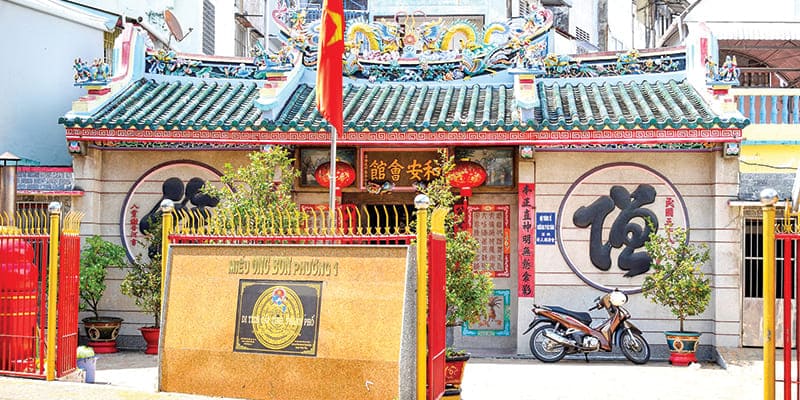
The ancient pagoda is located at 9A Nguyen Van Troi, Phu Loi Ward, Can Tho City (old address: 9A Nguyen Van Troi, Ward 1, Soc Trang City, Soc Trang Province). This is one of the typical constructions that preserve the cultural and religious values of the Chinese community in the Mekong Delta.
>>> See more: Truc Lam Soc Tran Zen Monasteryg: Binh Yen Stopover
Ong Bon Pagoda has undergone 7 renovations but still retains its ancient architecture
Ong Bon Pagoda was built in the early 20th century (according to some documents, in 1875), associated with the Chinese community living in the Southwestern region. Initially, the pagoda was just a small shrine where merchants and Chinese families gathered to worship some deities who protected their lives and business. Over time, with the development of the community and religious needs, the pagoda was expanded and renovated many times while still retaining its characteristic ancient architecture.
The pagoda is named after a general who made significant contributions to the country during the Song Dynasty
The name of the pagoda is derived from a famous general of the Song Dynasty in China - Ong Bon (also known as A Con, Trinh An). The worship of Ong Bon in the pagoda not only carries spiritual significance, providing protection and bringing peace, luck, and health to devotees but also reflects gratitude and respect for the general's contributions. Over generations, this belief has become an important part of the cultural life of the Chinese community, associated with distinctive traditional rituals.
Hoa An Hoi Quan is located in the city center, making it very convenient for visitors to travel from various directions. Specifically, here are the quick ways to get to Ong Bon Pagoda:
The pagoda is located in the city center, making it easy to find and convenient to travel
>>> See more: La Han Pagoda - Famous Spiritual Tourism Destination in Soc Trang
The uniqueness of Ong Bon Pagoda lies in the harmonious combination of traditional architecture and sacred space. The rituals and festivals here contribute to the unique appeal of the pagoda.
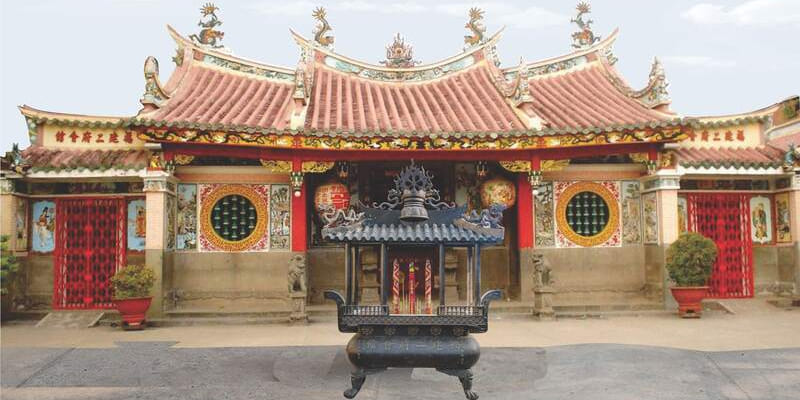
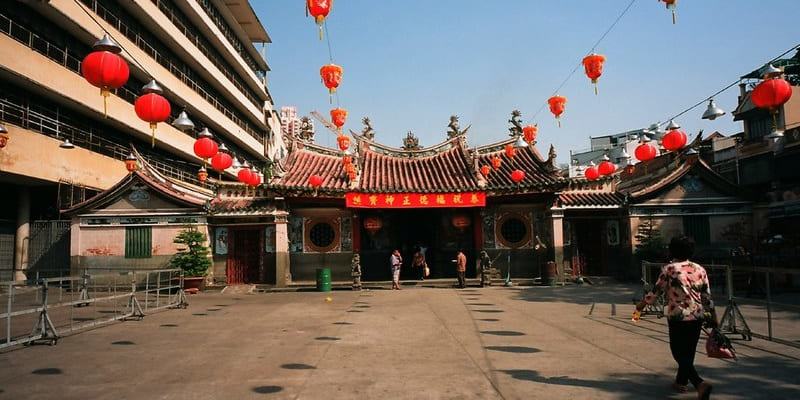
The pagoda is built in the shape of the character "Phu" and embodies the culture of the Chinese people
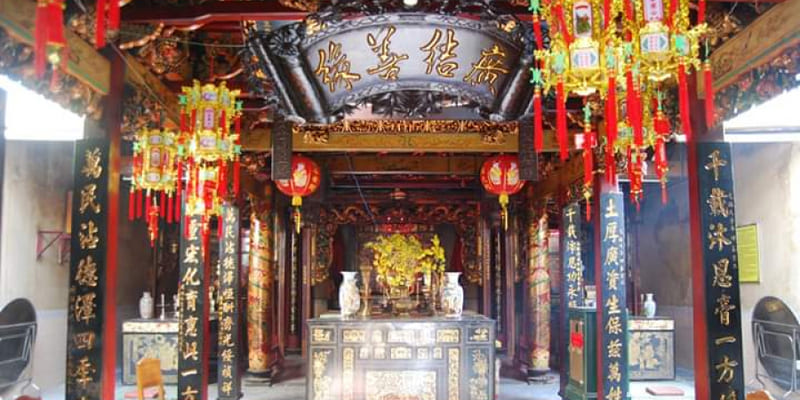
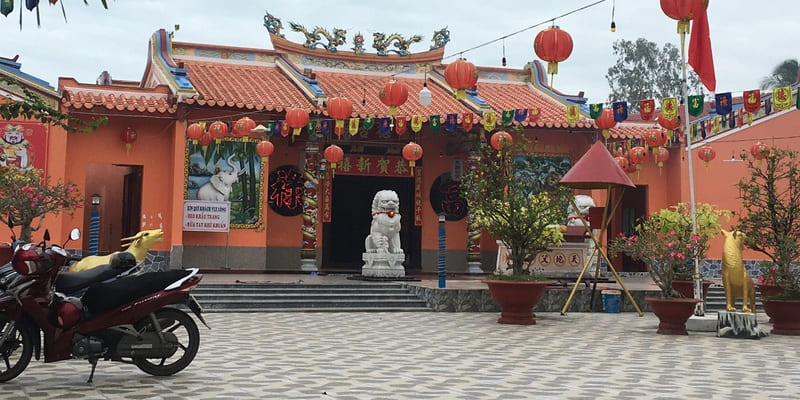
Hoa An Hoi Quan features distinctive Chinese architecture with curved tiled roofs, intricately carved pillars, and lively dragon-phoenix motifs. Every decorative detail, from the horizontal lacquered board, couplets to the deities, reflects traditional artistic style, creating a beauty that is both ancient and majestic. This architectural style not only captivates visitors but also preserves historical and cultural values through generations.
The main hall is divided into three sections and worships many deities
In the main hall, Trinh An (also known as Cam Thien Dai De) is worshipped; he is the fortune deity in the consciousness of the Chinese living in the Southwestern region. On the right is worshipped Ba Thien Hau Thanh Mau and on the left is Ong Phuc Duc.
In the empty spaces on both sides of the main hall, stone altars are built, featuring two famous cement reliefs "Ta Thanh Long" and "Huu Bach Ho" to create good feng shui for Ong Bon Pagoda.
Additionally, the pagoda also worships many other deities. Perhaps that is why Hoa An Hoi Quan not only attracts Chinese devotees but also draws many Khmer and Kinh people to come and worship.
The ancient tree and the pagoda yard create a serene and tranquil scene
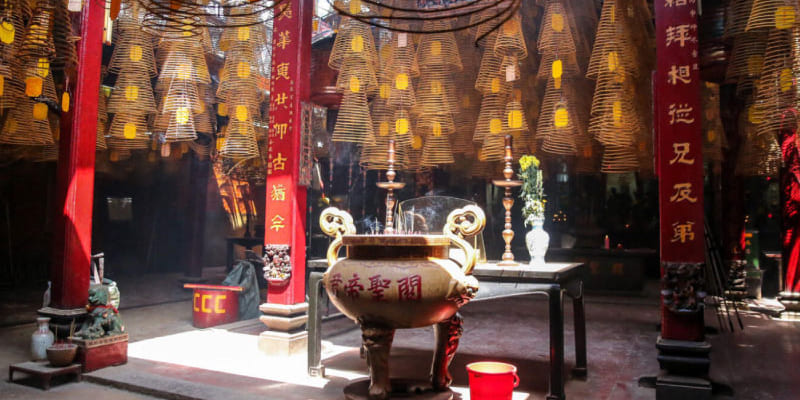
Entering Ong Bon Pagoda, visitors immediately feel the serene and peaceful atmosphere. The pagoda is harmoniously arranged between a spacious yard, lush green trees, and worship structures, offering an experience of both admiring the architecture and seeking inner peace.
For decades, the traditional festivals at Ong Bon Pagoda have remained intact, becoming a long-standing cultural and spiritual symbol of the Chinese community. Among them, the most distinctive festivals held annually at the pagoda are:
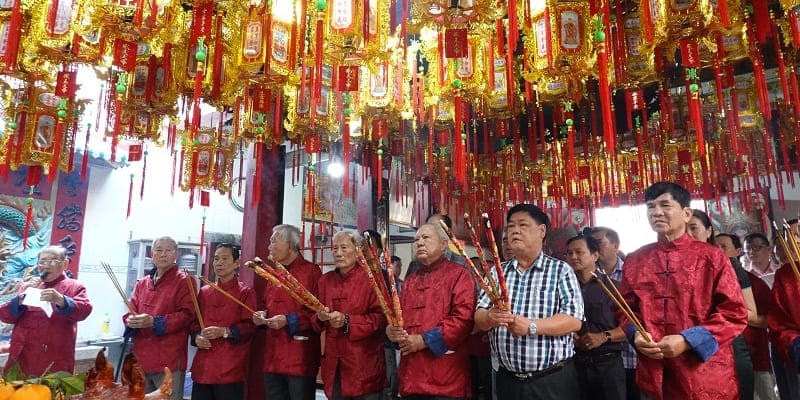
The festival is held on the 24th day of the 2nd lunar month each year, a time for devotees to remember and honor the protective deity of the pagoda. During the festival, local people and visitors gather to offer incense, fruits, cakes, and other offerings at Ong Bon's altar.
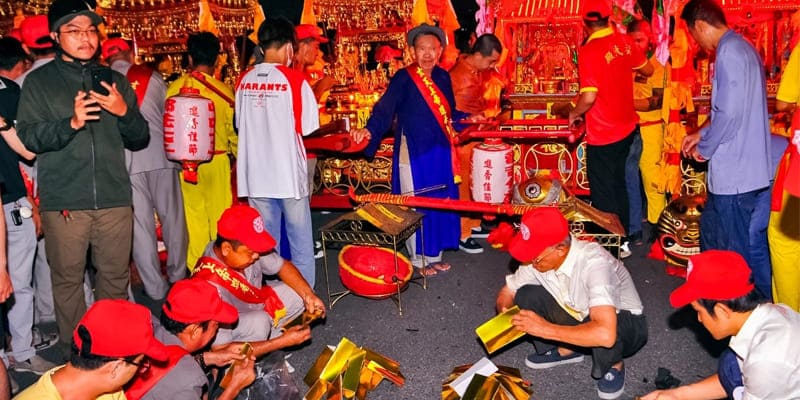
Carrying Ong Bon's palanquin around the pagoda in a lively festival atmosphere
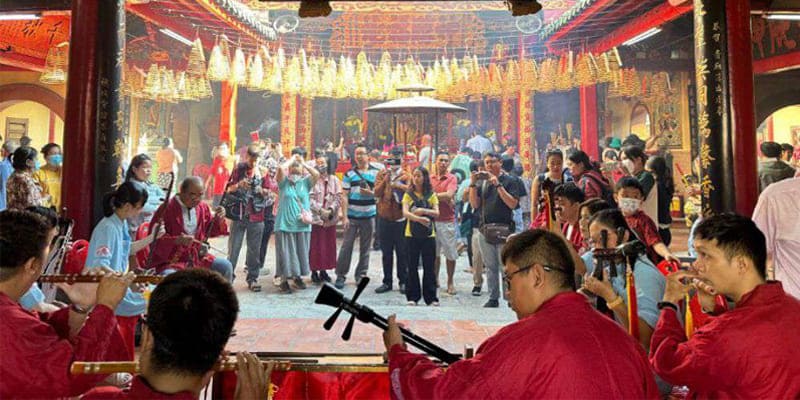
Especially, throughout the festival, many rituals will be organized, such as carrying Ong Bon's palanquin around the pagoda, lion dances, dragon dances, and folk opera performances, creating a solemn yet vibrant atmosphere. Additionally, the festival is also an opportunity for everyone to pray for peace, health, and good luck for their families.
The lantern auction festival usually takes place at the beginning of the new year, attracting a large number of local people and tourists to participate. During the festival, intricately decorated lanterns with various colors, unique patterns, and auspicious phrases are displayed. Participants will bid for the most beautiful lanterns, creating a lively and bustling atmosphere while also demonstrating community spirit and solidarity.
Local people and tourists participate in the lantern auction to pray for peace and good luck
All proceeds from the auction will be used by the pagoda for meaningful activities such as buying books, distributing rice to poor students, building schools or houses of love, etc. Therefore, the festival not only carries cultural and spiritual values but also spreads the spirit of sharing and compassion to the community.
To ensure a complete visit to Ong Bon Pagoda in the spirit of tranquility at the Buddha's door, visitors should pay attention to a few small but important details as follows:
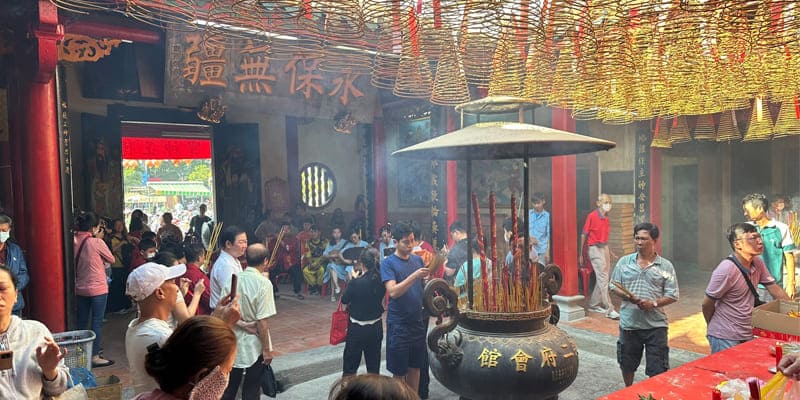
Full moon days and holidays are ideal times to visit Ong Bon Pagoda
Ong Bon Temple is not only a sacred spiritual destination but also a place that preserves the stories of beliefs and the lives of the Hoa community. Each festival, ritual, or architectural corner carries deep traditional beauty, allowing visitors to clearly feel the spirit of harmony and compassion. A visit to the temple will help you gain a deeper understanding of the local culture and find a moment of peace in your soul.
Let NVK Travel guide you to fully experience the beauty of faith and the peaceful atmosphere at the temple entrance. We are committed to providing you with a Soc Trang travel that is convenient, profound, and full of emotions.
Fill out the form and we will contact you