Language
Currency
Tram Chim National Park is a unique area that embodies the characteristics of the southwestern water region, where the entire national park is a wetland. With features that are unusual for tourists but familiar to the locals of the southwest, Tram Chim National Park boasts both poetic beauty and a rustic, close-knit atmosphere. Please read the article below from NVK Travel to learn more about this interesting destination.
Tram Chim National Park is located in Tram Chim town, Tam Nong district, Dong Thap province (now merged into Tram Chim commune, Dong Thap province), covering an area of up to 7,588 hectares. This is a habitat and migration site for many species of animals, with over 100 species of vertebrates, 40 species of fish, and 147 species of water birds, most notably the appearance of the red-headed crane (naked-neck crane) as a precious gift from Mother Nature to this land.
The plant ecosystem at Tram Chim National Park is incredibly interesting with natural factors such as sediment and topography. With soil characteristics ranging from gray soil on ancient sediment to new alluvial soil and saline soil on sedimentary foundations, it creates diversity for the natural plant communities here. A survey conducted in 2005-2006 discovered 130 plant species, showcasing the vast and rich living environment of Tram Chim National Park.
>>> See more: Rach Mieu Bridge: A Famous Waterway Check-In Spot in Tien Giang
The national park is one of the largest in Vietnam
The distance from downtown Ho Chi Minh City to Tram Chim National Park is about 160km. The journey is relatively pleasant. If you travel by personal vehicle such as a motorcycle or car, from Saigon, you just need to go straight along the Trung Luong - Tan An - Tan Thanh highway.
At the My An - Moc Hoa intersection, turn into Truong Xuan, and then just drive a little further to reach the old Tram Chim town. There, you will encounter many signposts leading to Tram Chim National Park. Alternatively, you can also choose a bus if you are unfamiliar with the route, but the travel time will take about 3 hours.
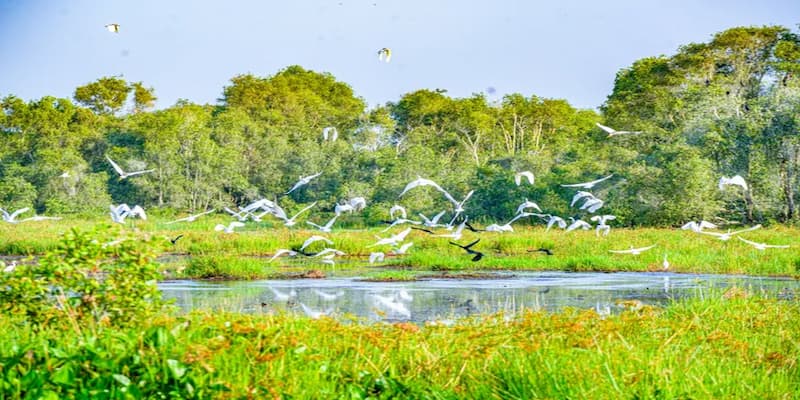
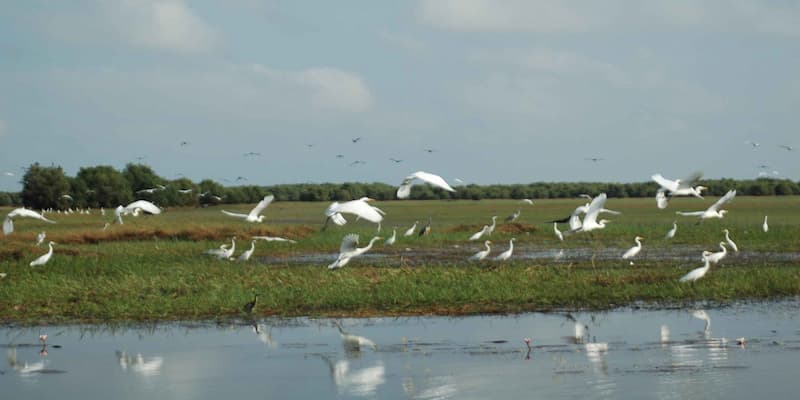
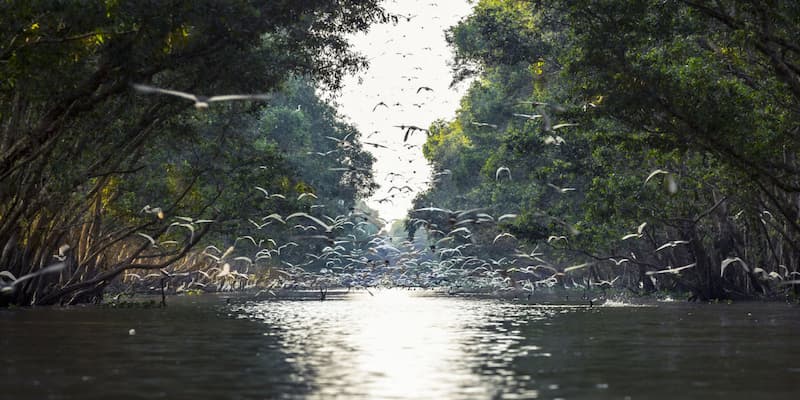
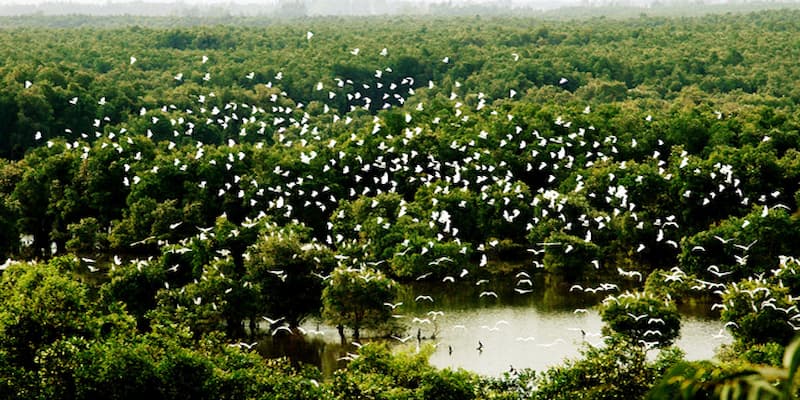
The place where storks fly freely in the sky
The entrance fee to Tram Chim National Park is relatively cheap, but there will be additional service fees when entering inside. The costs for those service experiences will be quite high compared to the entrance fee.
>>> See more: Truc Lam Chan Giac Zen Monastery: An Ideal Peaceful Destination
Visitation costs are very affordable and suitable for everyone
Tram Chim National Park, with its diverse ecosystem, offers visitors many different landscapes throughout the year. Below are the most popular tourist seasons at Tram Chim.
Flood season is one of the most famous times not only at Tram Chim National Park but also in the southwestern region in general. The flood season usually occurs from September to December each year. This is the time when lotus and water lily flowers bloom profusely, and it is also when various bird species breed. The flood season is the best time to understand the lifestyle and activities of the local residents, where visitors can paddle boats, catch fish, and participate in fishermen's activities such as netting and setting traps.
The impressive beauty of the national park during the flood season
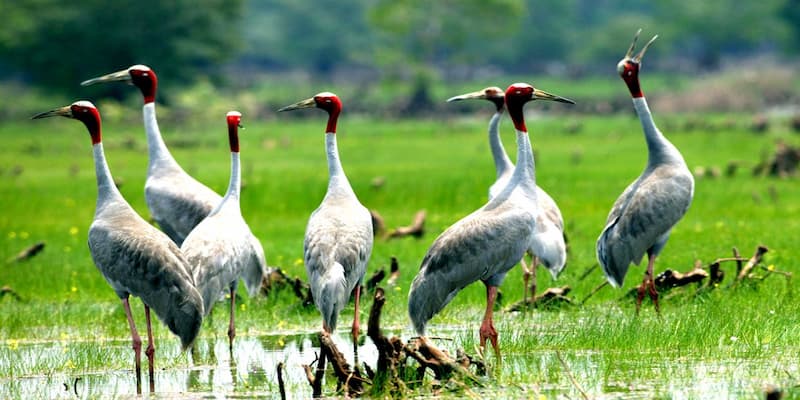
In addition to the time frame from September to December of the flood season, the period from January to June also has notable characteristics. This is when the southwestern region enters the dry season, with little rain and plenty of sunshine, providing a sense of security when visiting at this time, suitable for participating in water activities. Especially from February to May is the time when red-headed cranes come to feed, and the appearance of this species will leave a strong impression on visitors.
Photographing Red-Headed Cranes in the dry season of the year
During the period from December to February each year, visitors to Tram Chim National Park can enjoy the season of Hoang Dau An flowers. However, you should time your visit to see the flowers at the right moment. The flowers bloom simultaneously from around 11 AM to 2 PM, creating a vast, golden space that is incredibly poetic and romantic, reminiscent of a movie.
Admiring the beauty when the Hoang Dau An flower season arrives
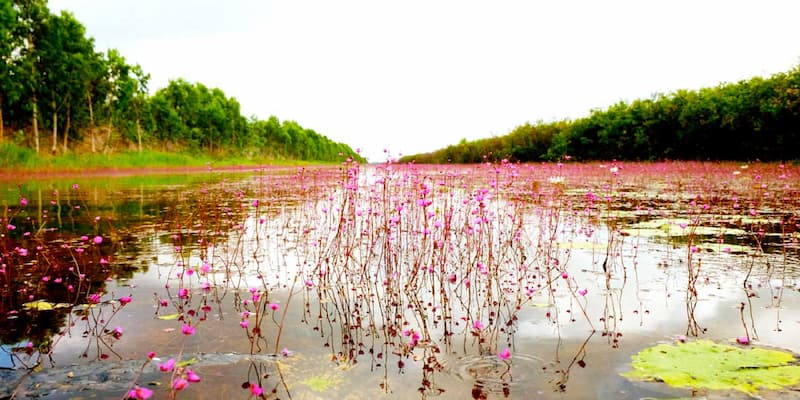
Nhi Can flowers, also known as purple water lily flowers, have a blooming cycle that starts from January and lasts for about 30 to 40 days. This is a type of submerged aquatic plant that thrives in low-lying areas and in acidic wetland conditions. This flower is a rare plant that holds significant importance for the ecosystem of Tram Chim National Park. The pink color of the flowers adds beauty and romanticism to the landscape on the river.
Illuminating the area when the Nhi Can flower season arrives
Tram Chim National Park can offer many diverse and fascinating experiences that visitors can look forward to.
With an area of over 7500 hectares, the plant community consists of more than 130 species interspersed. Thanks to this, the animal ecosystem is equally rich, including many species listed in the Red Book such as water lilies, gray-footed pelicans, and black-backed herons. This provides a variety of landscapes for visitors to comfortably take photos and check in.
Observing rare animals found only in the Red Book
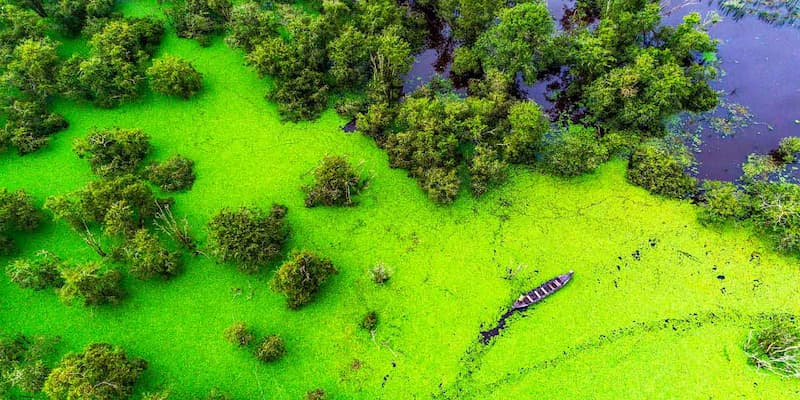
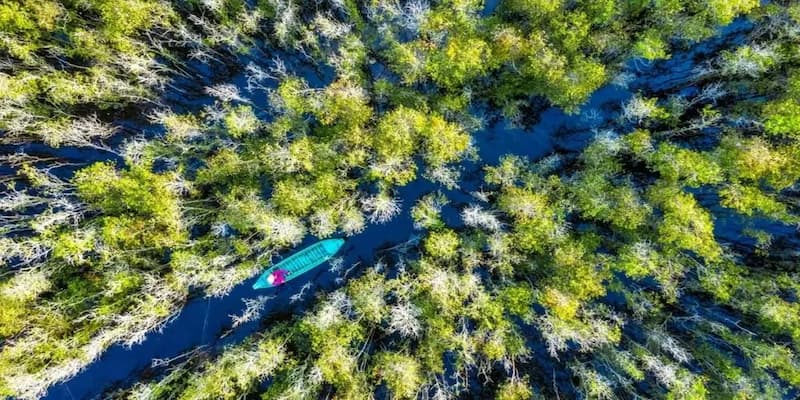
The water forest of Tram Chim brings a feeling of relaxation and freshness, with dense rows of trees rising from the water on both sides, occasionally a few storks may fly across the forest. Paddling is a suitable activity to relieve stress after a series of busy workdays, especially in the peaceful atmosphere of Tram Chim National Park.
Becoming a garden enthusiast while paddling on the river
The red-headed crane is a rare bird listed in the Red Book of Vietnam and also in the IUCN Red List worldwide. This bird migrates to many different countries for habitation, so the frequency of red-headed cranes appearing at Tram Chim National Park is not too high. Therefore, capturing a photo of a red-headed crane while visiting this site is incredibly valuable.
Another healing experience is living like the locals here. Escaping from the stressful city work, visitors to Tram Chim National Park will immerse themselves in the work and daily life of the local people. Tourists will paddle boats with fishermen, set nets, catch fish, or go to the fields to harvest rice with farmers. Although the work is hard, the joy and optimism of the residents will wash away all your pressures.
Experience the unique culture of the locals
When visiting Tram Chim National Park, tourists cannot miss the rustic dishes of the Mekong Delta such as grilled snakehead fish, field crab hotpot, braised fish, lemongrass eel, and linh fish hotpot with water lily... Especially during the lotus blooming season, visitors will also enjoy dishes made from lotus such as lotus stem salad, lotus root cooked with ribs, and chicken porridge with lotus seeds... You can visit riverside restaurants to enjoy not only the rich flavors of the dishes but also the peaceful, dreamy scenery of Tram Chim National Park.
Tram Chim National Park offers many accommodation services such as hotels and homestays for visitors to rest overnight. The price is quite reasonable, with a cost of about 150,000 VND for one person per night, but you need to book at least one week in advance. Additionally, this tourist area has resting stations in the forest that allow visitors to register to stay overnight; this experience is quite new, but you should consider carefully before making a decision due to the relatively risky safety level.
Tram Chim National Park is a scenic spot in Dong Thap Muoi, a place that preserves many precious animal species of Vietnam in particular and the world in general. It also has a rustic, peaceful charm, making it a perfect place for you to escape the hustle and bustle of urban life. If you have the need to travel to Dong Thap, do not hesitate to contact NVK Travel at nvktravel.com.
Fill out the form and we will contact you