Language
Currency
Nha Trang Oceanographic Institute is a place that takes visitors on a journey to explore the mysteries of the ocean through thousands of rare specimens. Not only prominent in its role as a scientific research center, it is also an ideal tourist attraction, offering a fresh perspective on the world of marine life. Let's explore this interesting stop with nvktravel.com through the article below!
Before starting the tour, having a clear understanding of general information will help you easily arrange your schedule and enjoy the exploration journey more fully.
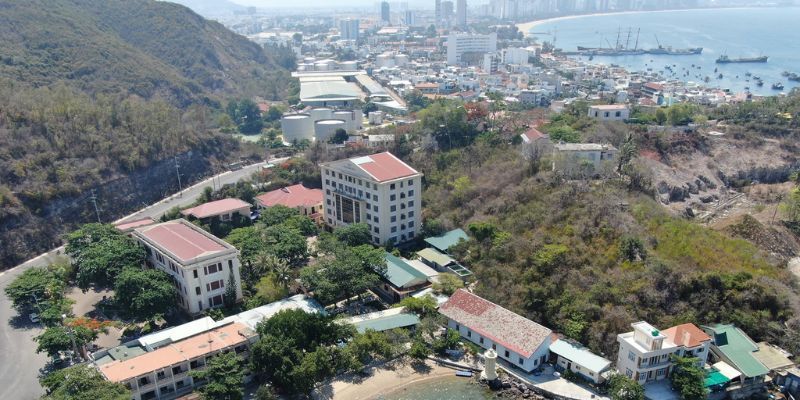
Aerial view of Nha Trang Oceanographic Institute
>>> See more: Vinpearl Land Nha Trang - A-Z Guide to Visiting Hon Tre
Nha Trang Oceanographic Institute is located at 1 Cau Da, Vinh Nguyen Ward, about 6 km southeast of the city center. It boasts a wonderful location near the sea, facilitating water environment research, specimen collection, and the establishment of specialized exhibition areas. Notably, the large space combined with the mild climate of the coastal region makes it an attractive destination in the Nha Trang travel journey.
The entrance to Nha Trang Oceanographic Institute is located at 1 Cau Da
>>> See more: Explore Thanh Toa Bridgein Hue Unique Architecture
Nha Trang Oceanographic Institute was established in 1922 under the decree of the Governor-General of Indochina, originally called the Indochina Fisheries Oceanographic Office. By 1930, the facility was expanded, marking an important development in marine research during this period.
In its early operational phase, the Institute received support from the De Lanessan survey ship, which expanded the research scope from the South of the Gulf of Thailand to the North of the Gulf of Tonkin and further to the waters around the Spratly and Paracel Islands.
In 1954, the facility was transferred to the management of the Southern government. The period of national division posed many challenges for research activities, but the Institute continued to maintain coastal survey trips and collect specimens for scientific classification. From 1967, along with the establishment of the Hai Phong Marine Research Institute, Vietnam's marine science developed two major research centers.
After 1975, the two facilities merged into the Nha Trang Marine Research Institute, under the Vietnam Academy of Science. This unit continued to be upgraded to meet modern research requirements. By January 2025, Nha Trang Oceanographic Institute will further expand by incorporating the Nha Trang Research and Technology Application Institute.
Nha Trang Oceanographic Institute has a history of formation spanning over 1 century
Overall, the ticket prices are quite affordable, accessible for families, students, and tourists who want to learn about marine knowledge combined with practical experiences.
After understanding the basic information, the next step is to choose a suitable means of transport to get to the Oceanographic Institute. From the center of Nha Trang city, you can choose:
Traveling by motorbike to the Oceanographic Institute to enjoy the scenery
Stepping into Nha Trang Oceanographic Institute, you will be overwhelmed by the vast exhibition scale and the rich ecosystem that recreates a vibrant ocean world. Below are must-see highlights that visitors should not miss when visiting here:
Visitors can admire the large aquarium that recreates the deep-sea living environment
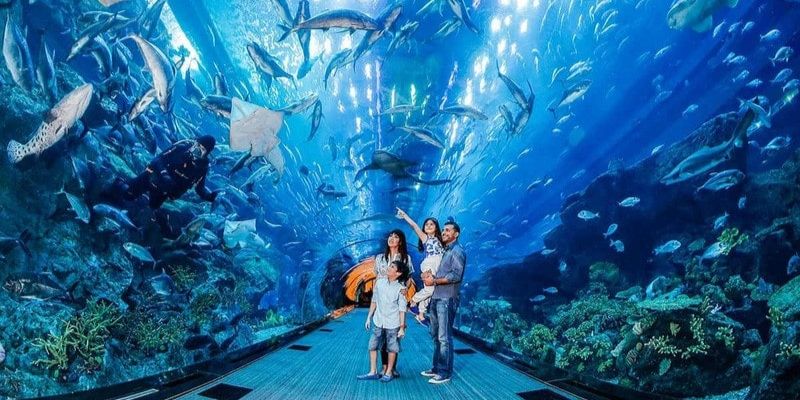
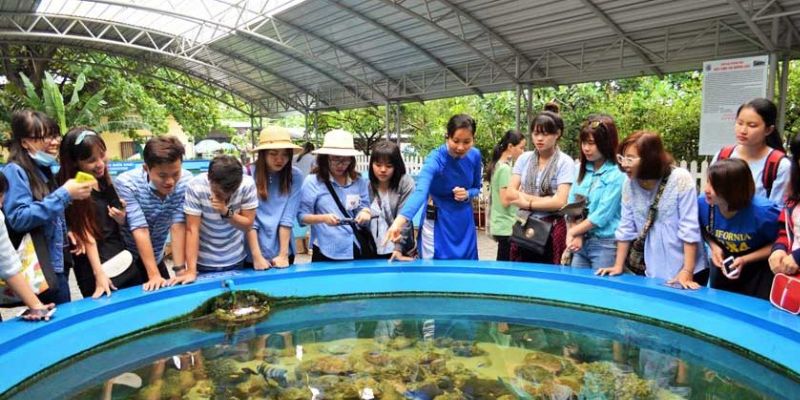
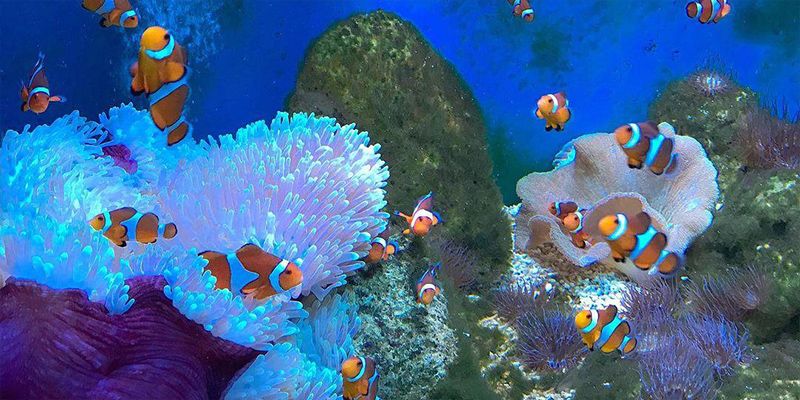
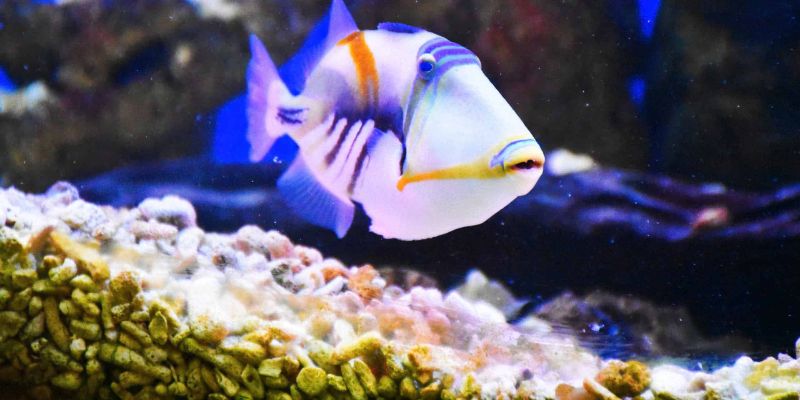
The marine life pond is the first stop, where large transparent aquariums recreate a miniature ocean scene. Through the glass, you can easily observe many colorful fish, strange creatures, graceful soft corals, and even aquatic species that only appear in deep waters. The gentle light combined with the blue water creates a feeling as if you are standing under the real ocean.
Right next to it is a meticulously constructed mangrove model. Here, visitors will understand the role of this special ecosystem in protecting the coastline, creating habitats for many species of fish and filtering water. The models of mangrove trees and mud layers help viewers access knowledge in a visual and intimate way.
The mini mangrove forest inside Nha Trang Oceanographic Institute
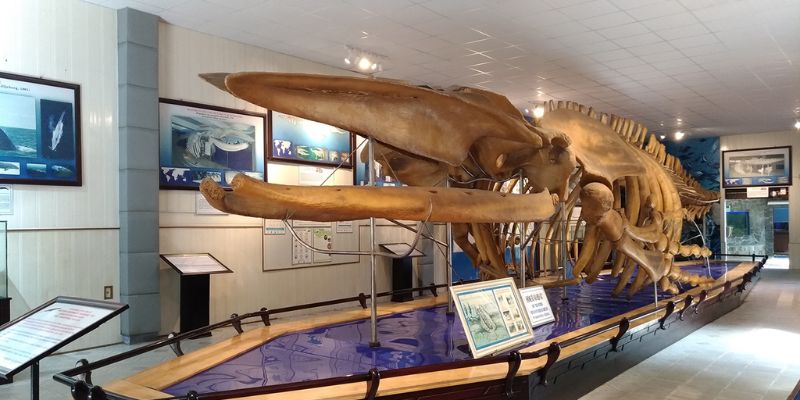
One of the most beloved areas by many visitors in Nha Trang Oceanographic Institute is the giant specimen exhibition room. Each specimen is meticulously preserved, holding special scientific and historical value.
The most prominent is the skeleton of a whale nearly 18 meters long, which has been meticulously restored. In addition, there are large shark bones, rare sea turtle species, giant grouper, and many other specimens with impressive sizes.
Not only displayed for viewing, each specimen is detailed with captions, helping viewers understand their living environment, biological characteristics, and research value. This area fascinates both children and adults.
The impressive restored skeleton of an 18m whale
Artificial reefs are one of the educational display areas of Nha Trang Oceanographic Institute. This area introduces models of reefs created by humans to support the restoration of degraded marine environments.
By using special concrete blocks, ceramics, and environmentally friendly materials, artificial reefs provide new habitats for corals, fish, and bottom-dwelling organisms. Here, you will learn about how these structures are implemented, their roles, and the successes that the Institute has achieved in the research application process.
Artificial reefs simulate a stunning underwater ecosystem
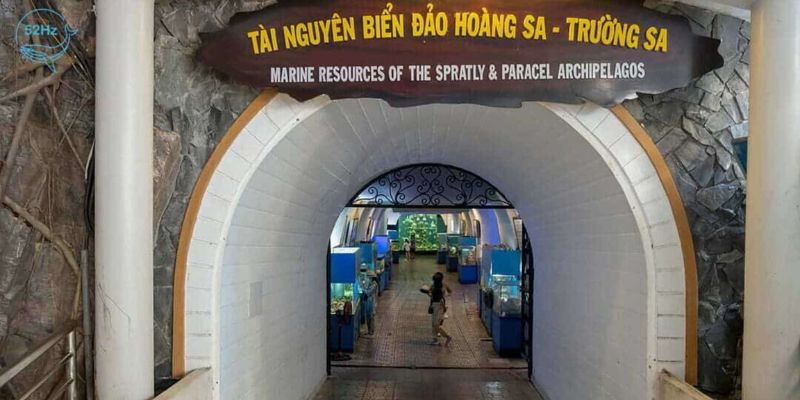
This exhibition area holds deep significance, as it reflects the natural conditions, resources, and biodiversity of the Hoang Sa - Truong Sa archipelago. Many valuable documents have been compiled from the Institute's field survey trips, including ancient maps, research images, and specimens collected from the two archipelagos.
Through the modern display system, visitors can gain a clearer understanding of the richness of the ecosystem here, from the vibrant coral reefs to the fish species living in the offshore waters. At the same time, the area also provides a wealth of historical information, contributing to raising awareness about Vietnam's maritime sovereignty.
The documentation room about the Hoang Sa and Truong Sa archipelagos
Concluding the tour at the Nha Trang Oceanography Institute is the marine biodiversity exhibition area, which houses over 24,000 specimens from various groups of organisms. From fish, crustaceans, mollusks to corals and rare species, everything is scientifically arranged according to each thematic area. In this area, visitors will have the freedom to explore:
The unique bioluminescent marine life exhibition
In addition to real specimens, the area also integrates 3D models, ecological maps, and illustrative images, providing a visual and easily digestible learning space. This is a place that helps viewers gain a more complete understanding of the richness of Vietnam's seas and the challenges in conservation efforts.
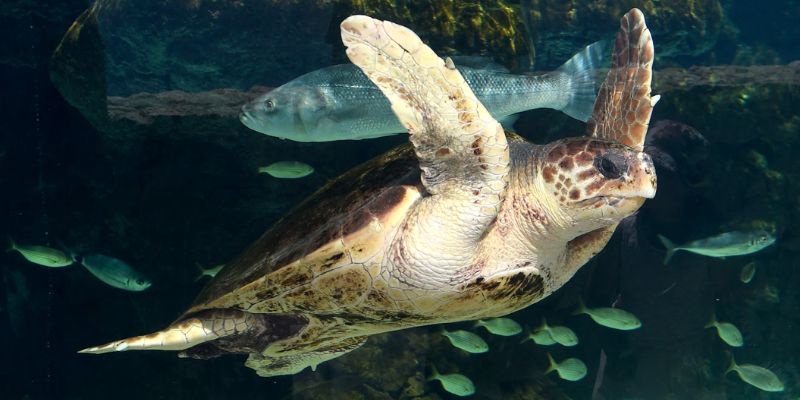
The preserved sea turtle specimen introduced at the Oceanography Institute
After exploring the fascinating exhibition areas, you should remember a few small notes to make your visit smoother:
Stay close to small children for a safe exploration of the Oceanography Institute
The journey to explore the Nha Trang Oceanography Institute opens up profound insights into the ocean world. At the same time, this place is also an ideal stopover that offers many interesting educational experiences for all ages. If you want your trip to be even more complete, consider choosing Nha Trang travel services from nvktravel.com for attentive companionship and support!
Fill out the form and we will contact you