Language
Currency
Luy Lau Ancient Citadel is one of the most valuable archaeological sites in Bac Ninh, closely tied to the history of urban formation, trade, culture, and religion in Northern Vietnam from the early centuries AD. Over nearly two millennia, many traces of Luy Lâu have been preserved underground and within today’s rural landscape. Let’s explore!
Luy Lau Ancient Citadel is located in the Lũng Khê area, Thanh Khuong ward, Thuan Thanh town, Bac Ninh province, according to place names used in previous archaeological records and publications. This land belongs to the historic Kinh Bắc region, situated along the ancient Dau River.
Looking at today’s map, Luy Lau is not too far from Hanoi, making it a suitable destination for day trips to explore history from both Hanoi and Bac Ninh.
Luy Lau once played an important role in the administrative system of Giao Chi during the period of Northern domination. Historical sources and archaeological findings show that this place was once a major political, economic, and cultural center. In particular, Luy Lau is considered one of the important sites in the early formation and development of Buddhism in Vietnam.
What impresses visitors when learning about Luy Lau is the contrast between the imagined image of an ‘ancient citadel’ and what remains on the ground. Today, travelers do not see a grand fortress with complete gates. Instead, there are earth mounds, rampart sections, architectural traces, and relics scattered among the rural landscape. This simplicity makes the journey of exploration more fascinating, as each trace must be placed in its historical context to fully understand its value.
Luy Lau appears in many ancient records, showing the important position of this area in the history of Giao Chi. Later archaeological studies continued to provide material evidence to compare with historical writings.
According to researchers, Luy Lau was not only an administrative center. It was also an urban area with developed economic and handicraft activities. Many archaeological discoveries show that the inhabitants here once engaged in production, metallurgy, and bronze casting.
Notably, fragments of bronze drum casting molds found at Luy Lau are valuable materials for research on metallurgical techniques and the continuation of Dong Son culture. Some studies even indicate that this area was once a remarkable center of metallurgy and bronze casting.
This helps broaden the perspective on Luy Lau. If it is only seen as a fortress serving administrative or military purposes, that would be insufficient. Archaeological traces show that this was once an urban area where many activities took place simultaneously, from administrative management and handicraft production to trade and religious life.
Another outstanding value of Luy Lau is its role in the history of Buddhism in Vietnam.
The Luy Lau area is associated with the system of pagodas and the Four Dharmas belief, including famous sites such as Dau Pagoda and To Pagoda. This is considered one of the important ancient Buddhist centers of Vietnam.
The location of Luy Lau along ancient waterways also contributed to cultural exchange. From here, cultural, religious, and technical elements from many regions could be received, transformed, and integrated with the local culture.
Therefore, when visiting the Luy Lau area, combining the exploration of the ancient citadel with the surrounding ancient pagoda system will make the trip more meaningful.
According to archaeological studies, Luy Lau was an earthen citadel with a rectangular structure. Research on its scale shows a length of about 680 m and a width of about 520 m, forming a very large area compared to many other ancient citadel sites remaining in the North.
Around the citadel there used to be a system of protective moats. The Dau River to the west formed an important geographical feature, while the other areas show traces of water moats built together with the rampart system.
Today, the ancient citadel has undergone a long process of transformation. Part of the area has become a residential zone, while some sections of the earthen ramparts can still be recognized in the terrain.
The remaining citadel area covers more than 132,000 m², mainly in the southwest. Some sections of the earthen walls are still about 1–2 m high and the top of the citadel is about 1.5 m wide.
This is something to note when visiting. Luy Lau is not the type of relic where visitors can see the entire ancient structure intact. Its value lies largely in the stratigraphy, foundation traces, and distribution of artifacts.
>>> See also: Dai Bai Bronze Casting Village – A Thousand Years of Heritage
Excavations at Luy Lau have brought a large amount of material about the life of ancient inhabitants. The group of artifacts discovered is quite diverse, including:
These artifacts are not only valuable for display. For archaeologists, the location of each group of artifacts within soil layers helps determine the dating, function of structures, and changes of the area through different historical periods.
A trip to explore Luy Lau will be more complete if combined with relics located within the same cultural space.
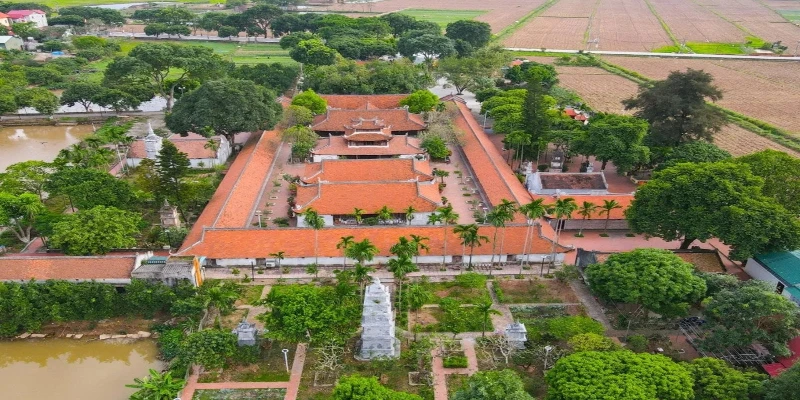
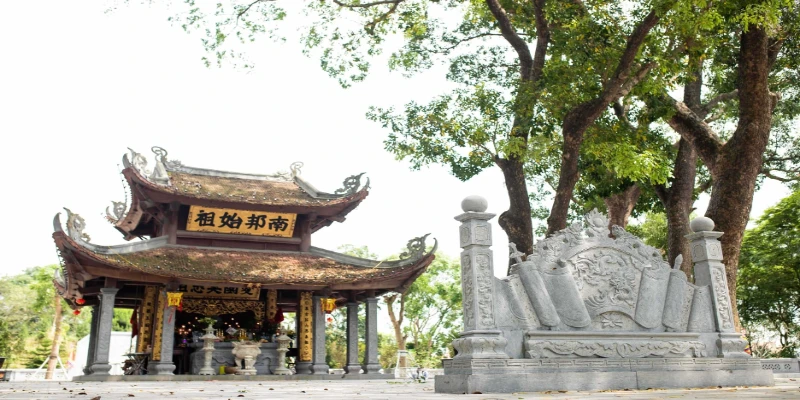
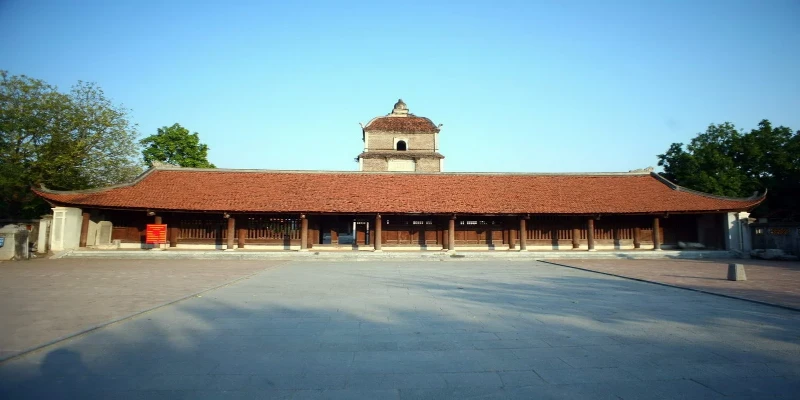
Dau Pagoda is one of the most typical sites of the Luy Lau area. The pagoda is associated with the early history of Buddhism in Vietnam and the Four Dharmas belief system.
From the ancient citadel, moving to the Dau Pagoda area is not too far, so visitors can combine both sites in the same itinerary.
What is remarkable is that when standing in the space of the ancient pagoda, you can better imagine the religious role of Luy Lau in the past. The ancient citadel reflects the urban and administrative aspect, while the ancient pagoda adds a perspective on the spiritual life of the community.
To Pagoda, also known as Phuc Nghiem Tu, is also part of the relic system linked to the Buddhist history of Luy Lau. This site has value in terms of belief and cultural history.
If you enjoy learning about the history of Buddhism in Vietnam, you should spend more time in this area instead of only visiting the ancient citadel briefly.
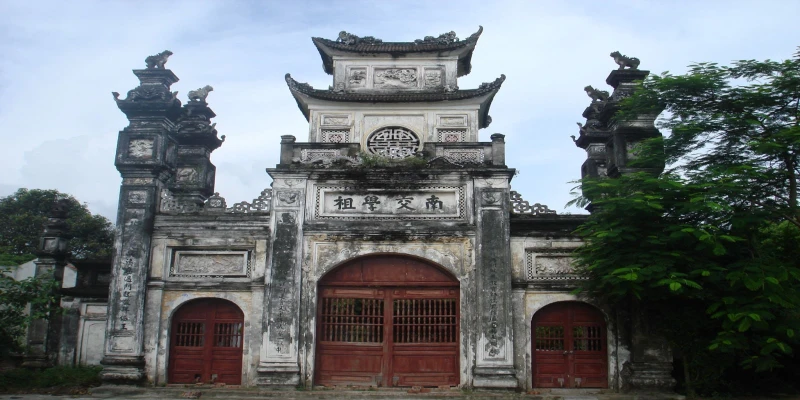
The Luy Lau area is also associated with the temple and tomb of Si Nhiep. In the historical research of Luy Lau, Si Nhiep is a figure often mentioned when discussing the role of this area during the Giao Chi period.
The traces related to the temple, stone bridge, and surrounding landscape contribute to forming a heritage complex with many layers of history.
Before going, you should check information about the relic area and the sites that can be visited at the actual time. Since Luy Lau is still an archaeological research site, some areas may be used for excavation or preservation work.
If you want to understand the relics more clearly, you should read a little about the history of Luy Lau in advance. With some background knowledge, observing the earthen ramparts or ancient foundations will become much more interesting.
You should also combine visiting the ancient citadel with Dau Pagoda and nearby relics. This way helps save travel time and creates a cultural exploration journey of Kinh Bac with a clear theme.
Another note is not to dig, pick up, or move bricks, ceramics, or objects suspected to be antiquities. Even very small items can have great research value if they remain in their original stratigraphic position.
>>> See also: Tam Phu Temple (Phu Day): Experience of Pilgrimage and Seeking Blessings from A–Z
If you have the chance to explore Bac Ninh, you should spend time visiting Luy Lau and combine it with Buddhist relics, temples, and pagodas in the area. For those who love history, archaeology, and Vietnamese culture, this is a special journey because the deeper you study, the more you realize that behind the seemingly simple earth mounds lies a very important part of the history of the Kinh Bac region.
If you are planning to explore Bac Ninh and want to combine Luy Lau Ancient Citadel with Dau Pagoda, But Thap Pagoda, and other outstanding cultural destinations, refer to the itineraries at NVK Travel for more suitable options for your trip.
Fill out the form and we will contact you