Language
Currency
The Hoang Su Phi rice terraces are a masterpiece crafted by local residents over hundreds of years. During the harvest season, the golden terraced fields wind around the mountainsides, creating a majestic landscape that attracts travelers from all over.
Hoang Su Phi is located in the far western region of Tuyen Quang Province following the administrative boundary merger. Effective July 1, 2025, Ha Giang Province was merged into Tuyen Quang Province under Resolution 202/2025/QH15. Hoang Su Phi borders China and sits at an average elevation of 1,000–1,500 meters above sea level.
The Hoang Su Phi rice terraces cover an area of over 3,700 hectares, stretching across 24 communes and towns. Of this area, approximately 1,380 hectares of terraced fields across 11 communes have been recognized as a National Scenic Relic: 6 communes designated in 2012—Ban Luoc, San Sa Ho, Ban Phung, Ho Thau, Nam Ty, and Thong Nguyen—along with 5 additional communes added in 2017. This terrace system is estimated to be around 300 years old, carved out and expanded through generations of labor by ethnic minority communities such as the La Chi, Red Dao, Nung, Hmong, and Tay.
Because Hoang Su Phi features steep, heavily dissected terrain, local residents ingeniously created terraced fields for wet-rice cultivation to retain water, prevent soil erosion, and maximize arable land. These cascading slopes hold not only agricultural value, but also reflect human ingenuity and adaptation to nature. Each ethnic group here contributes to the rich cultural identity of Hoang Su Phi.
Compared to Mu Cang Chai or Sa Pa, Hoang Su Phi still retains its pristine, peaceful charm and is far less commercialized.
>>> Read more: Cam Luong Sacred Fish Stream - A Sacred Landmark in Thanh Hoa
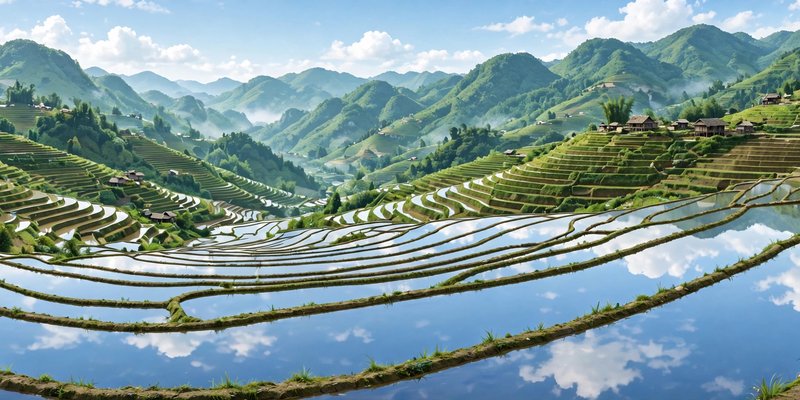
The scenery of Hoang Su Phi transforms with each season. May and June mark the water-pouring season: as the first rains arrive, water cascades down from mountain streams, filling the terraced fields and reflecting the blue sky and white clouds. Viewed from above, the entire region looks like a giant mirror.
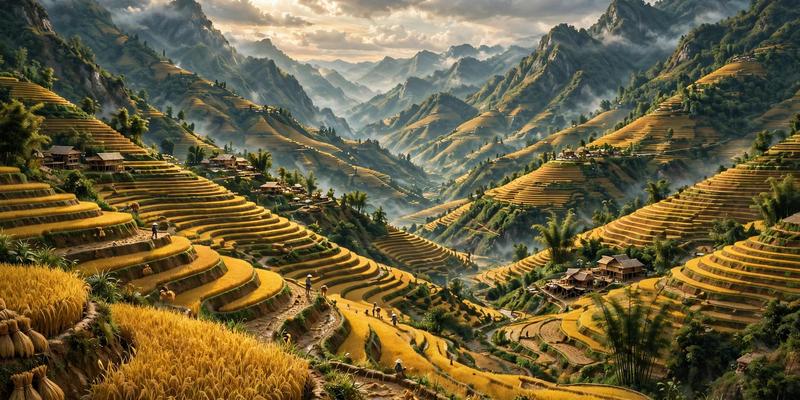
July and August bring the young rice seedling season: the fields are blanketed in lush green, dotted with local farmers transplanting rice. From late September to early October is the golden harvest season: the entire mountainside is draped in a shimmering golden coat, with terraced lines winding gracefully like streams of golden light. This is the most stunning time of the year.
November through February is ideal for cloud hunting and watching the sunrise, though highland winters can be quite cold, so be sure to pack plenty of warm clothes.
Ban Phung is the most beloved destination among visitors. Situated at an elevation of over 1,200 meters, the village boasts hundreds of terraced fields stacked layer upon layer, resembling waves of rice winding around the mountainsides from afar. Home to the La Chi ethnic people, Ban Phung is widely regarded as having the most beautiful rice terraces in Hoang Su Phi.
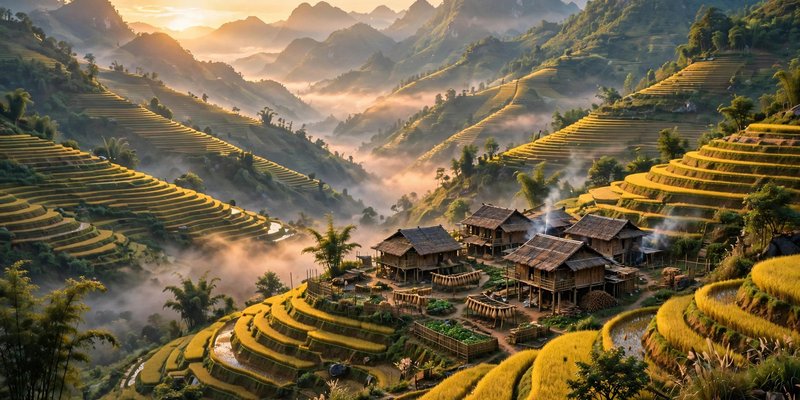
Ho Thau is famous for its majestic scenery and panoramic views overlooking the valley. In the early morning, as mist blankets the landscape, the golden terraced ridges emerge faintly through the clouds, making the area look like a traditional ink-wash painting.
Thong Nguyen, Nam Dich, and Nam Khoa are also communes with stunning terraces. Nam Ty Commune features S-shaped terraced fields that are considered among the most breathtaking within the National Relic system.
Hoang Su Phi has strongly developed its community-based tourism model. Visitors can stay in traditional stilt houses, share meals with local families, and take part in transplanting rice, picking tea leaves, and weaving brocade. In Ban Phung, many homestays are built right along the mountainsides, offering direct views overlooking the rice terraces.
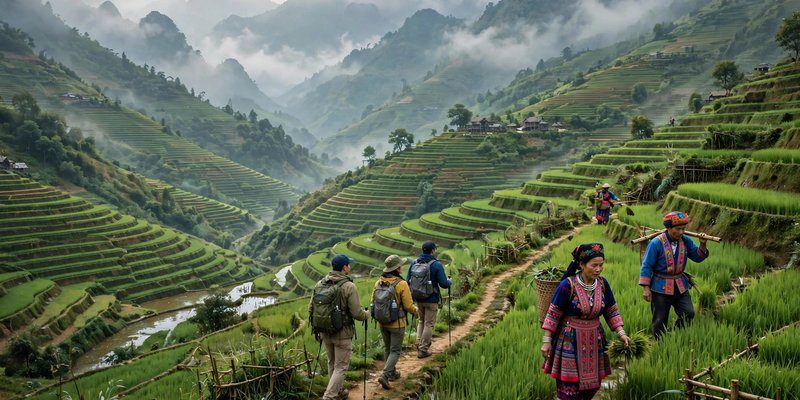
If you love adventure, Hoang Su Phi is a paradise for trekking and photography, featuring hiking trails that wind between rice fields, cut through forests, cross streams, and pass by villages such as Nam Khoa, Ban Luoc, and San Sa Ho. Additionally, thrill-seekers can conquer Tay Con Linh Peak at 2,428 meters or Chieu Lau Thi at 2,402 meters, the two highest mountains in the region.
Hoang Su Phi is a cultural crossroads of many ethnic groups, each with its own customs, festivals, and traditional attire. On weekends, the Hoang Su Phi market becomes a vibrant cultural gathering spot: Dao, Nung, and Hmong people dressed in colorful traditional outfits bring agricultural produce, livestock, and brocade textiles to trade and sell. Visitors can immerse themselves in the bustling atmosphere and sample local specialties like thang co (traditional horse meat stew) and leaf-fermented corn wine.
Hoang Su Phi cuisine is rich with the authentic flavors of the mountains and forests: au tau porridge, terraced-field carp, free-range local pork, five-colored sticky rice, and corn wine are all prepared by hand to preserve their natural taste. During the harvest season, many homestays host terraced-field culinary festivals where guests can enjoy local delicacies and join cultural exchanges with indigenous residents.
From Hanoi, Hoang Su Phi is about 300 km away, taking 7–8 hours to reach. The most popular route follows National Highway 2 through Tuyen Quang to the Bac Quang intersection, then turns onto Provincial Road 177 up to Vinh Quang Town. The mountain pass from Bac Quang to Hoang Su Phi stretches roughly 50–60 km with winding curves and steep inclines, requiring an experienced driver or a chartered car service accompanied by a local guide.
Travelers can take an overnight sleeper bus from My Dinh Bus Station, with ticket prices ranging from 250,000 to 300,000 VND, arriving early the next morning. From the Bac Quang intersection, transfer to a local bus or van heading to Vinh Quang, which takes about 2 hours. If traveling by motorbike, start early and stay overnight in Tuyen Quang City before continuing the next morning, as navigating the mountain pass at night is very dangerous.
Hoang Su Phi offers numerous homestays in Ban Phung, Ho Thau, and Thong Nguyen, with room rates ranging from 200,000 to 500,000 VND per night. During peak season, book early to secure rooms with the best terrace views. A few practical tips: pack warm clothes, sturdy sneakers, and a lightweight raincoat; mobile signal can be unstable, so carry enough cash; respect local customs and ask permission before taking photos of residents; and consider traveling in a group or with a local guide.
>>> Read more: Ham Rong Mountain: An A-to-Z Journey Exploring the Sacred Peak
Day 1: Depart from Hanoi to Tuyen Quang, then continue up to Hoang Su Phi. Check into a homestay in Ban Phung. In the afternoon, admire the terraced fields and capture sunset photos. In the evening, enjoy cultural exchanges and have dinner with local residents.
Day 2: Wake up early for cloud hunting and watch the sunrise over the terraces. Explore Thong Nguyen and Nam Khoa with light trekking. In the afternoon, visit the local market and savor highland cuisine. Stay overnight in Ho Thau.
Day 3: Visit the ancient rice terraces of Ban Luoc or hike up Chieu Lau Thi Mountain if time permits. Shop for brocade textiles and corn wine as souvenirs. Return to Hanoi.
In short, the Hoang Su Phi rice terraces are not merely a sight to behold, but a place to slow down and feel the rhythm of nature and mountain life. Standing amidst layer upon layer of golden terraces as the breeze ripples the rice stalks like a golden sea, you will feel an extraordinary sense of peace.
If you are planning a trip to Hoang Su Phi during the harvest season, contact NVK Travel for tailored advice on a Ha Giang itinerary, terrace-view homestay bookings, and all-inclusive private transfers.
Fill out the form and we will contact you