Language
Currency
Son Doong Cave is globally renowned for being the largest natural cave in the world. With such a vast area, there are many interesting things for visitors to explore. To learn more fascinating information about the Son Doong cave system in Ninh Binh, let's follow the article right after from NVK Travel!
When it comes to tourism in Quang Binh, the most prominent and frequently mentioned destination is undoubtedly Son Doong Cave. With its miraculous natural features, this place attracts a large number of visitors.
Son Doong Cave is located in Phong Nha - Ke Bang National Park, one of the most famous tourist spots in Quang Binh. It is also part of an underground cave system connected to over 150 other caves near the Laos border of Vietnam.
The cave was first discovered in 1991 by a local resident named Ho Khanh. He accidentally found the cave while seeking shelter inside to avoid a heavy rain while he was in the forest. However, it wasn't until 2009, when an expedition team from the British Cave Research Association (BCRA) arrived in the area, that he had the opportunity to announce the existence of the mysterious cave.
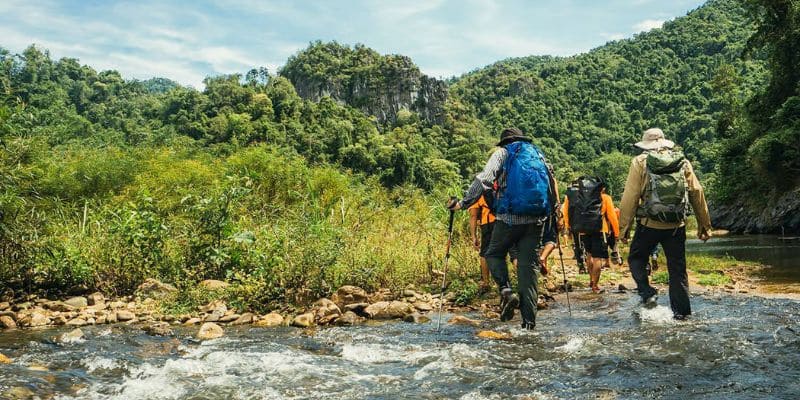
To find the way back to the cave, Mr. Khanh and the expedition team had to traverse dense forests with difficult terrain. The cave entrance was not accurately located on Google Earth, so the whole team had to rely entirely on Mr. Khanh to lead the way.
Upon arrival, the expedition team ventured deep into the cave, conducting measurements, taking photos, and collecting valuable scientific data. Son Doong Cave has been recognized as a world heritage site due to its outstanding features: it is the largest natural cave, providing a unique interior environment with pristine forests, an underground river, and distinct weather conditions.
The cave was only discovered a little over 30 years ago
>>> See more: Top 12 Quy Nhon Beach with Picturesque and Poetic Scenery
Son Doong Cave is located in the oldest limestone mountain system in Asia, dating back up to 400 million years. However, through the analysis of fossil sediment samples, researchers have discovered that this cave is relatively young, only about 2 to 3 million years old.
The formation of this cave is closely related to the faults in the Truong Son mountain range and the strong erosion process of the Rao Thuong River. Continuously for millions of years, the flow through the mountain carried carbonic acid that helped dissolve calcium in the limestone.
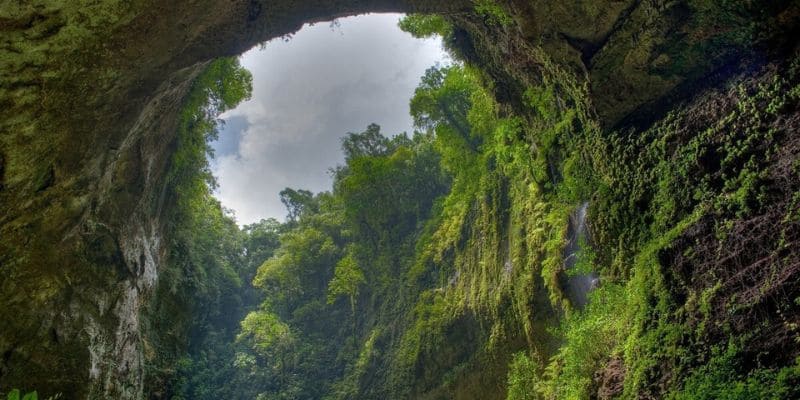
This process led to the erosion and formation of giant tunnels inside the rock mountain. Additionally, cracks in the cave ceiling have also eroded over time and collapsed, creating large sinkholes, thus connecting the cave with the outside world.
With these impressive figures, Son Doong Cave has officially set a world record, surpassing Deer Cave in Gunung Mulu National Park, Malaysia, becoming the largest and most impressive natural cave on the planet.
Since the survey was completed, Son Doong Cave has been confirmed by National Geographic Magazine in 2009 as the largest cave in the world. The total volume of the cave reaches 38.5 million m3, far exceeding Deer Cave in Malaysia - which previously held the record with a total volume of only 9.5 million m3.
In 2013, the Guinness World Records officially recognized Son Doong as the largest natural cave. By 2015, the cave was further recognized by Guinness for its largest volume at 38.5 million m3.
Son Doong Cave proudly holds many world records
>>> See more: Cu Lao Xanh - A Precious Gem in the Sea of Quy Nhon
In 2014, The New York Times honored Son Doong Cave as one of the 52 most interesting travel destinations in the world. In the same year, the cave was filmed and broadcast live for the first time on the Good Morning America program of ABC News in 2015.
Also in 2015, National Geographic released a sharp 360-degree photo set with sound inside the cave. By 2019, DJ Alan Walker created a music video titled "Alone P.II" at Son Doong and released it on Youtube.
In 2020, Business Insider recognized Son Doong Cave as one of the 20 most amazing natural wonders. Additionally, in 2021, the 360-degree photo set of the cave on National Geographic became a viral virtual reality tour during the pandemic.
On April 14, 2022, to commemorate Son Doong being recognized as the largest cave in the world, Google Doodle honored the cave on Google's homepage in 18 countries, including Vietnam, the UK, Brazil,... Recently, on November 26, 2023, Son Doong appeared in episode 6 of Planet Earth III - Extreme - a famous nature documentary by BBC.
Son Doong cave exploration tours are organized from January to August each year. From September to December, the cave will temporarily halt tourism activities to ensure the safety of visitors and allow the ecosystem to recover. Below are the ideal time frames you may consider for your trip:
The ideal time to visit here is from January to August each year
The cave has a vast area, thus it possesses many unique and attractive landscapes. Among them, some notable stops include:
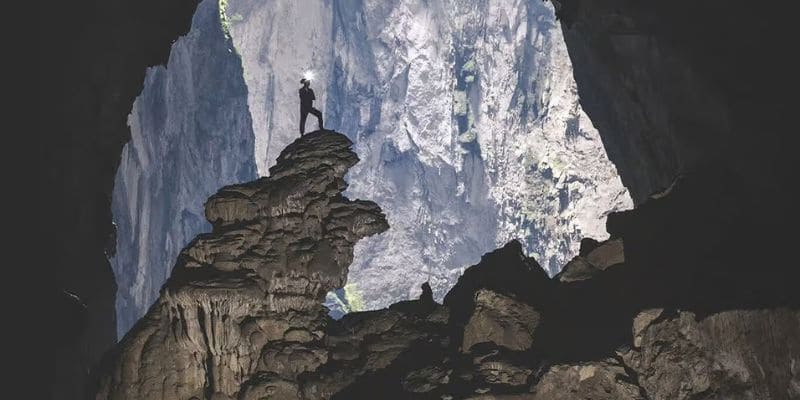
Located deep underground with a length of nearly 9 km, Son Doong Cave features gigantic cave domes, some reaching up to 200 m high and over 150 m wide. The natural "skylights" soaring high allow shimmering light to penetrate deep into the cave, creating conditions for a lush primeval forest to thrive inside.
The cave is home to about 200 species of diverse plants, including lush moss carpets and trees over 30m tall. Additionally, the vast underground river and many deep lakes create a habitat for many special fish species. These fish have developed excellent adaptation abilities to life in the darkness of the cave.
Besides the rich vegetation, the cave is also a habitat for many mysterious creatures yet to be discovered. Biologists have recorded over 7 new species inside the cave, including fish, spiders, and scorpions, all sharing the common feature of transparent bodies and no eyes - a characteristic that demonstrates nature's remarkable adaptation.
The cave has an extremely diverse ecosystem of flora and fauna
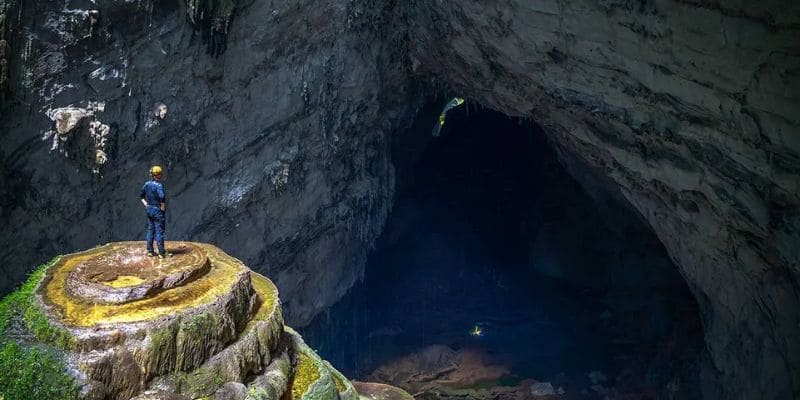
The interior space of Son Doong Cave is so vast that it can accommodate skyscrapers, and even Boeing airplanes can fly through. Inside, you will find streams, waterfalls, and primeval forests, creating a magical world underground.
Especially, the cave has a climate independent of the mystical cloud layers and cool breezes. The temperature here is always maintained at 22-25 degrees Celsius in summer, which is 8-12 degrees Celsius lower than outside.
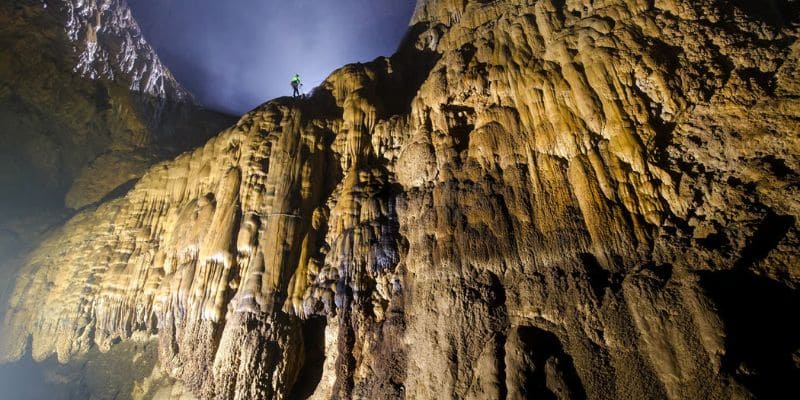
The Hope and Vision cave branch stands out with its gigantic space, which is the largest area in the complex. It is estimated that this space could accommodate a skyscraper taller than 40 floors and is also large enough for a Boeing 747 to fly through. Additionally, it is home to the tallest stalagmite in the world, with an incredible height of 80m.
The vast Hope and Vision cave branch features a stalagmite reaching 80m high
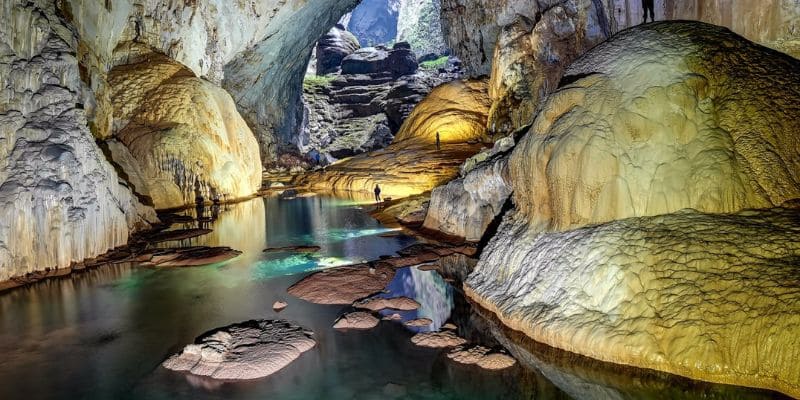
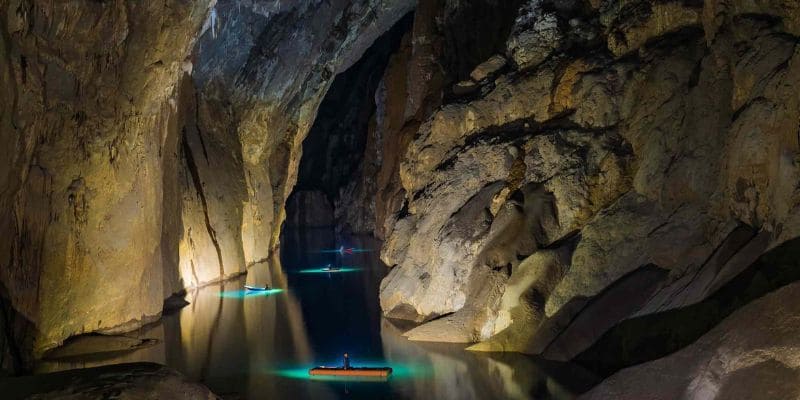
Inside the largest cave in the world, there is an underground river flowing from Hang En and Hang Khe Ry, originating from Laos. To enter the Dog's Foot area, visitors must cross the stream twice at chest-deep levels. When the water rises, there will be elevated pathways using ladders for easier and safer movement.
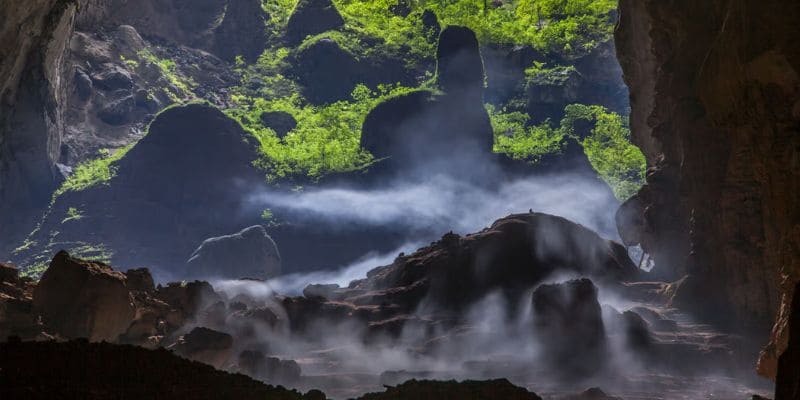
As the stream flows into the cave, the cascading water creates waterfalls ranging from 5 to 10 m high with echoing sounds, making the space shrouded in mist that frequently covers it. This underground river disappears near the first sinkhole, about 4.5 km from the cave entrance. The presence of this river has enriched the diverse ecosystem in Son Doong cave, creating mysterious landscapes with layers of clouds and mystical fog.
The underground river with clear water
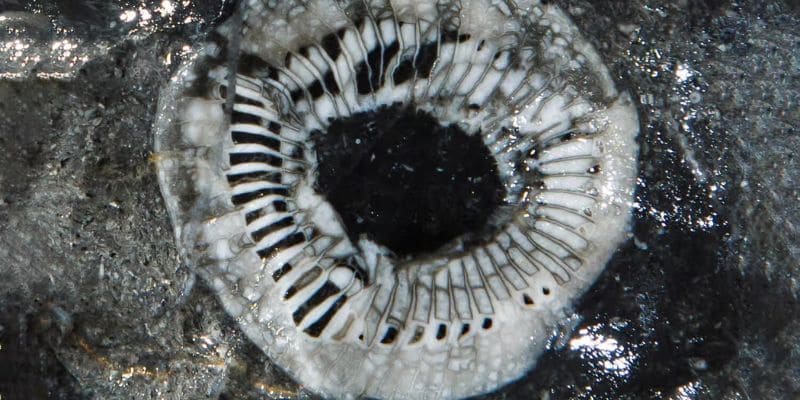
The fossil corridor is located right next to the underground river, lying 40m below the campsite at Sinkhole 1. This is where remnants of limestone rocks are preserved, featuring fossilized images of snails, clams, fish skeletons, and many types of corals that existed hundreds of millions of years ago.
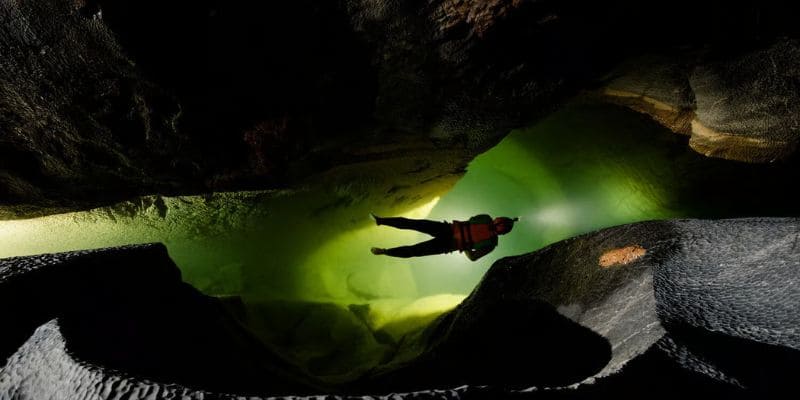
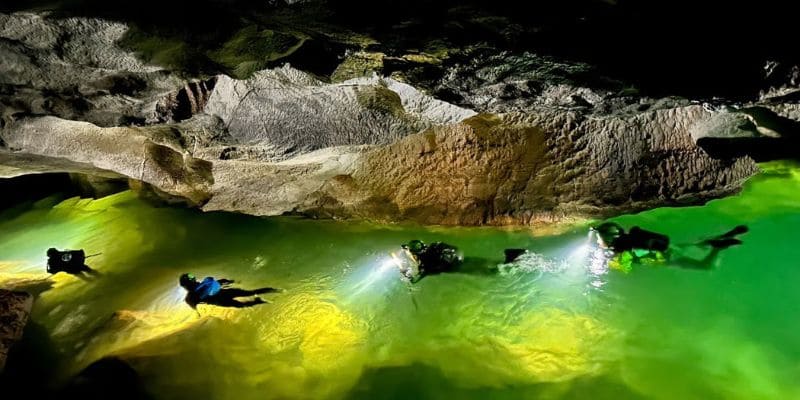
This area also has an underground lake with temperatures ranging from 16 to 17 degrees Celsius. Here, visitors can wear life jackets and use headlamps to swim and relax after a challenging day of trekking in Hang En. According to travelers who have taken the Son Doong cave tour, this is an experience you cannot miss.
Many fossils have been discovered here
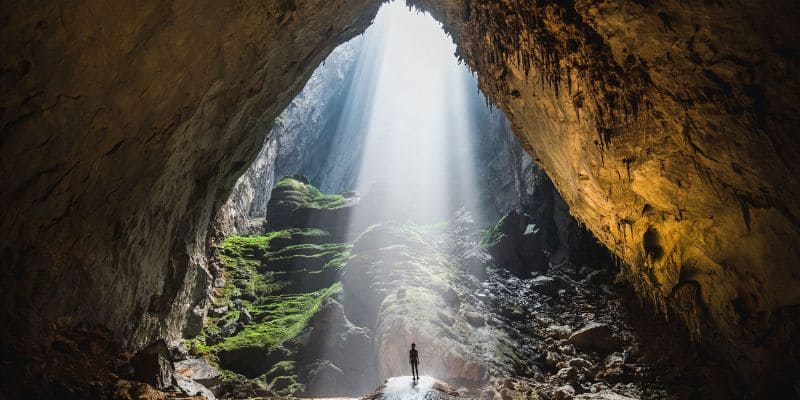
Sinkhole 1 is the area where the cave dome collapsed, creating a skylight that opens to the outside. The lowest point of this area is at an elevation of 450 m above the cave floor and is also where the underground river ends.
On sunny days, this area receives sunlight from around 11 AM to nearly 1 PM. Especially from January to March each year, these rays penetrate deep into the cave, illuminating the vast interior.
The sunlight combined with the mist created by the waterfall forms a unique ethereal scene that cannot be found anywhere else. Notably, the stunning image of Sinkhole 1 in Son Doong cave has been honored by Google Doodle on its search homepage.
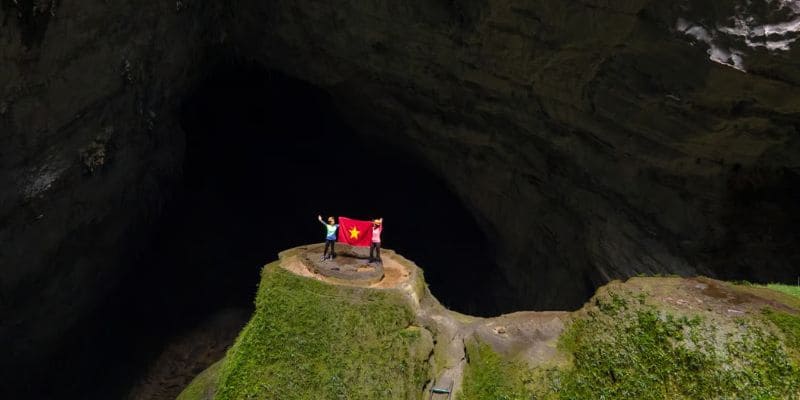
The Dinosaur's Eye sinkhole possesses an unreal beauty
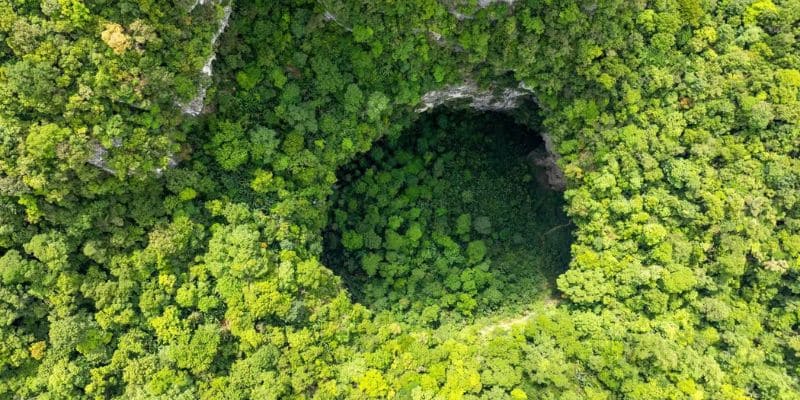
About 1 km from Sinkhole 1 is a sinkhole with a unique primeval forest space lying 200m underground among the overlapping limestone mountains. Leaving Sinkhole 1, you will see a gentle slope leading to this vast garden.
Light from the sinkhole's mouth shines through, allowing ferns to thrive, creating a lush pathway resembling a road into a fairy tale world. This forest has many towering ancient trees, and to cross here, you need to walk for more than 30 minutes to reach the campsite.
The fairy-tale paradise garden in sinkhole 2
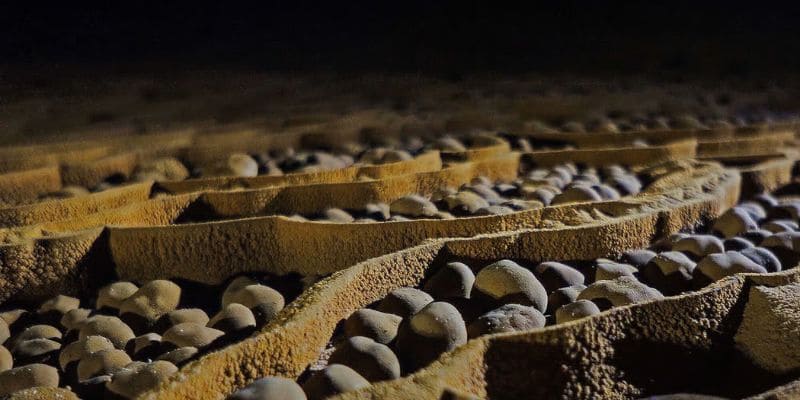
The pearl cave consists of calcium stones formed from calcium-containing droplets falling from the cave ceiling onto the calcium layers below. These pearls come in various shapes and sizes, from as small as a pea to as large as a baseball. The cave has many areas where pearls are formed, showcasing an incredibly captivating beauty, especially when the light shines through during drizzly days, making them sparkle.
Although very beautiful, these pearls are actually just ordinary calcium and have no commercial value. When exposed to sunlight, they lose their beauty and become dull. Besides Son Doong cave, some other caves in Phong Nha - Ke Bang National Park, such as Hung Thoong, also have similar sparkling pearls.
The pearls formed by natural creation
The Vietnam Wall reaches a height of up to 90 m and a slope of 45 degrees, which was once a significant challenge for the expedition team of the Royal Caving Society when exploring Son Doong cave. This is a massive stalagmite that blocks the pathway leading to the cave's exit. Currently, this area is equipped with safety systems so that everyone can experience conquering this majestic wall.
The magnificent and unique Vietnam Wall
At the foot of the magnificent Vietnam Wall, there is a lake over 600 m long, with water levels changing with the seasons. In the dry season, the lake dries up, revealing a muddy path deep to the hips, making it extremely difficult for explorers to navigate.
In contrast, during the rainy season, the water rises, transforming this area into a lake stretching over 500m with a beautiful turquoise color. Visitors who come at this time have the opportunity to experience kayaking or rafting on the lake to the cave's exit.
The beautiful lake at the Passchendaele corridor
When exploring Son Doong cave, visitors will experience many unique activities that create unforgettable memories.
When visiting this ecological experience tourism area, visitors must try swimming in the cave at least once. The water source in the cave flows continuously, making it extremely clear, clean, and cool. However, there are some areas with strong and swift currents, so you need to follow the guide's instructions to ensure safety.
An exciting swimming experience in Son Doong cave
Photos of sunlight filtering through the mist have become a hallmark of Son Doong cave. To admire and capture this beautiful moment, you should visit here in the spring when the weather is dry, and sunlight shines through the sinkholes. The mist covering the area will enhance the scene, allowing you to capture the magical beauty of nature.
Capture the imprint of nature with a dreamy frame
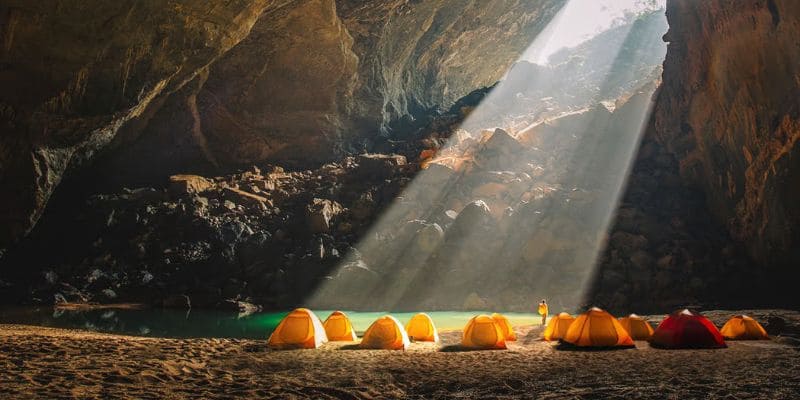
The two camping areas in the cave are considered among the most beautiful and unique campsites in the world. Located at the edge of the sinkholes, you can enjoy the stunning starry sky on clear nights, providing a perfect sense of closeness to nature.
Overnight camping experience in the wilderness inside the cave
To have the most complete and wonderful exploration trip, tourists need to pay attention to some things as follows:
Prepare thoroughly for a more complete exploration journey of Son Doong cave
Son Doong Cave - one of the greatest natural wonders in the world - is a pride of Quang Binh tourism in particular and Vietnam in general. With its colossal scale, pristine ecosystem, and fascinating exploration stories, this cave complex is a destination that travelers should visit at least once in their lifetime. If you want to learn more about Quang Binh travel tours (which include the Son Doong cave exploration), customers should contact NVK Travel immediately for advice and to receive great price offers!
Fill out the form and we will contact you