Language
Currency
The Mekong Delta, a land of winding rivers and vast rice fields, is always beautiful in its own way through each season. The journey to discover which season is the best to travel to the Mekong Delta opens up experiences from vibrant floating markets, waterlogged cajeput forests, to traditional Tet festivals rich in Southern culture. Each season brings its own colors and emotions, making the heart flutter. This article shares the climate characteristics and the ideal months to explore the authentic Mekong Delta.
The Mekong Delta, with provinces like Can Tho, An Giang, Tien Giang, Long An, has a tropical monsoon climate, divided into two main seasons: the dry season (November-April) and the rainy season (May-October). The average temperature year-round ranges from 25-32°C, with high humidity (70-80%), creating a warm and pleasant feeling but sometimes sweltering in summer. The dry season features gentle sunshine, little rain, and clear waters, ideal for boating at Cai Rang floating market or admiring the rice fields in Long An.
The rainy season, especially from August to November, is the flood season, when the Mekong River rises, turning the plains into vast seas of water, lively floating markets, and the cajeput forest of Tra Su immersed in green. Each season has its own unique beauty.
The climate of the Mekong Delta is influenced by the Southwest monsoon (rainy season) and the Northeast (dry season), creating diversity in the landscape. In January-February, the air is cool, Tet flowers bloom profusely, suitable for participating in festivals. In June-August, there is much rain, but the An Giang lotus fields and bright yellow water lily flowers make the scenery more poetic.
From September to November, the floodwaters bring fish and birds, making Tra Su forest and Dong Thap Muoi vibrant. And to answer the question of which season is the best to travel to the Mekong Delta, it is indeed the flood season.
Which season is the best to travel to the Mekong Delta to fully enjoy
>>> See more: Summer Travel in the Mekong Delta: The Journey to Explore the Golden Sunshine Season
The question of which season is the best to travel to the Mekong Delta depends on the desired experience: the bustling festive atmosphere, peaceful nature, or the unique flood season. However, based on actual journeys through the provinces of Can Tho, An Giang, Tien Giang... the flood season is considered the most ideal time.
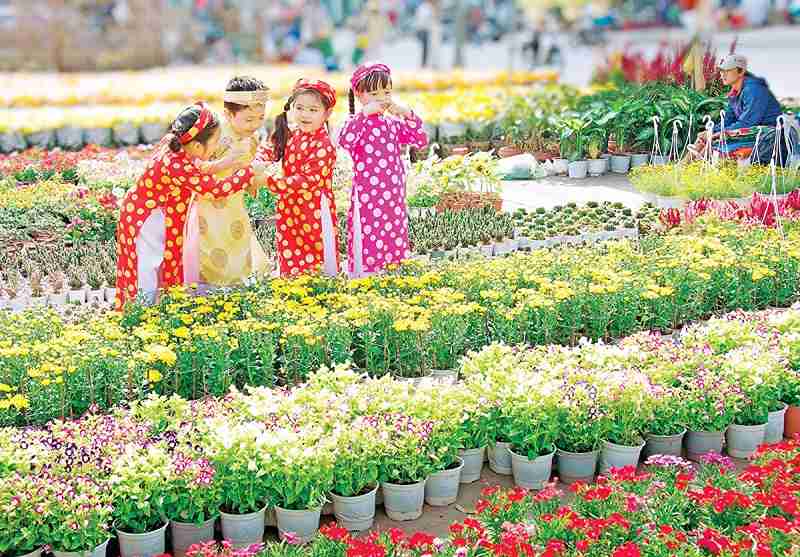
Spring in the Mekong Delta, especially from January to March, is a time of cool weather (22-28°C), clear skies, and Tet flowers blooming throughout the countryside. Can Tho is vibrant with Tet flower markets along Ninh Kieu Wharf, where chrysanthemums, marigolds, and yellow apricot blossoms showcase their colors, bringing a sense of excitement. Rowing a boat through Cai Rang floating market at 6:00 AM, the sounds of vendors, the aroma of noodle soup, and the early sunlight sparkling on the river create a light-hearted feeling.
Vibrant Tet flower markets in the Mekong Delta
>>> See more: Self-Guided Travel Experience in the Mekong Delta - Exploring from A to Z
In Chau Doc, the Ba Thien Hau Temple festival (1st lunar month) attracts thousands of people, with lion dances, palanquin processions, and a sacred atmosphere. Walking through the countryside of Tien Giang, the lush green rice fields, children flying kites evoke childhood memories.
Activities: Visiting Tet flower markets (free), taking photos with flower boats at Cai Rang. Enjoying My Tho noodle soup (30,000 VND/bowl) at Quan Sau Hao (Tien Giang). Renting a motorbike (100,000 VND/day) to explore the fruit orchards in Cai Be, picking rambutan (20,000 VND/kg). Spring is ideal for culture lovers and the festive atmosphere, but early booking for homestays is necessary due to high demand.
Summer in the Mekong Delta, from April to June, features hot weather (28-34°C), but the lotus fields bloom profusely and the fruit orchards are laden with fruit, bringing a refreshing feeling.
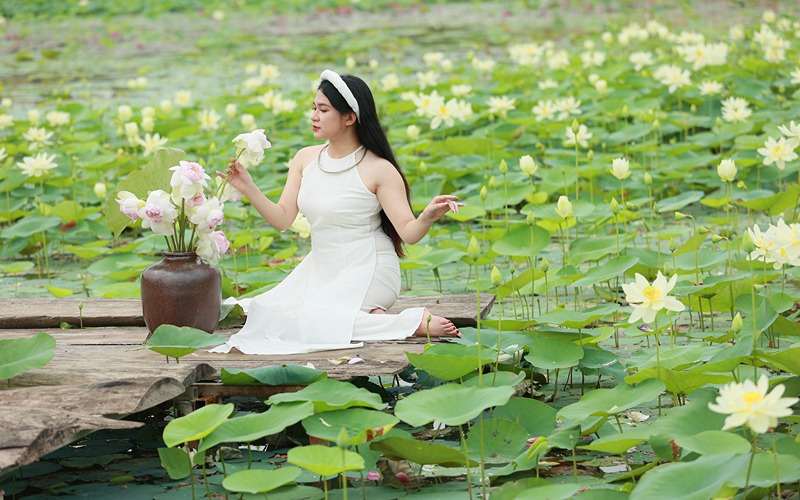
In An Giang, the Thot Not lotus fields stretch wide, boats glide through the canals, the fragrance of lotus fills the air, and the sounds of birds create a tranquil soul. Taking photos among the lotus fields, wearing a conical hat, feels like immersing in a countryside painting.
In Tien Giang during rambutan and durian season, visiting Vinh Kim fruit orchards, picking fresh fruit, and enjoying under the cool shade of trees.
Can Tho during this season is peaceful, walking along Ninh Kieu Wharf at dusk, the Hau River breeze cools, the lights sparkle, creating a relaxing feeling.
Activities: Renting a boat (50,000 VND/boat) to admire the Thot Not lotus fields, enjoying chicken salad with grapefruit leaves (120,000 VND/portion) at a riverside restaurant. Visiting fruit orchards (50,000 VND/ticket), buying grilled snakehead fish (50,000 VND/kg). Taking photos at Ninh Kieu Wharf and the pedestrian bridge. Summer is suitable for nature and fruit lovers, but sunscreen SPF50+ and hats are necessary.
Lotus fields bloom profusely in the summer of the Mekong Delta
The flood season, from August to November, is the most beautiful time in the Mekong Delta, when the Mekong River rises, turning the plains into vast seas of water.
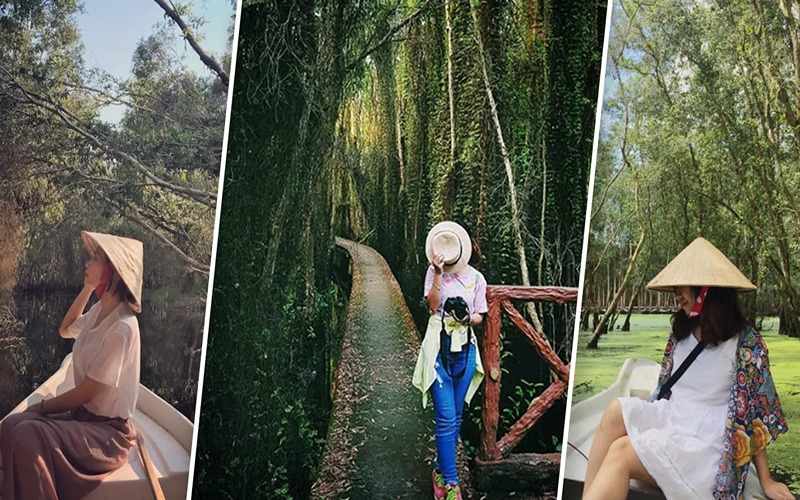
The Tra Su cajeput forest (An Giang) is flooded, covered with green water lilies, white storks flying across the sky, and the sound of flowing water creates a natural symphony. Rowing through the canals, admiring the bright yellow water lily flowers, it feels like stepping into another world.
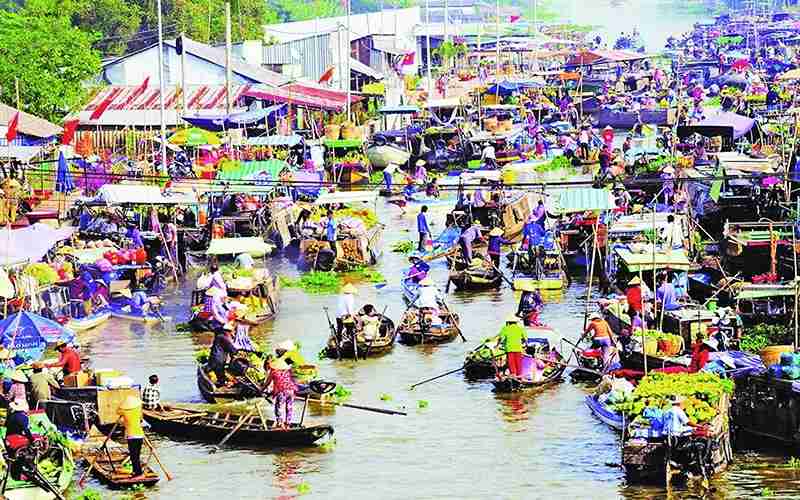
Cai Rang floating market is livelier than ever, with boats carrying fish, noodle soup, and laughter echoing. In Long An, Dong Thap Muoi transforms into a vast lotus lake, boats glide past, and the aroma of grilled snakehead fish wafts from thatched huts. The flood season is not only beautiful but also offers unique culinary experiences, with fish, water lily flowers, and fish hotpot.
Activities: Renting a boat (150,000 VND/boat) to explore Tra Su, taking photos with water lilies and white storks. Enjoying fish hotpot with water lily flowers (150,000 VND/portion) at Tra Su Restaurant. Strolling through Cai Rang floating market (100,000 VND/boat), buying mangoes (20,000 VND/kg). Visiting in September-October to see the peak of the floodwaters. This season is the perfect answer to the question of which season is the best to travel to the Mekong Delta, especially for nature and food lovers.
Cai Rang floating market is livelier than ever during the flood season
Each season in the Mekong Delta has its own unique beauty, but the flood season (August-November) is considered the best time to travel to the Mekong Delta. The vast waters, bustling floating markets, cajeput forests filled with green, and seasonal specialties like fish and water lily flowers make the journey more enriching.
Spring (January-March) is suitable for festival lovers and the Tet atmosphere, with vibrant flower markets and temple festivals.
Summer (April-June) is ideal for those who want to enjoy fruits and admire lotus fields, but the heat should be noted. If you want to experience the Mekong Delta fully, the flood season is an unmissable choice, bringing a sense of adventure and a strong riverine character.
The journey to discover which season is the best to travel to the Mekong Delta is an emotional trip through rivers, rice fields, and bustling floating markets. The flood season (August-November) shines with the lush green Tra Su cajeput forest, the vibrant Cai Rang floating market, and the fragrant fish hotpot. The spring is vibrant with Tet flower markets, and summer is sweet with lotus fields and fruits.
Each season is a piece of the puzzle, from poetic nature to rich culture, making the heart flutter. Plan to explore the Mekong Delta with detailed tours to travel in the Mekong Delta at nvktravel.com. Start your journey to the Mekong Delta today!
Fill out the form and we will contact you