Language
Currency
If you are someone who enjoys exploring cultural history and learning about origins, then Den Hung is one of the ideal destinations you should not miss. Not only is it a place of worship for the 18 generations of Hung Kings, but it also features unique architecture and many interesting historical stories. Let's take a look at the following article to pocket some experiences for a complete exploration of this tourist destination!
When mentioning spiritual tourism destinations in Northern Vietnam, Den Hung cannot be overlooked. With its unique architectural structure, profound spiritual value, and majestic landscape, the site is a place for visitors to fully feel the serene, pure, and sacred beauty.
Den Hung is a special national cultural historical site
>>> See more: Ho Dong Chuong - Discovering the Natural Beauty of Ninh Binh
The Den Hung tourist area is a place of worship for the Hung Kings who founded the nation, and it also preserves the origins of the Vietnamese people. The historical site is located in Co Tich village, Hy Cuong commune, Viet Tri city, Phu Tho province. The destination is about 7km north of the center of Viet Tri city and 90km from Hanoi.
In ancient times, this land was the center of the Van Lang state with many rivers, hills, and ponds, stretching across fertile fields. The special favors of nature helped this place be chosen as a stable stop for the lives of the people and also a good defensive location during tribal conflicts.
Den Hung is a historical site in Viet Tri city, Phu Tho
>>> See more: Bird Park Thung Nham Beautiful Scenery and Rich Flora - Fauna
Den Hung is the capital of the first state in Vietnam - Van Lang, located in Phong Chau, now part of Viet Tri, Phu Tho. This place is associated with the legend of the Dragon and Fairy, where Lac Long Quan and Au Co gave birth to 100 children, 50 went to the sea, 50 went to the mountains, and the eldest son was crowned king with the title Hung Vuong.
The site is a place of worship for the renowned Hung Kings
According to many historical and scientific documents, the architectural foundation of Den Hung began construction during the reign of King Dinh Tien Hoang. It was not until the 15th century during the Later Le dynasty that it was completed. The site has been developed, restored, and built with many additional structures to worship the Hung Kings, preserve cultural history, and welcome visitors.
Den Hung has a long-standing cultural and historical heritage
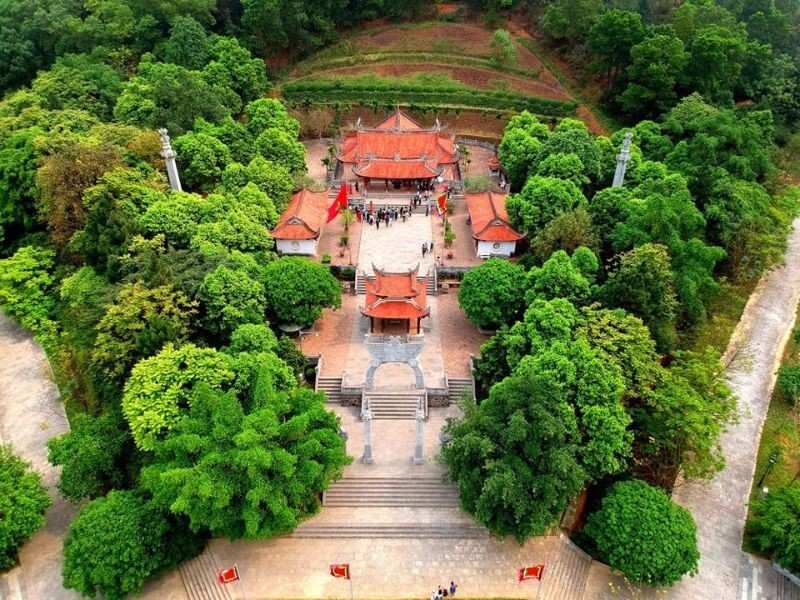
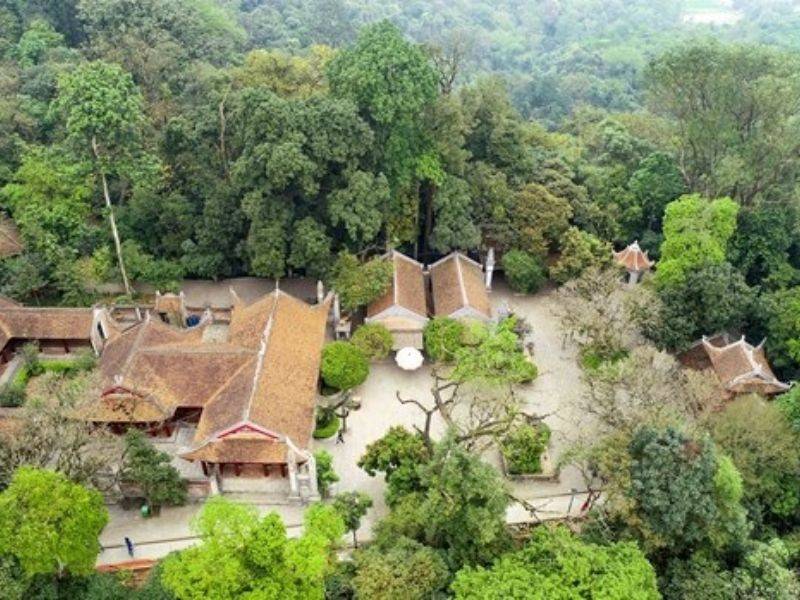
The entire historical site covers an area of 845 hectares with 4 temples, 1 tomb, and 1 pagoda. The temple is situated on a high hill, surrounded by beautiful natural scenery, both sacred and solemn.
Den Hung was built on Mount Hung in the ancient land of Phong Chau, with an architectural overview that harmoniously combines the majestic nature, gathering the sacred essence of the mountains and rivers. Visiting the tourist area from the foot of the mountain, visitors will admire many stops rich in cultural and historical values as well as spiritual significance.
Overview of the Den Hung historical site
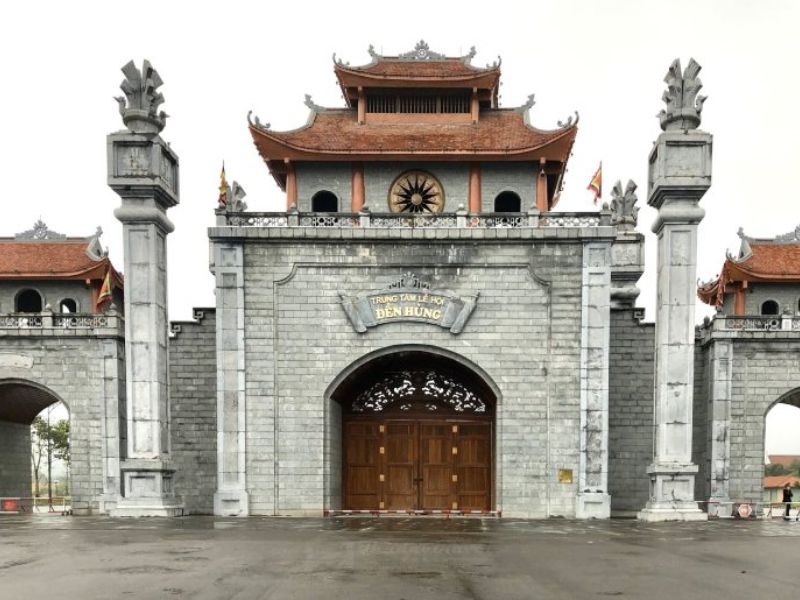
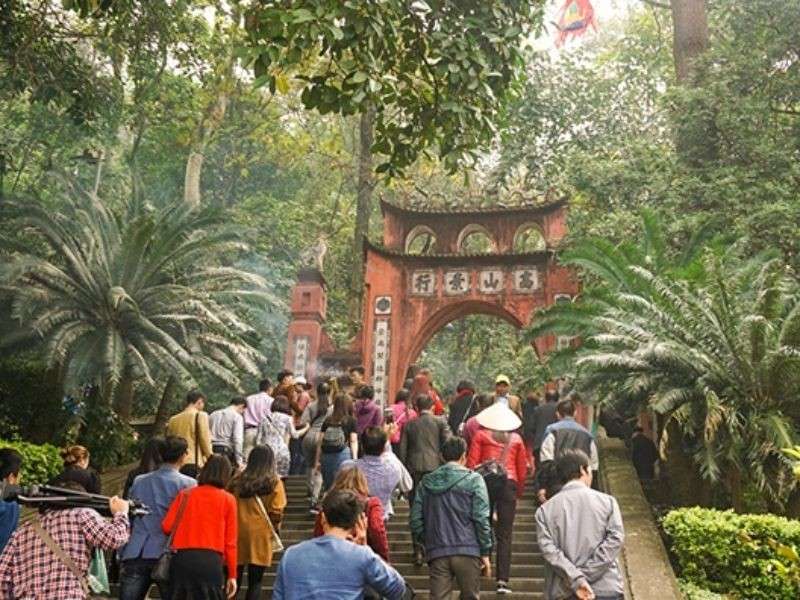
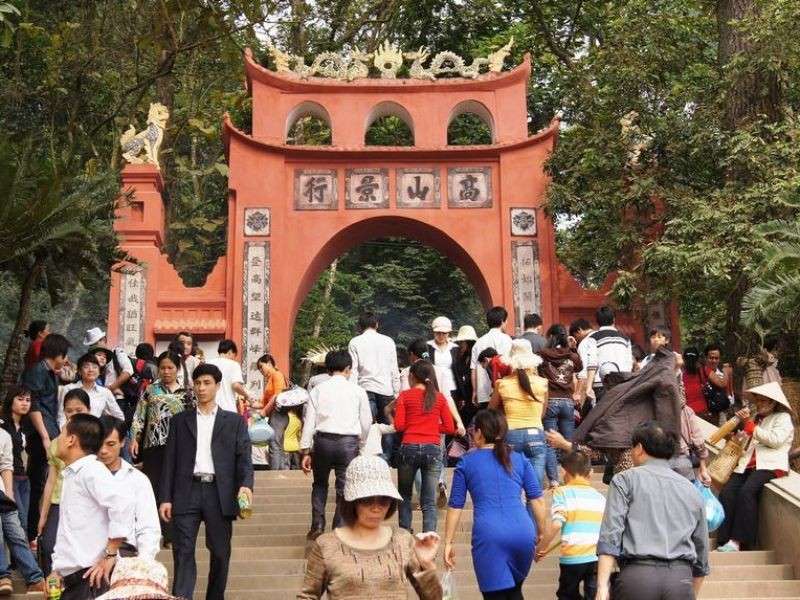
This is the place where visitors begin their journey to the land of the Ancestors. The temple gate was built in 1917, the second year of King Khai Dinh, with an archway height of 8.5m and 2 floors with 8 roofs covered with imitation tiles. The upper part of the gate is decorated with dragons and embossed Nghes, while the middle features the large inscription “Cao son canh hanh,” meaning to climb the high mountain and look far.
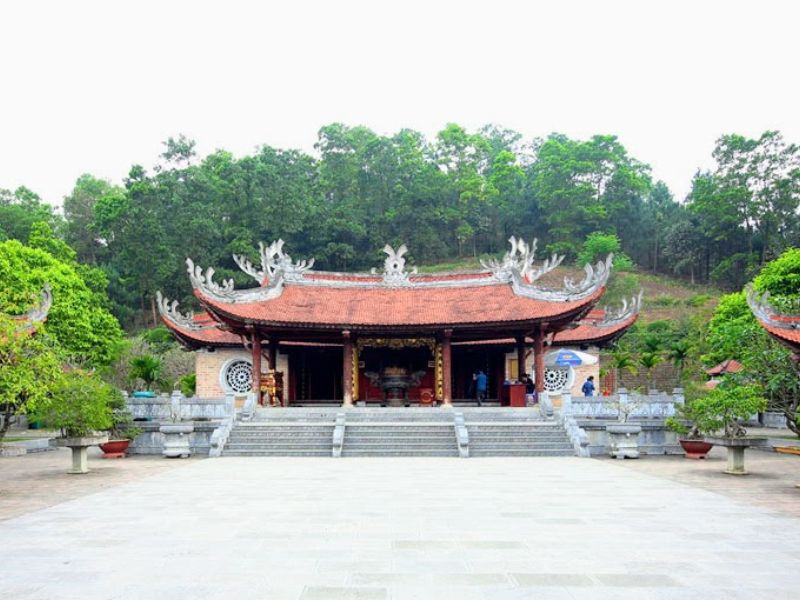
This is associated with the legend of Mother Au Co giving birth to a hundred eggs that hatched into 100 children of the Dragon and Fairy lineage of Den Hung. The architecture of the Lower Temple follows a dual form with two front and rear halls separated by 1.5m.
Next to the Lower Temple is Thien Quang Pagoda, which worships Buddha according to the Mahayana sect. The pagoda was built around the 18th century during the Tran dynasty. Inside the pagoda, there are 32 wooden Buddha statues painted in gold.
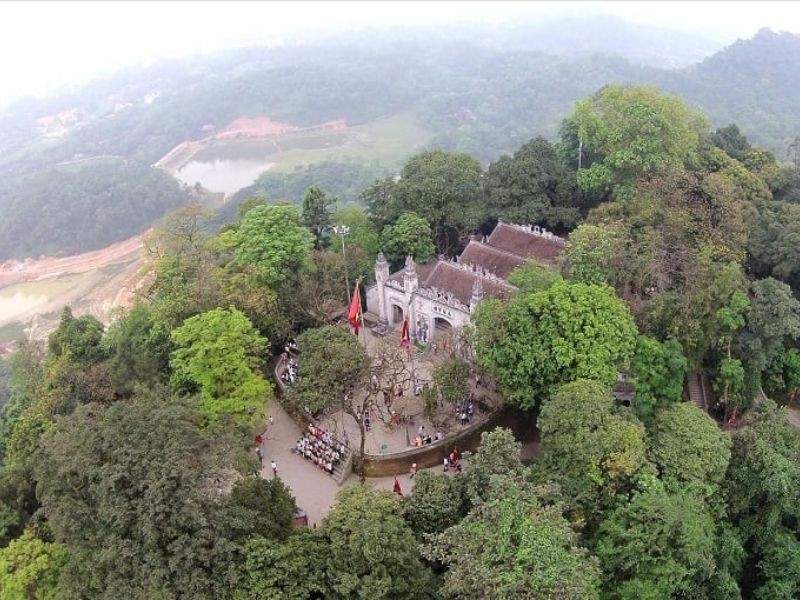
Located halfway up the mountain, visitors must climb 159 stone steps to reach it. The structure is named Hung Vuong To Mieu and is dedicated to the Hung Kings with a single-character architectural style. It is said that this is where the Hung Kings, along with the Lac Tuong and Lac Hau, often went sightseeing and discussed state affairs.
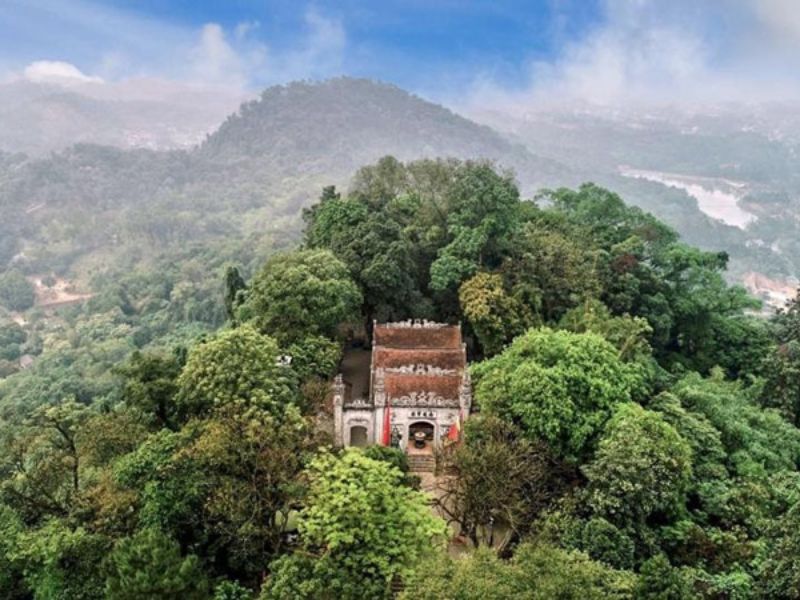
From the Middle Temple, continuing up 100 steps will lead to the Upper Temple, the highest position on Nghia Linh mountain. The temple is named Vuong Thien Lien Dien or Cuu Trung Thien Tien Dien. This is where the 6th Hung King set up an altar to worship heaven and earth, praying for favorable weather.
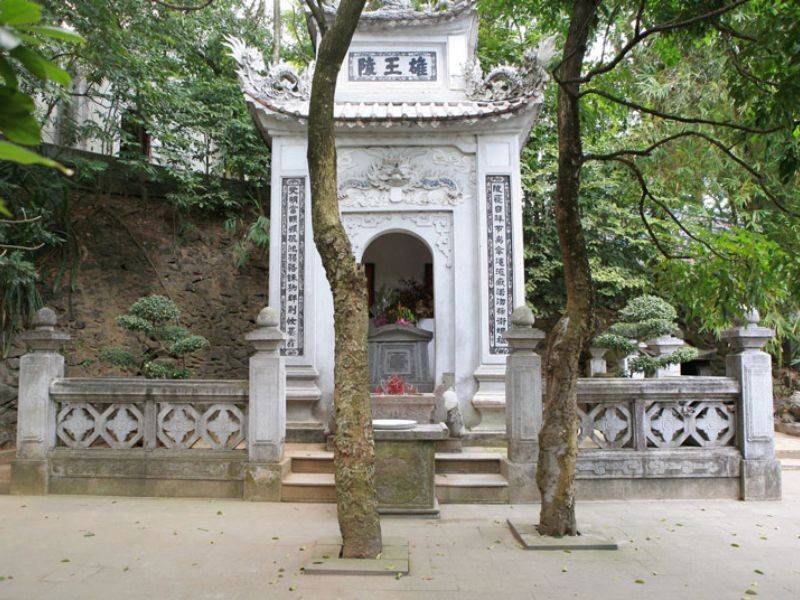
The structure is located to the east of the Upper Temple, nestled against the mountain and facing the river, believed to be the tomb of the 6th Hung King. The architectural design is square, with columns connected to walls, two-tiered roofs, and decorated with intricate patterns.
The majestic Hung Vuong Tomb at the historical site
The Well Temple was built in the 18th century with an architectural style resembling the character “gong,” believed to be where the two princesses of the 18th Hung King, Tien Dung and Ngoc Hoa, came to look in the mirror and style their hair when accompanying their father through this region. To honor the contributions of the two princesses who taught the people about irrigation and rice cultivation, the locals built a temple here.
The temple was built in 2001 to promote the worship of the Mother and commemorate the contributions of Mother Au Co. The architecture reflects traditional Vietnamese temple and pagoda styles, with decorative motifs mimicking the patterns on Dong Son bronze drums.
This is where more than 4000 artifacts are preserved, with nearly 700 original artifacts from the Van Lang state, providing a wonderful experience opportunity for all visitors.
This structure is located on Sim hill, 1km from Nghia Linh mountain, with a landscape of mountains facing water. Inside the temple is a statue of the National Ancestor Lac Long Quan, with a majestic appearance, cast in 1.5 tons of bronze.
The National Ancestor Lac Long Quan has sacred significance
To help you have a complete visit to Den Hung, here are detailed travel experiences for the historical site that you can refer to.
Visiting Den Hung from February to May is considered the best time. During this period, the weather in Phu Tho is quite pleasant, cool, and not too hot, creating favorable conditions for sightseeing and participating in festivals here.
In addition, February and March are close to the main festival days of the tourist area. You can choose this time to visit the Hung Kings' Temple to join in the lively atmosphere of the festival. April and May are when the festivals have ended, but it is also a suitable time if you enjoy the comfort, tranquility, and serenity of the temples.
The ideal time to visit the Hung Kings' Temple is from February to May.
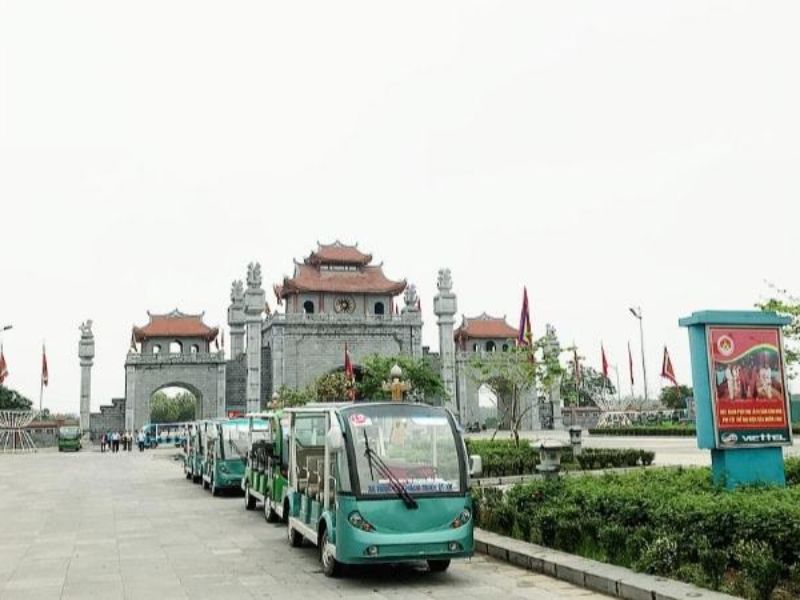
At Den Hung, the entrance fee to visit the historical sites inside the memorial area is about 10,000 VND/person, and children are usually free. The electric car ticket for moving within the memorial area ranges from 15,000 to 50,000 VND/person, depending on the pick-up and drop-off points. The entrance fee to the Hung Vuong Museum is 15,000 VND/person with many artifacts for you to explore the history of our nation.
The entrance fee to visit the Hung Kings' Temple is very reasonable.
Den Hung is 90km from the center of Hanoi and 7km from Viet Tri city. With a well-developed infrastructure, visitors can easily travel here conveniently by road and rail.
Traveling to the Hung Kings' Temple tourist area is convenient.
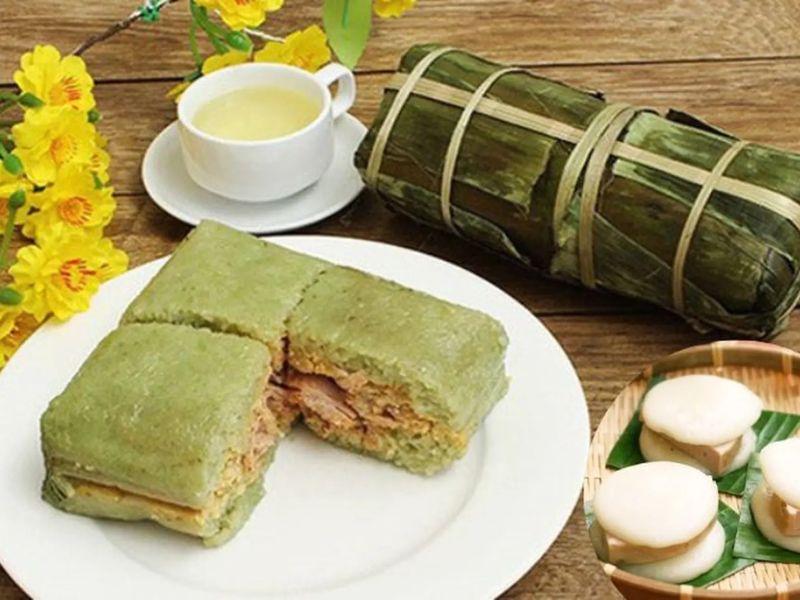
Not only does it have poetic natural landscapes and sacred historical sites, but Phu Tho is also a culinary paradise for food lovers. When visiting Den Hung, you definitely cannot miss specialties such as Phu Tho ear cake, Thanh Son sour meat, Co om, specialties from Dong village, Phu Tho cassava cake,...
Phu Tho is famous for many delicious cakes such as banh chung and banh day.
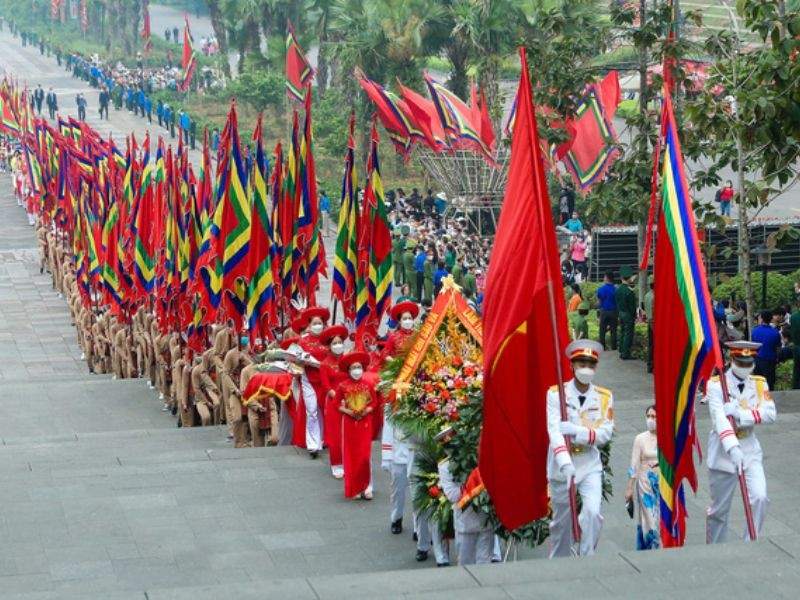
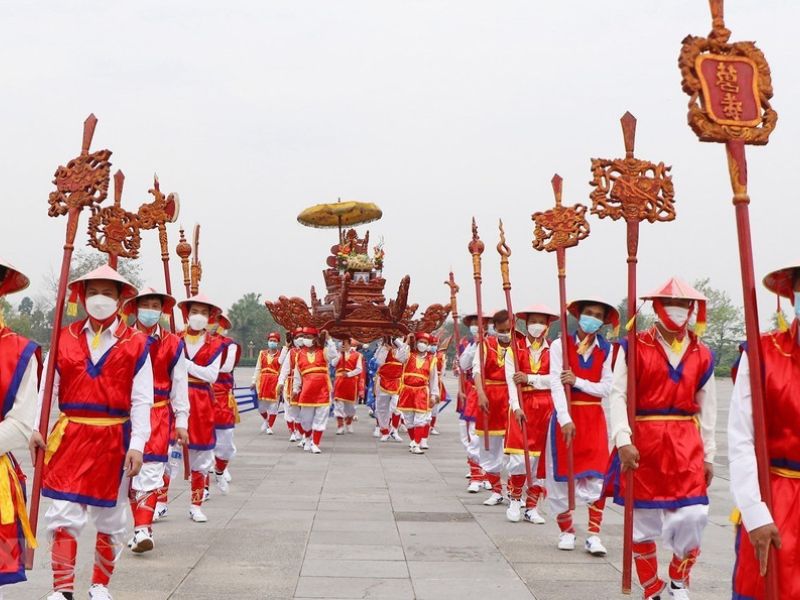
Den Hung frequently organizes many bustling festivals, especially at the beginning of the year. Highlighted by the Hung Kings' Death Anniversary Festival to commemorate and express gratitude to the kings who contributed to the founding of the nation. The official Death Anniversary day is the 10th day of the 3rd lunar month each year, however, many folk cultural activities take place before that. Some solemn and interesting rituals that you should not miss when coming here.
The incense offering ceremony at the Hung Kings' Temple.
The annual lively procession of the Hung Kings' Temple.
The article above has detailed information about Den Hung and interesting experiences to explore here. If you are planning to visit the memorial area of the Hung Kings or tourist destinations in Phu Tho, please contact NV Travel for a complete travel consultation. Don't forget to visit nvktravel.com to explore many other destinations!
Fill out the form and we will contact you