Language
Currency
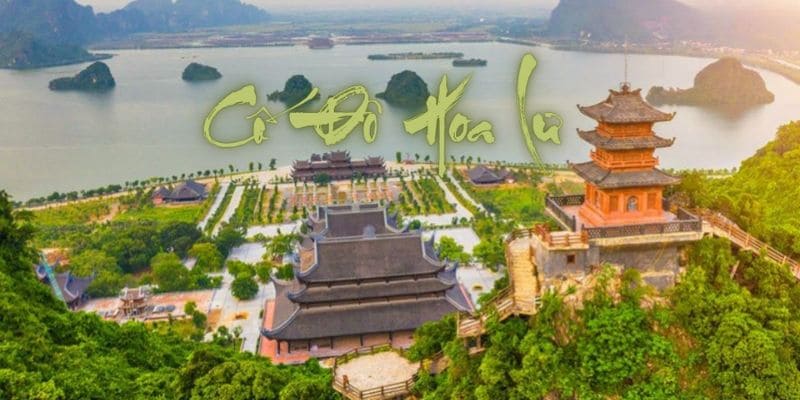
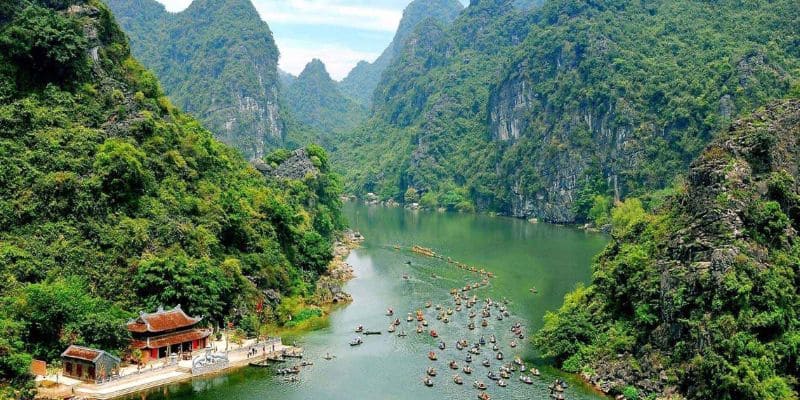
The ancient capital Hoa Lu is one of the four core areas of the Trang An Scenic Landscape Complex, located in Ninh Binh Province. This is a tourist destination that attracts visitors with its immense cultural and historical values. Over thousands of years, this place has maintained its peaceful, majestic, and grand beauty from a glorious period in the nation's history. To learn more specific information about this destination, let's follow the article right below from NVK Travel!
Admire the picturesque landscape at the ancient capital Hoa Lu
>>> See more: Trang An Scenic Landscape Complex Beautiful and Majestic, Captivating Hearts
The ancient capital Hoa Lu is one of the most significant cultural and historical heritages of Vietnam. It stands out with its majestic natural landscapes and is a place that marks the glorious pages of the nation’s history.
Address: Truong Yen Commune, Hoa Lu District, Ninh Binh Province
The ancient capital Hoa Lu covers a total area of over 300ha, preserving architectural works of high cultural and historical value. It is one of the four core areas of the Trang An Scenic Landscape Complex. In 2014, this site was recognized by UNESCO as the first and only dual cultural heritage in Southeast Asia.
The vast ancient capital preserves the history of a historical era
>>> See more: Discovering Mysteries at the Ba Trieu Temple A Thousand Years Old in Thanh Hoa
The ancient capital Hoa Lu was the first capital of our country, existing for 42 years in history. This land witnessed the formation and preservation of the nation through 12 years of the Dinh Dynasty (968 - 980), 29 years of the Early Le Dynasty (980 - 1009), and the early period of the Ly Dynasty (1009 - 1010).
The terrain of this land is surrounded by majestic mountains along with the winding Hoang Long River and the Nho Quan fields, which hold extremely important military value. In 968, it was here that Dinh Bo Linh quelled the rebellion of 12 warlords, ascended the throne, and established the powerful Dai Co Viet, turning Hoa Lu into a crucial political center.
During the reign of King Ly Thai To, he decided to move the capital from Hoa Lu to Thang Long because the Hoa Lu capital no longer had enough space for expansion and was not suitable for the country's development at that time. This decision marked the end of the glorious era of Hoa Lu, but many relics and infrastructure were still inherited in Thang Long. Although no longer a center of power, the ancient capital Hoa Lu continued to be built and preserved through the centuries with temples and pagodas.
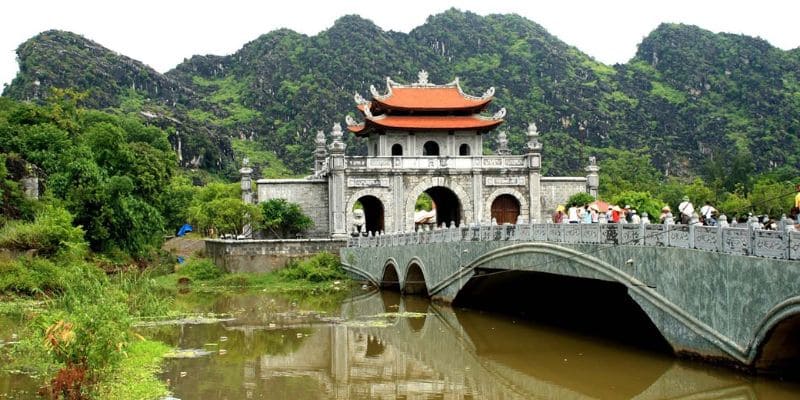
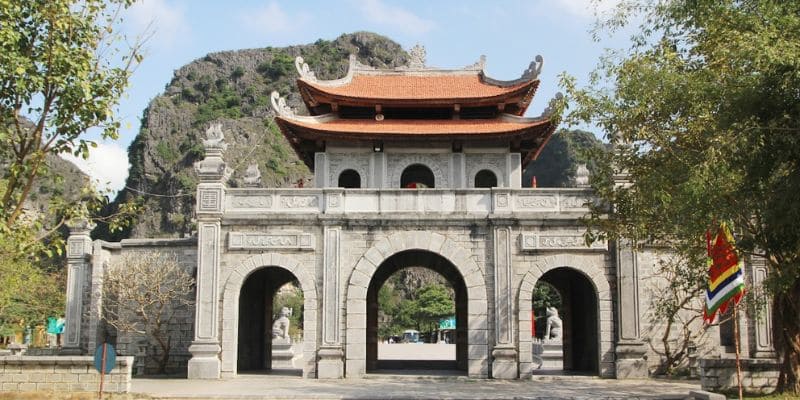
When stepping foot here, visitors will surely be amazed by the beautiful and solemn ancient scenery. Standing amidst the ancient city walls, you will feel the grandeur and magnificence of a bygone capital.
Currently, the area of the ancient capital covers a total of 300ha, including many architectural relics such as city walls, temples, tombs, and each component carries special historical and cultural value. The entire area is divided into three zones: a specially protected area, a buffer zone, and related relics.
The ancient capital Hoa Lu with its stunning scenery
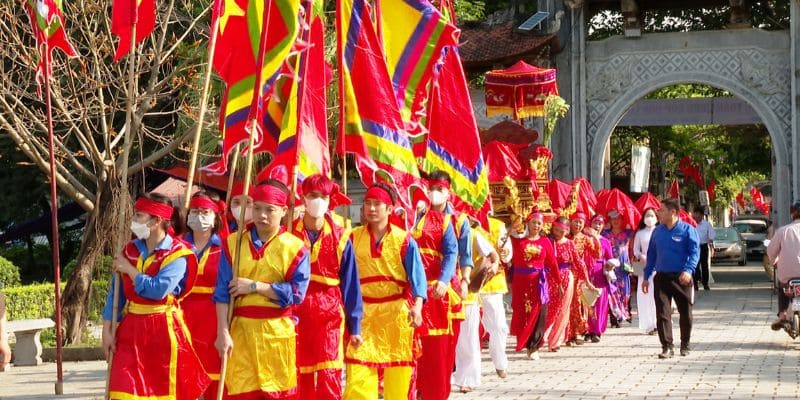
Visitors can visit the ancient capital at any time of the year, but the spring season is the most ideal time. During this season, many traditional festivals are held, such as the La Temple Festival, the Thai Vi Temple Festival, and the Saint Nguyen Temple Festival,... to commemorate the kings and saints who made great contributions to building the country.
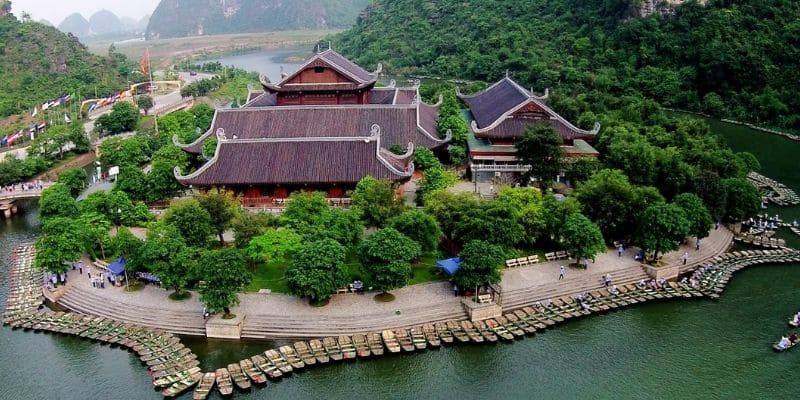
Besides spring, the dry season around May is also a suitable time to explore the ancient capital Hoa Lu. At this time, the weather is fresh and pleasantly cool, and you will have the opportunity to admire the golden rice fields stretching far and wide. To make your trip more complete, you can combine visiting some other famous tourist spots in Ninh Binh, such as Tam Coc - Bich Dong or Bai Dinh Pagoda,...
Visitors can visit the ancient capital at any time of the year
To travel to Hoa Lu, tourists can refer to the following route:
The distance from Hanoi to Ninh Binh is not too far, so you can choose any means of transportation to get there.
The route to the ancient capital is quite simple and easy to travel
Once you arrive in Ninh Binh city, to get to the ancient capital Hoa Lu, you just need to turn left towards the city exit and follow the Trang An road. Continue following the signs to the Trang An tourist area for about 200m, and you will reach the ancient capital tourist area.
The ancient capital complex stands out with its heroic history, making it an ideal stop for those who love exploring culture and nature.
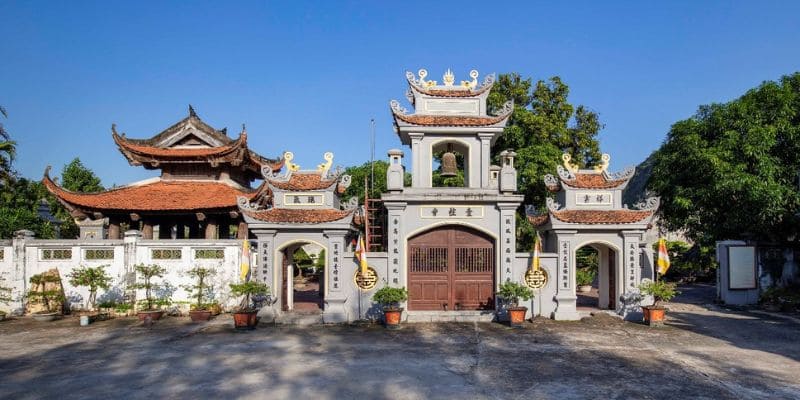
After more than 1,000 years of history, many important relics at the ancient capital Hoa Lu are still preserved, most notably the temple dedicated to King Dinh Tien Hoang and the temple dedicated to King Le Dai Hanh. The temple of King Dinh Tien Hoang is located in Truong Yen Commune, which was once the central area of the ancient capital.
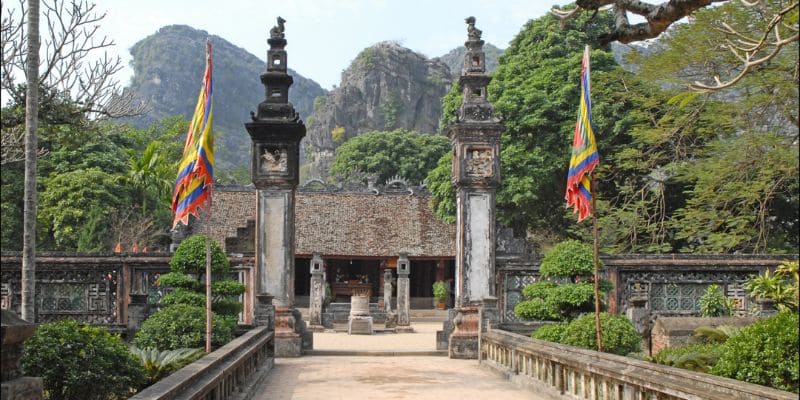
The temple has a very beautiful location, facing the Ma Yen mountain where King Dinh's tomb is hidden amidst the natural scenery. The relic was started to be built during the Ly Dynasty, in the style of "internal construction, external decoration", reflecting the architectural shape of the ancient capital, later renovated during the Later Le period.
The majestic Temple of King Dinh Tien Hoang
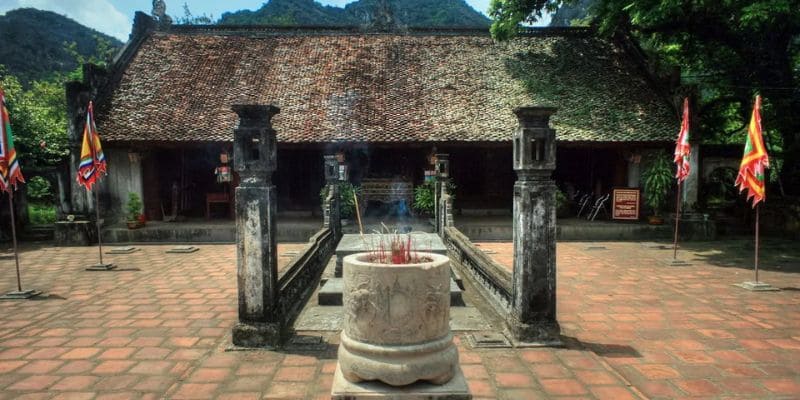
The temple of King Dinh Tien Hoang is a large architectural complex, including the main gate, artificial mountain, lotus pond, flower garden, and two ceremonial gates. Inside, there are three worship halls, one Heaven Fragrance hall, and one rear palace, where the statue of King Dinh and his sons are placed.
This place still preserves many valuable artifacts such as a pair of ceremonial elephants and a pair of stone long sang treasures carved from solid green stone with intricate carvings. The architecture of the temple is also decorated with many delicate carvings on wooden and stone pillars featuring images of dragons, clouds, fairies, and flowers, showcasing the skilled craftsmanship of artisans from the 17th century.
Le Hoan was the founder of the Early Le Dynasty, honored as one of the fourteen national heroes for his victory over the Song army. After ascending the throne, he took the reign name Le Dai Hanh and ruled the Dai Co Viet for 24 years.
In addition to worshiping King Le, the temple also honors Queen Duong Van Nga, Le Long Dinh, along with the altars of Princess Le Thi Phat Ngan and General Pham Cu Luong. The temple of King Le is about 300m from the temple of King Dinh, opposite the central square of Hoa Lu, with a water moat behind it, forming a defensive line for the ancient capital.
The area of the temple of King Le Dai Hanh along with Queen Duong and Le Long Dinh
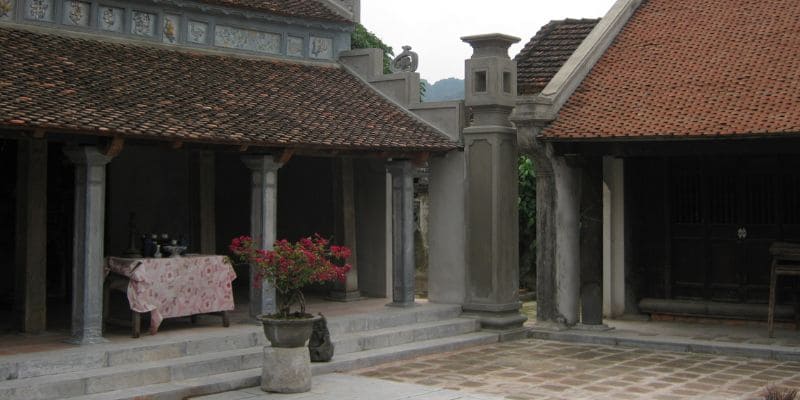
Currently, the temple of King Le still retains traces of ancient architecture, with exquisite carvings and remnants of the former palace foundation and many ancient ceramic artifacts. These valuable artifacts are currently being preserved in the display room on the left side of the temple.
Princess Phat Kim is the daughter of King Dinh Tien Hoang, and her temple is located right next to the temple of King Le Dai Hanh and Nhat Tru Pagoda. According to legend, the temple is situated on the old foundation of the Vong Nguyet Palace - the ancient capital Hoa Lu - where the princess once lived. The well that she jumped into to commit suicide still exists in front of the temple.
The temple of Princess Phat Kim - Honoring the gentle and hardworking woman
This place is a symbol honoring traditional gentle women, who went through many storms in the 10th century. The spiritual value of the temple also reflects the meaning: although circumstances may change, traditional culture will always endure.
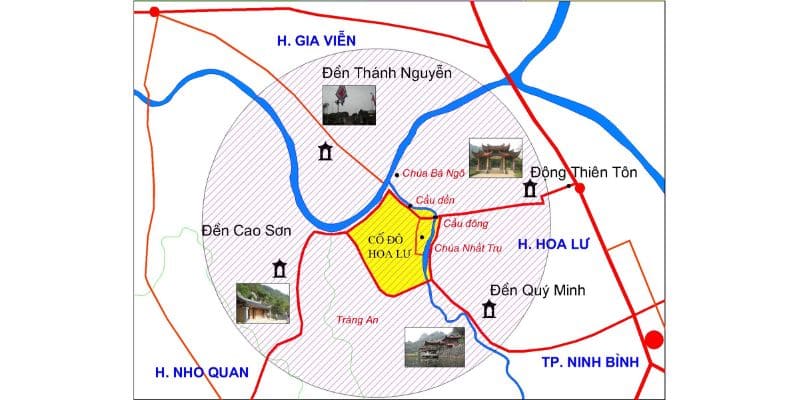
Hoa Lu Four Guardians is the area dedicated to the deities who protect the three walls of the ancient capital, as well as to commemorate the heroes who contributed to building and protecting the country. The four deities in the Four Guardians include:
God Thien Ton was worshipped by King Dinh before he led his troops to quell the rebellion of the 12 warlords, hoping to receive assistance from the deity. According to legend, Thien Ton is an angel, originally a prince, whose mother dreamed of swallowing the sun and gave birth to him. When he grew up, the prince possessed extraordinary strength and fame spread throughout the world. After 42 years of cultivation on Dung Duong Mountain (Hoa Lu), he attained enlightenment, and Ngoc Hoang bestowed upon him the Tam Thai That Tinh sword and appointed him as the Northern Guardian General with the ability to fly and eliminate evil.
Thien Ton is known as the "Tu Thuy Ky Son" area with harmonious mountain and river landscapes, where he stands firm. After successfully quelling the rebellion of the 12 warlords, King Dinh decided to choose Hoa Lu as the capital and had the Tien Te Hall and Kinh Thien Dai built to receive envoys from other countries.
The temple of God Cao Son - West Guardian of the ancient capital Hoa Lu - is located in the spiritual tourism area of Bai Dinh Pagoda. God Cao Son, according to legend, is the 17th son of King Lac Long Quan, who made significant contributions to helping the people settle down and protect against foreign invaders. He was granted the title Lac Tuong Vu Lam and had a temple built from the west on Dinh Mountain.
Hoa Lu Four Guardians - Protecting the entire ancient capital area
The temple of Duc Thanh Quy Minh is now also known as Tran Temple or Noi Lam Temple, located in the low-lying area of Son Nam. He is the water deity who played an important role in protecting the borders during the reign of the 18th King Hung.
Thanks to his great contributions, God Quy Minh was honored as a superior deity, revered through many dynasties. The main temple was built by King Dinh Tien Hoang in the city of Nam Co Do (now Trang An) and was rebuilt during the reign of King Tran Thai Tong, remaining unchanged to this day.
The temple of Khong Lo or Duc Thanh Nguyen is located in Gia Thang and Gia Tien communes, Gia Vien district. This is the place to worship Zen Master Nguyen Minh Khong - an important figure of the Ly dynasty - who was granted the title Ly Quoc Su.
The temple was built on the foundation of Vien Quang Pagoda established by the Zen master in 1121. After he passed away, the people remembered his contributions and renamed the pagoda to the temple of Duc Thanh Nguyen.
The ancient capital Hoa Lu has been recognized as an important national architectural complex and historical relic that needs to be preserved. This land contains many cultural, spiritual, and historical values with many famous ancient pagodas. Here, there are many famous pagoda areas, including:
In addition, there are many other ancient pagodas such as Ban Long Pagoda, Kim Ngan Pagoda, Am Tien Cave Pagoda, and Ba Ngo Pagoda,… creating a rich picture of beliefs in the ancient capital Hoa Lu.
Explore the oldest Nhat Tru Pagoda in Vietnam
Every year in spring from the 8th to the 10th of the 3rd lunar month, the ancient capital Hoa Lu organizes many traditional festivals to honor and commemorate the contributions of kings and national heroes. Some festivals that attract a large number of tourists include: Thai Vi Temple Festival, Duc Thanh Quy Minh Dai Vuong Festival, Truong Yen Festival, Hoa Lu Festival, and Trang An Festival.
Visit the ancient capital Hoa Lu in early spring to participate in traditional festivals
If you are planning a trip to the ancient capital Hoa Lu but do not know where to start, please refer to the tour itinerary from NVK Travel below:
Experience a unique Ninh Binh tour
To have a complete and safe trip in Hoa Lu, you should pay attention to some points below:
Tourists need to prepare fully for the best trip
The ancient capital Hoa Lu is the first capital of the Vietnamese land, preserving important cultural and spiritual values. This place possesses ancient architectural works that reflect a glorious period of the nation. If you wish to visit and explore the ancient capital Ninh Binh, please contact NVK Travel for a tour consultation with preferential prices!
Fill out the form and we will contact you