Language
Currency
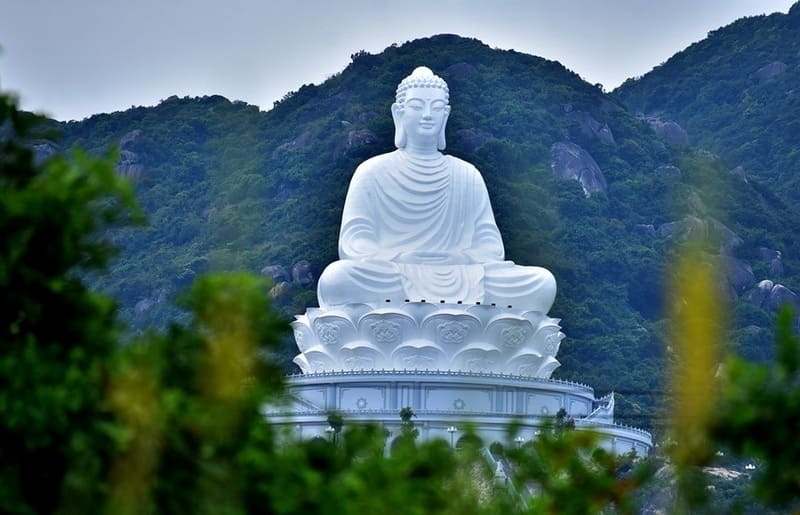
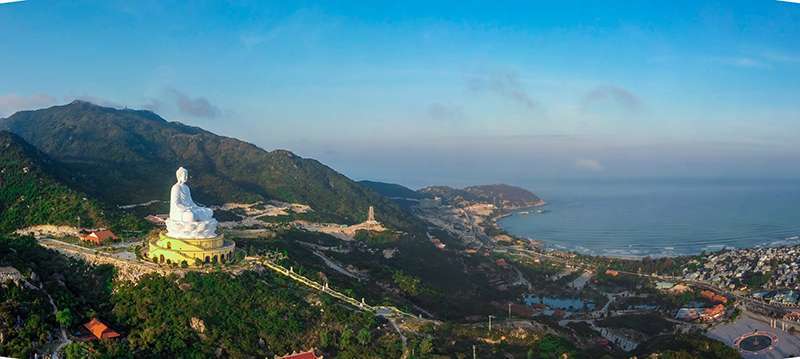
Ong Nui Pagoda is nestled beside the majestic Ba Mountain with a giant statue of Buddha Shakyamuni peacefully amidst the clouds. The stone steps leading to the pilgrimage seem to take people away from the mundane, guiding them to a tranquil place. In addition, the temple is also a unique spiritual tourism destination, attracting numerous visitors from near and far to worship and admire the stunning scenery.
Location:
Ong Nui Pagoda is also known by another name, Linh Phong Son Tu (or Dung Tuyen Linh Phong Zen Monastery). The name "Ong Nui" is associated with the legend of the Zen master Tinh Giac - a true practitioner who lived in seclusion on Ba Mountain since the late 17th century. Meanwhile, "Linh Phong - Sacred Wind" alludes to the divine response of nature and the spirit of enlightenment and practice.
Ong Nui Pagoda - A sacred symbol amidst the ocean waves
>>> See more: Returning to Ngoc Hoa Meditation Center Keeping the Soul Peaceful and Serene
Before this place was named Linh Phong Son Tu, it had gone through many sacred stories and fascinating legends. Let's turn back time and explore each memorable historical milestone of Ong Nui Pagoda.
Before Ong Nui Pagoda rose majestically, this area was famous for the Dung Tuyen Thach Coc cave. In 1686, Zen master Giam Huyen and his disciple Le Ban (Dharma name Tanh Ban) came here to practice.
The rustic scenery from the early days
>>> See more: Twin Towers Quy Nhon - A relic that embodies the mysterious beauty of the land of martial arts
By 1969, after the master left, Tanh Ban stayed behind to practice in solitude, living a frugal life, healing people with herbal medicine without taking any payment. The locals both respected and playfully called him Moc Y Son Ong, meaning "The Mountain Man in Bark Clothes," which sounded both serious and endearing.
In the year of Nham Ngo 1702, he built a small thatched hut on the mountainside, laying the foundation for the first pagoda. Since then, this place has been affectionately called Ong Nui Pagoda, becoming a spiritual anchor, making anyone who passes by exclaim, "So Beautiful."
In the early 18th century, Lord Nguyen Phuc Cho ordered the pagoda to be rebuilt with tiles and renamed it Linh Phong Zen Temple. At the same time, he also conferred the Dharma title to Le Ban as Tinh Giac Thien Tri Dai Lao Cong Zen Master, elevating the dignity of the true practitioner.
By 1747, Master Tanh Ban passed away at the age of 81. In 1826, King Minh Mang recovered from illness thanks to a dream of Ong Nui, and he allocated funds from the treasury to rebuild the pagoda and bestowed monastic robes, elevating the pagoda to a new stature.
Ong Nui Pagoda after restoration
The pagoda continued to be restored in 1897, under the sponsorship of Dao Tan - the founder of Vietnamese classical drama. At this time, the fame and scenery of the temple were praised in many ancient documents, including "Dai Nam Nhat Thong Chi," affirming the spiritual position and cultural value of Ong Nui Pagoda.
In the mid-20th century, Ong Nui Pagoda underwent many upheavals as fierce wars destroyed nearly all structures, leaving only the ancestral cave and a small stream. By 1990, the reconstruction of the pagoda began, and by 2004, it returned to its majestic appearance.
The devastating destruction of war
Not stopping there, in 2009, the Gia Lai Provincial People's Committee (formerly Binh Dinh) along with the Buddhist church initiated a project to transform Ong Nui Pagoda into a spiritual tourism complex called Linh Phong. The total area is over 63 hectares with an investment of about 500 billion VND.
In 1994, this place was recognized by the Ministry of Culture, Sports and Tourism, affirming its important role in preserving history, maintaining traditional culture, and becoming a spiritual symbol amidst the mountains and forests.
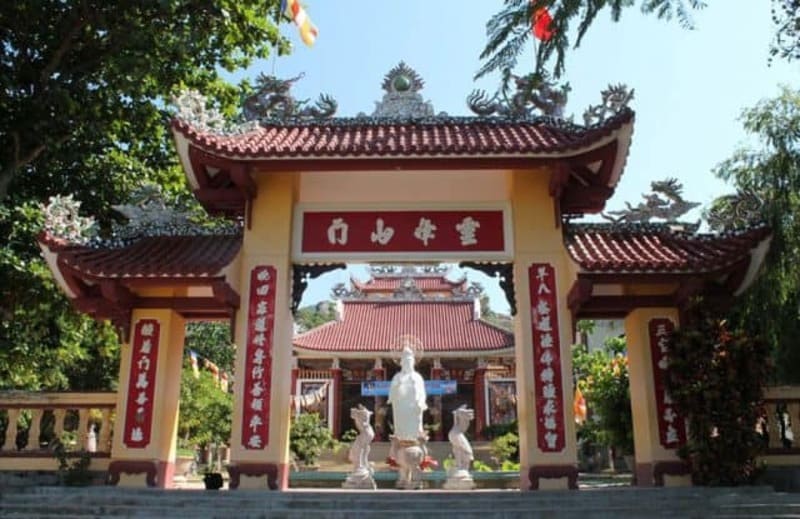
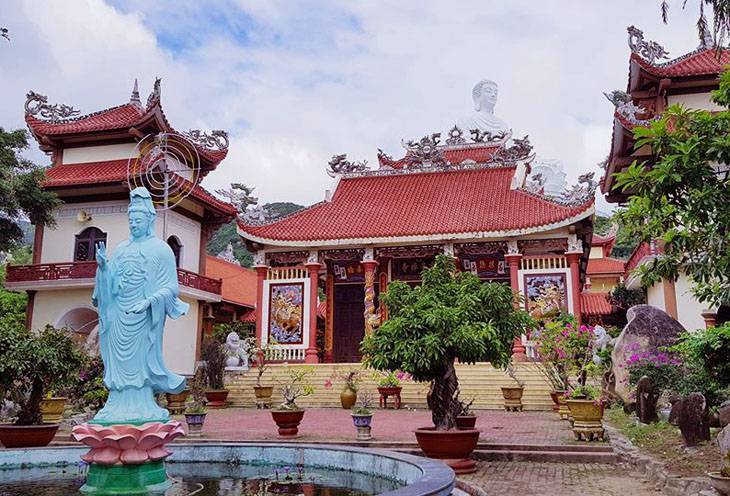
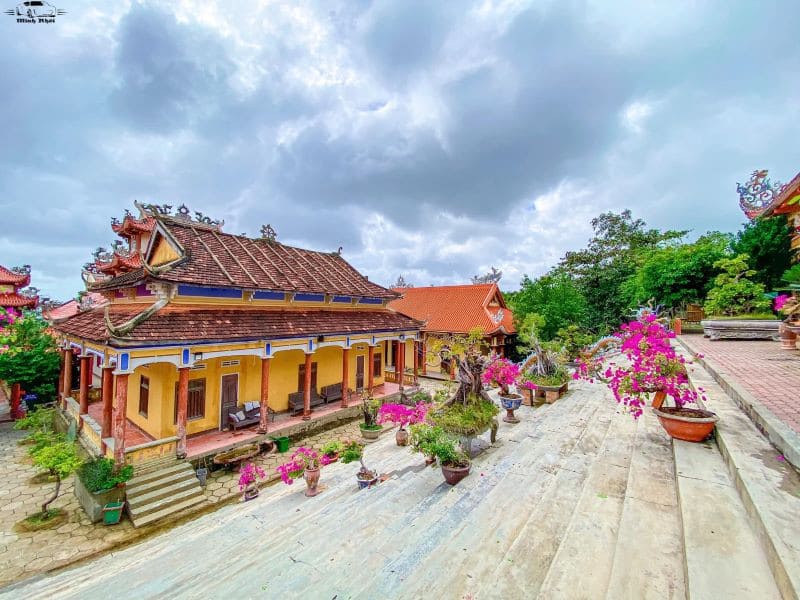
Ong Nui Pagoda is adorned with traditional Central architecture featuring curved tiled roofs and intricately carved lim wood pillars. The surrounding space is planned into various areas including worship halls, courtyards, and lakes... Creating a sense of peace from the very first step.
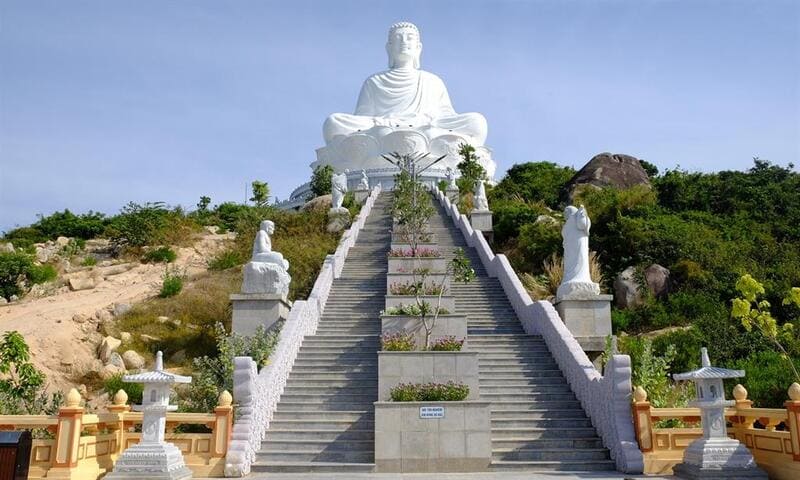
Visitors must walk through about 600 stone steps, winding between two majestic cliffs to reach the giant Buddha statue area. Along the way, there are statues of La Han, Ho Phap statues, stone bells, and engraved Buddhist scriptures. These structures remind the footsteps of practitioners to move slowly and quietly.
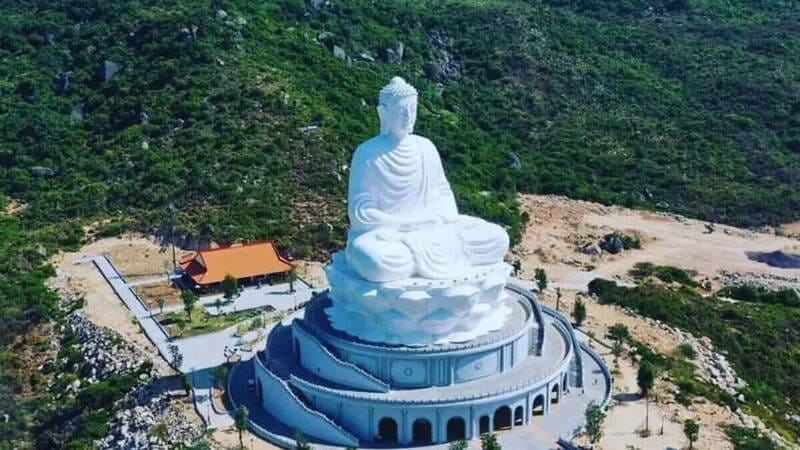
The panoramic view of the spacious area at the foot of the mountain
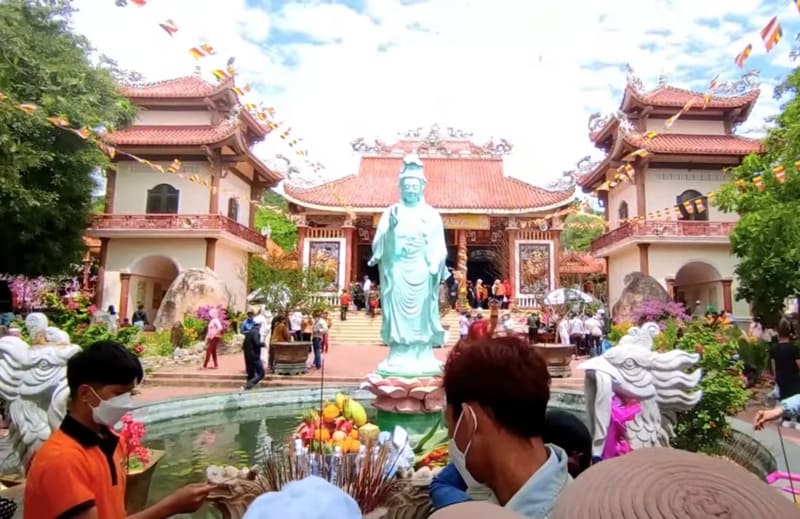
The main hall stands out with its soft red tiled roof, the roof peak intricately carved in the shape of a flying dragon. The red-painted wooden pillars are exquisitely carved, meticulously crafted down to the smallest detail. In front of the altar is a large incense burner.
Here, practitioners can light incense, sending their thoughts and prayers. Inside, a 2.5m tall statue of Buddha sits in the hall, solemn and serene, making anyone who enters feel the sacredness of Ong Nui Pagoda.
Near the main hall, the bell tower stands about 15m tall, featuring a great bell weighing over 2 tons, resonating throughout the mountainside. Not far from there, the Ancestral Cave (Dung Tuyen Thach Coc), where the founding Zen master of the temple is worshipped. Inside the cave, the altar of Ong Nui stands solemnly beside a small path leading down to a cool stream that flows gently day and night, likened by many to the "Holy Water" of the mountains and forests.
The highlight of the Ong Nui Pagoda complex is the giant seated statue of Buddha Shakyamuni, 69m tall, including the lotus pedestal and base, reaching 108m. The statue is designed in the posture of "Tua Son Vong Hai," symbolizing good omens, protection, and maintaining peace for the region.
The majestic statue of Buddha facing the vast sea
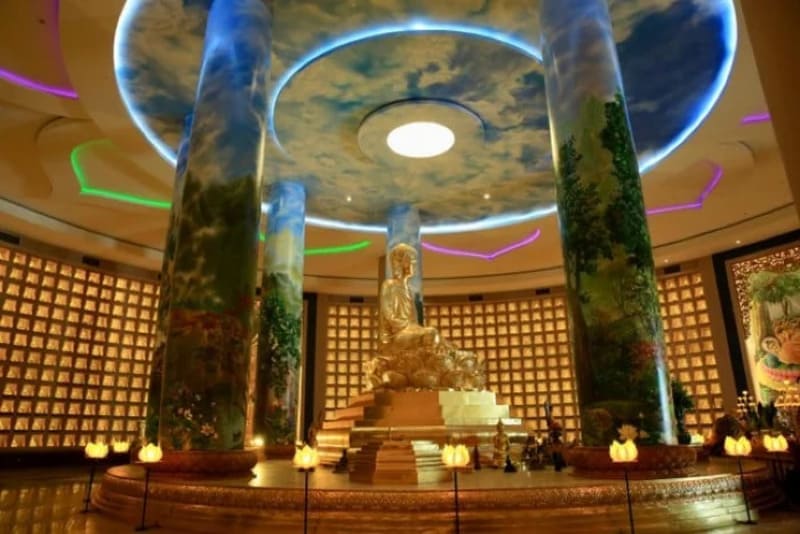
At the foot of the statue, the Buddhist preaching center, the La Han corridor with 10,438 Buddha statues arranged around the walls, a Buddhist library, and a museum of relics. Here, visitors can worship as well as learn about the Dharma.
Upon arriving at Ong Nui Pagoda, visitors will experience activities rich in spiritual and local cultural significance. Every moment promises to be a truly memorable experience.
The activities begin from the main hall, you just need to prepare offerings of flowers, fruits, and purified water. Then, practitioners continue to the ancestral house or the area of the giant Buddha statue on the mountain, offering incense and sending prayers for peace, health, work, or good fortune.
Buddhists offer incense at the temple, praying for peace.
On major holidays and the full moon, Ong Nui Temple will provide prayer cards for Buddhists to write their names and wishes to place in the donation box, which will be recited during the ceremonies.
Note: If you are not familiar with temple rituals, please observe or ask someone to guide you in the main hall. This is a way to help you perform correctly without fear of losing the rhythm.
From the main hall, visitors follow the path on the left, winding through stone steps and a winding dirt road to reach the Ancestral Cave. Here, you can
A place that preserves the marks of practice and Buddhist traditions.
This stream is referred to by locals and Buddhists as "Holy Water" used for drinking or washing faces with the hope of peace, health, and purification of body and mind. It can be said that this is one of the special experiences that help visitors clearly feel the sacredness of the meditation space.
Over 600 green stone steps stretch along the mountainside leading to the Buddha statue, training your mind and willpower. This is the time when you can set aside all worries, breathe deeply, and feel your footsteps harmonizing with the rhythm of the mountains and forests.
Admire the majestic scenery from above.
The higher you go, the more you will see Ong Nui Temple becoming more vibrant like a painting with wildflowers blooming, reeds swaying in the wind, and lush green forest trees. Especially, visitors will be able to admire the panoramic view of the deep blue Cat Tien beach and the bustling city of Quy Nhon at a close distance.
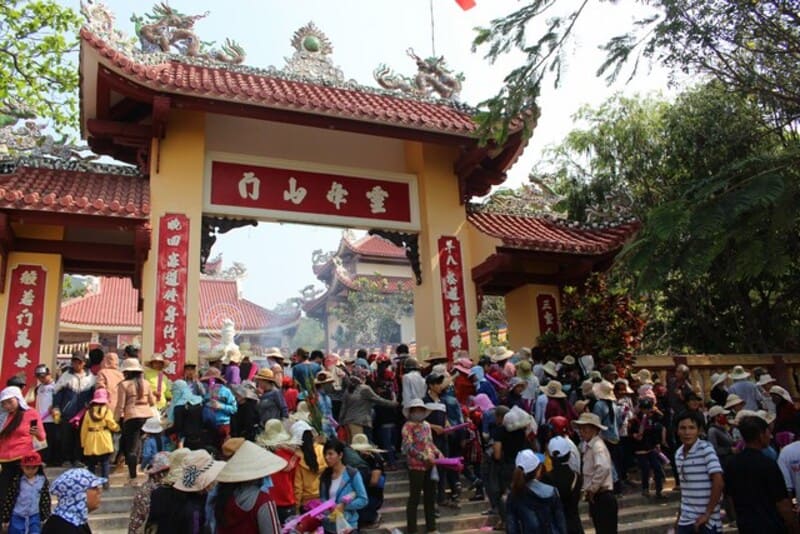
One of the most distinctive festivals at Ong Nui Temple takes place on the 24th and 25th of the first lunar month, with the 25th being the memorial day of Zen Master Tinh Giac. This is an occasion for Buddhists and visitors to offer incense, pray for peace, health, and a prosperous new year.
The festive atmosphere is bustling and lively, attracting over 10,000 visitors, especially on weekends. In addition to traditional rituals, the temple also offers free vegetarian meals, distributes lucky gifts at the beginning of the year (betel leaves, flowers), and arranges many convenient prayer points.
In addition to the main festival, Ong Nui Temple regularly organizes prayer ceremonies and meditation retreats. Here, Buddhists can practice meditation, chant sutras, slow down, and gain a deeper understanding of Buddhist teachings in the tranquil, sacred mountain forest space.
When entering the premises of Ong Nui Temple, especially the main hall and the Buddha statue area, visitors should dress modestly and respectfully. Avoid overly short clothing, sleeveless shirts, or skirts above the knee to both respect the sacred space and move comfortably.
Things to remember when visiting and worshipping.
Dining is also convenient as there are eateries serving food and drinks at the foot of the mountain and around the temple area, with clearly listed prices. Additionally, Buddhists should behave appropriately, such as:
It can be said that Ong Nui Temple is one of the most sacred temples in the Nau region, gathering the beauty of the mountains and forests, unique architecture, and the rich cultural life of the locals. If you want to fully experience the sacredness and worship, let NVK Travel accompany you. Everything will be planned in detail from bookinga Quy Nhon tour., arranging itineraries, guiding tours, and accompanying services to make it most convenient for you.
Fill out the form and we will contact you