Language
Currency
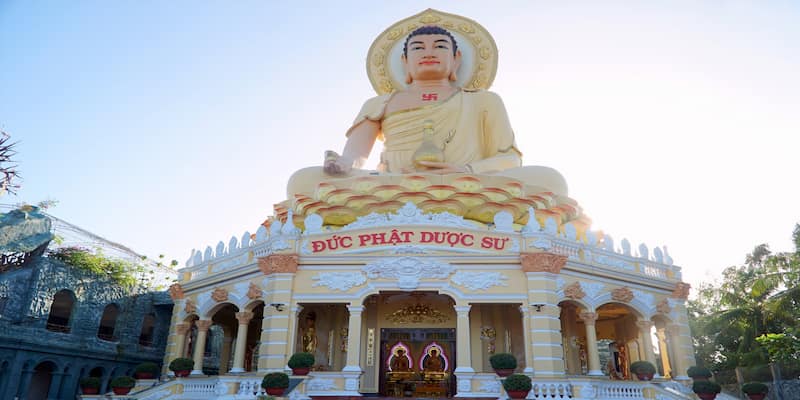
Located in the beautiful land of Bac Lieu, Duoc Su Pagoda stands tall, surrounded by deep spirituality and an absolutely solemn atmosphere. This place is likened to a "crossroads" where traditional architectural features blend with fresh carvings in design. After more than 100 years, this pagoda has become a historical testament, "tasting" countless bittersweet ups and downs of the nation.
Let's explore with NVK Travel what Duoc Su Pagoda is, its origins, and its role.
Duoc Su Pagoda with its vast surrounding space
>>> See more: Visit Uncle Ho's Temple - A Cultural Tourism Destination in Vietnam
The pagoda is located right on National Highway 1A, Xom Lon Hamlet, Chau Thoi Commune, Vinh Loi District, Bac Lieu Province (after merging, it is Chau Thoi Commune, Bac Lieu Province), about 7km southeast of Bac Lieu city center. Duoc Su Pagoda has been dubbed the "heart of Buddhism" for the people of the Mekong Delta since the early 20th century, and it has been over 100 years now. Therefore, the pagoda carries significant historical and spiritual values and plays a special role for the Buddhists of Bac Lieu Province.
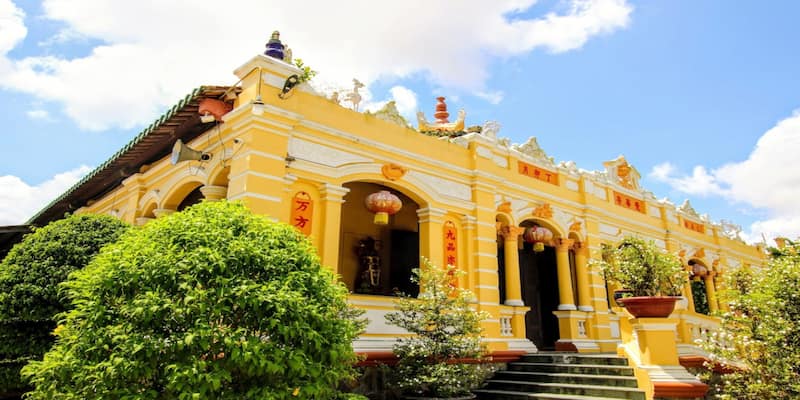
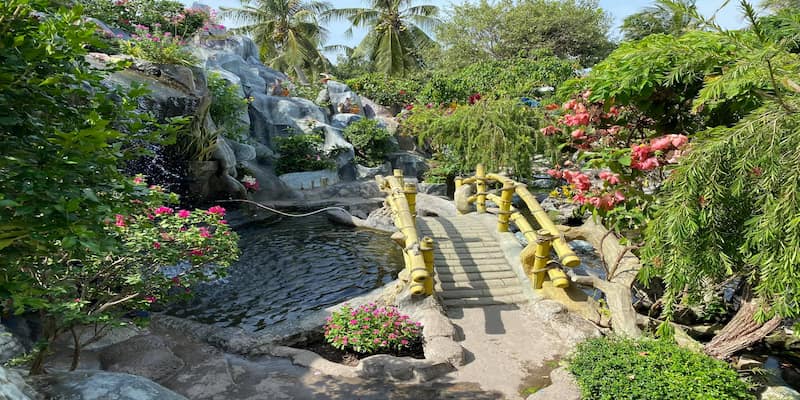
Surrounding the pagoda is the gentle Chau Hung River, along with lush green landscapes and a cool atmosphere, bringing a sense of peace and tranquility as soon as one steps inside the pagoda, as if a separate world exists within it. The highlight of Duoc Su Pagoda is its East-West architectural fusion, learning from Western architecture while still retaining the deep spirit and culture of the East.
Duoc Su Pagoda is the familiar name used by the local people
>>> See more: Self-Guided Travel Experience in Buon Ma Thuot & Important Notes
The pagoda is widely known by the name Giac Hoa Pagoda, which is the official name given by Mrs. Tran Thi Dieu. Mrs. Tran Thi Dieu is a descendant of the most prestigious family in the Mekong Delta at that time, the Bac Lieu gentleman's family.
She is well-known for her contributions of land, resources, and assets to the pagoda for charitable purposes; moreover, she directly took care of and developed the pagoda. The name Giac Hoa given by her signifies enlightenment and the lotus flower, both of which are symbols closely associated with Buddhism. However, the pagoda is affectionately referred to by the locals as Duoc Su Pagoda.
The pagoda was recognized as a provincial historical relic in 2001
Construction of the pagoda began in 1919, initiated by Venerable Thich Tri Tam. This pagoda is one of the earliest Buddhist structures in Bac Lieu Province.
According to documents provided by the Provincial Buddhist Association, Duoc Su Pagoda was once the largest Buddhist study center in the South before 1975. It trained and nurtured many generations of monks and nuns, spreading and developing Buddhism throughout the region.
In 2001, Giac Hoa Pagoda was recognized by the People's Committee of Bac Lieu Province as a provincial historical relic due to its significant values.
The pagoda is a center of Buddhism in the Mekong Delta
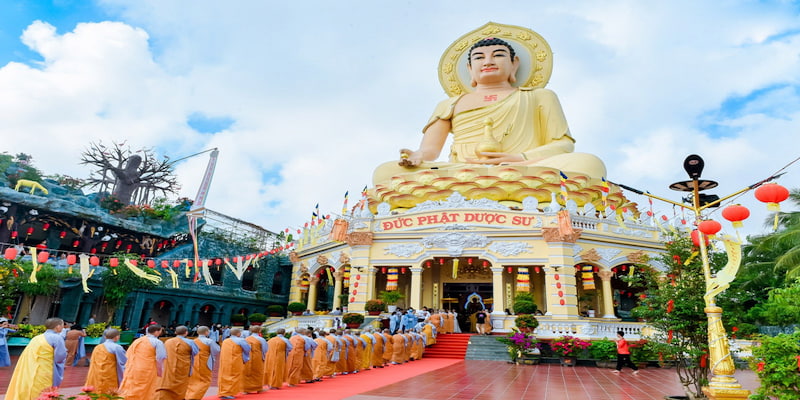
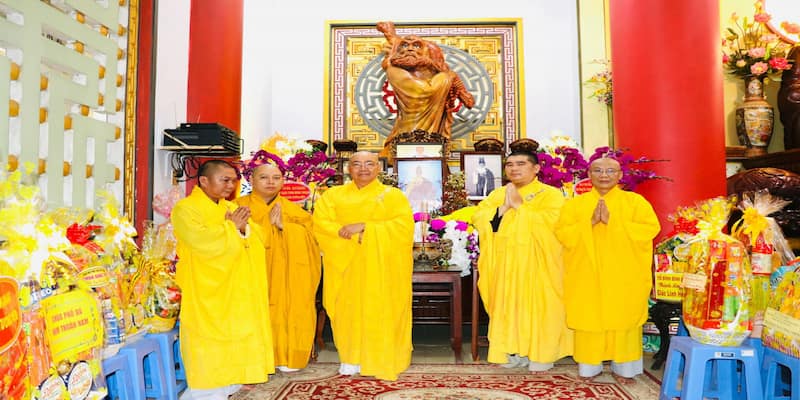
Today, Duoc Su Pagoda still plays an important role in the spiritual life of Bac Lieu residents. The pagoda hosts many major Buddhist festivals such as Buddha's Birthday, Vu Lan Festival, the first full moon of the Lunar New Year, and the retreat period, attracting many Buddhists and tourists to the pagoda each year. Currently, the pagoda also has a Buddhist Intermediate School of the Bac Lieu Provincial Buddhist Association to continue its mission of training the next generations of monks and nuns and spreading Buddhism.
Not only holding spiritual and religious significance, the pagoda also has important meaning during the war period in Vietnam. During the two resistance wars against French colonialism and American imperialism, it was a place to hide and care for revolutionary officials and soldiers, and secret meetings were also held here. Moreover, in 1945, the pagoda contributed 2,000 sacks of rice to the famine relief movement, affirming the spirit of patriotism and a close bond with the mission of national liberation.
One of the attractions of the pagoda, drawing many tourists each year, is its unique architecture.
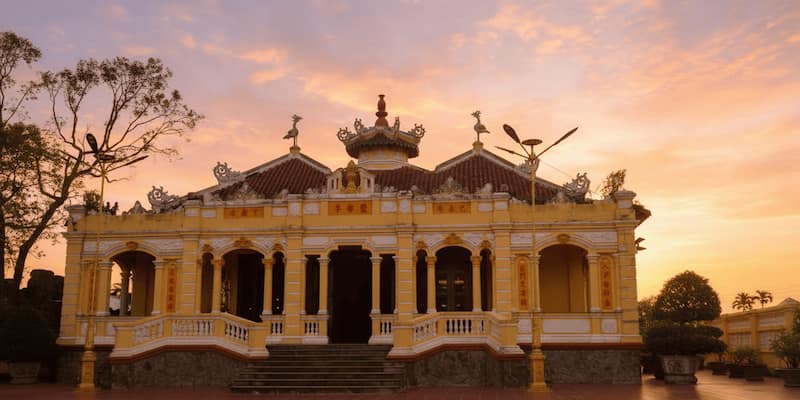
The unique East-West cultural fusion architecture of the pagoda
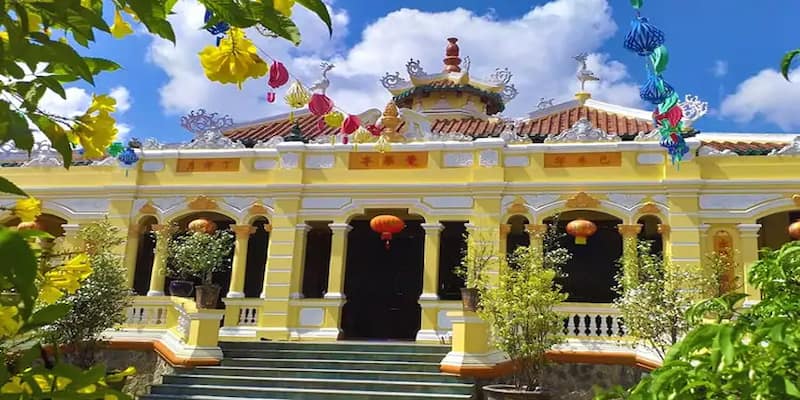
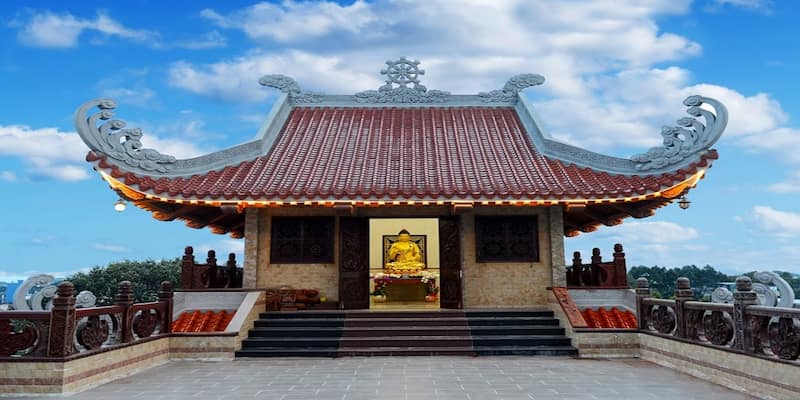
Overall, Duoc Su Pagoda covers an area of over 700 square meters, facing north. The pagoda is designed with a fusion of Eastern and Western architectural excellence, built during the French colonial period, so some features bear the distinct style of late 19th-century France, such as vine details, curvy patterns, Baroque and Gothic columns, while still retaining Eastern architectural characteristics like curved tiled roofs, wooden frames, and the two dragons worshiping the moon.
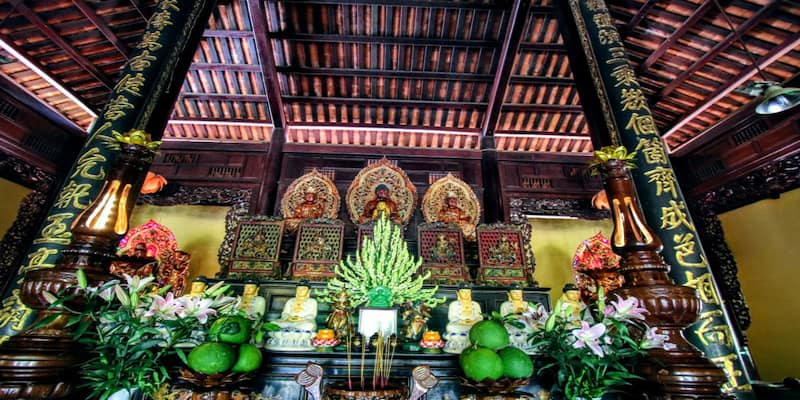
The main hall area of Duoc Su Pagoda
Duoc Su Pagoda retains the traditional Buddhist layout with the three-entrance gate, main hall, lecture hall, ancestral house, and rear hall.
The pagoda currently preserves many valuable ancient artifacts
Duoc Su Pagoda is now a place that houses many precious artifacts, holding significant historical, cultural, and artistic meanings such as:
Visitors to the pagoda can participate in various activities, among which the following 4 activities are the most popular.
Many visitors come to the pagoda to pray and worship
With over 100 years of history, Duoc Su Pagoda has always been an ideal place for Buddhists to pilgrimage and pray, with the following worship rituals taking place:
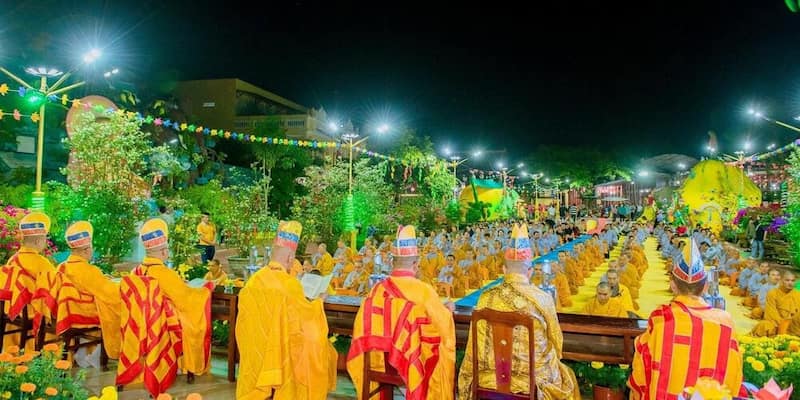
Many major festivals take place at Duoc Su Pagoda annually
If visitors come to the pagoda during significant Buddha festivals, they will be able to participate in unique cultural and spiritual activities such as:
Many youths are interested in participating in courses at the pagoda
The Intermediate Buddhist School of the Bac Lieu Buddhist Association provides courses for many people coming to the pagoda, from adults to children, all can participate:
When visiting Duoc Su Pagoda, tourists will admire the unique architectural blend of East and West, view valuable artifacts, and enjoy the tranquility in the pagoda's garden. Visitors can find suitable spots to stroll or meditate to regain peace of mind.
Additionally, if you enjoy photography, the majestic structures, unique architecture, and the serene landscape of the pagoda will make you want to snap photos continuously.
Duoc Su Pagoda is a temple of significant importance not only for its spiritual aspects but also for nurturing the culture and spirit of the local people. We hope the knowledge, information, and experiences shared will be useful for visitors when visiting Bac Lieu. If visitors plan to travel to this sacred place, please seek the services of NVK Travel to experience through the address nvktravel.com.
Fill out the form and we will contact you