Language
Currency
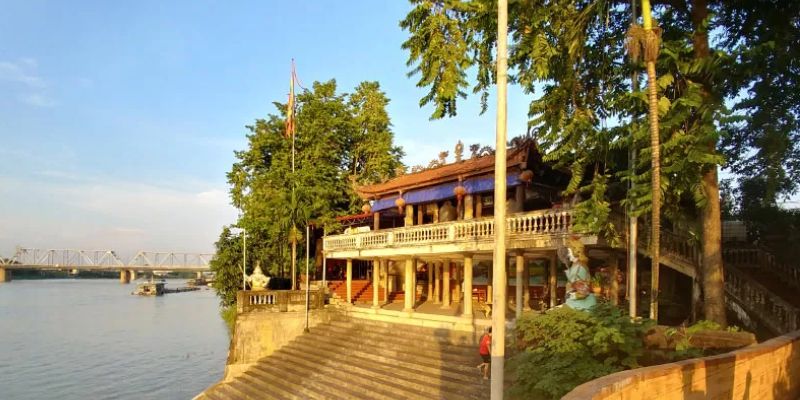
Nestled by the gentle Lo River, Dai Bi Pagoda appears as an ancient relic amidst the picturesque landscape. The pagoda is also a familiar stop for those seeking peace in the hustle and bustle of life. In this poetic natural setting, visitors can slow down to listen to the rhythm of nature, exploring the beauty that has existed for hundreds of years.
Dai Bi Pagoda, also known as Tam Giang Pagoda, stands proudly by the riverbank, gazing towards the Nghia Linh mountain range. The history of the pagoda's formation is intertwined with many rich legends. Some documents record that the pagoda was built during the reign of King Tran Nhat Duat along with Princess Thien Thuy.
Dai Bi Pagoda hides beside the Lo River
>>> See more: Van Lang Park - A Green Space Linked to Vietnamese History
Conversely, some historical records assert that General Kieu Cong Han, the leader of Phong Chau during the time of the 12 warlords, constructed the pagoda when establishing a base here. Regardless of its origin, Dai Bi Pagoda has become an important cultural and spiritual relic of the ancestral land. Over time, the pagoda has undergone many upheavals such as wars, natural disasters, and deterioration, leading to the loss of many original traces.
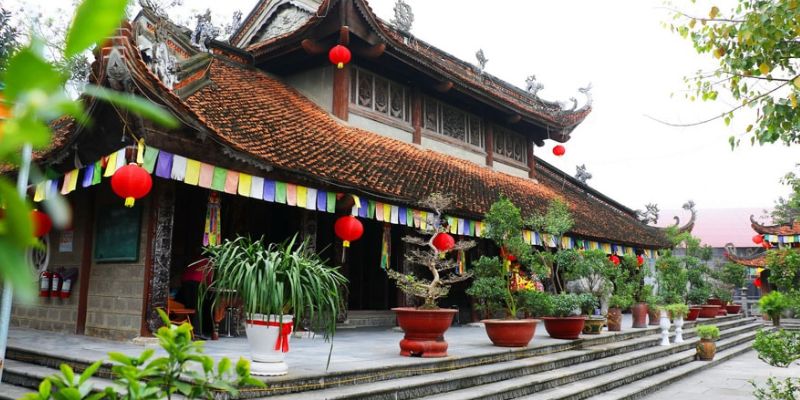
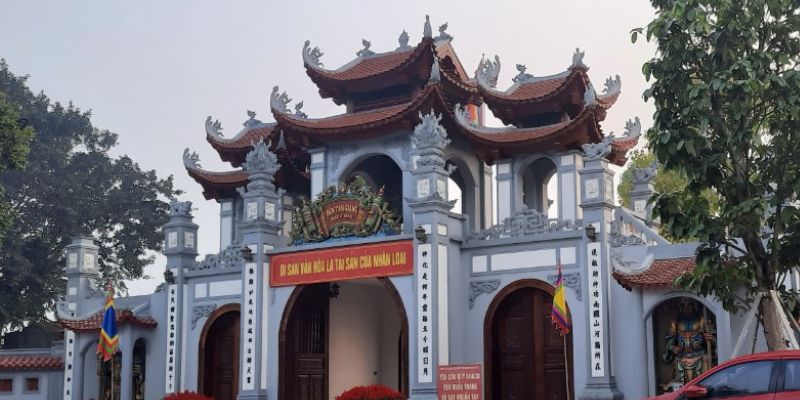
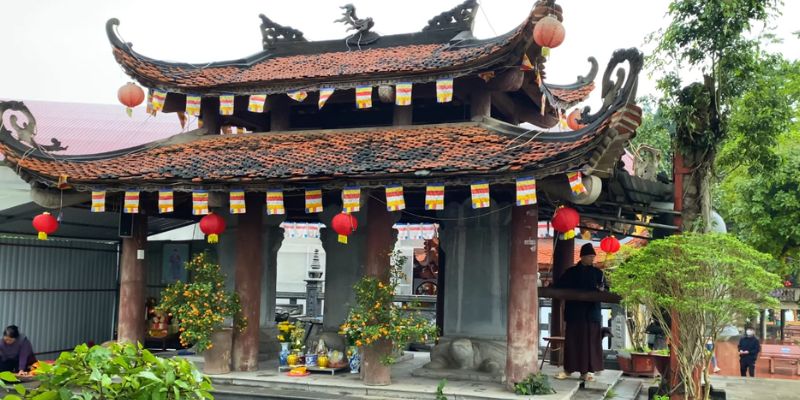
About 20 years ago, the pagoda underwent a large-scale restoration, preserving traditional Vietnamese architecture. The current pagoda stands out with its eight-curved roof, soaring dragon carvings, and intricate patterns. These elements reflect the harmony between traditional sculpture art and Buddhist beliefs.
The pagoda has undergone a comprehensive restoration
>>> See more: Hung Vuong Museum - A Lively Perspective on Vietnamese Culture
Inside the pagoda, the serene and solemn atmosphere creates a sacred feeling with every step. Visitors can admire the Buddha statues, altars, and ancient worship items, while also feeling the peaceful and tranquil ambiance amidst the riverine nature. Dai Bi Pagoda helps visitors gain a deeper understanding of the worship of Mau, Buddhism, and the traditional values of the Vietnamese people.
As soon as visitors step onto the steps leading to the main hall of Dai Bi Pagoda, they will be impressed by the unique architecture facing the Lo River. Each large and small structure contains the beauty and craftsmanship of artisans from earlier times.
The entire pagoda space features distinctive architecture
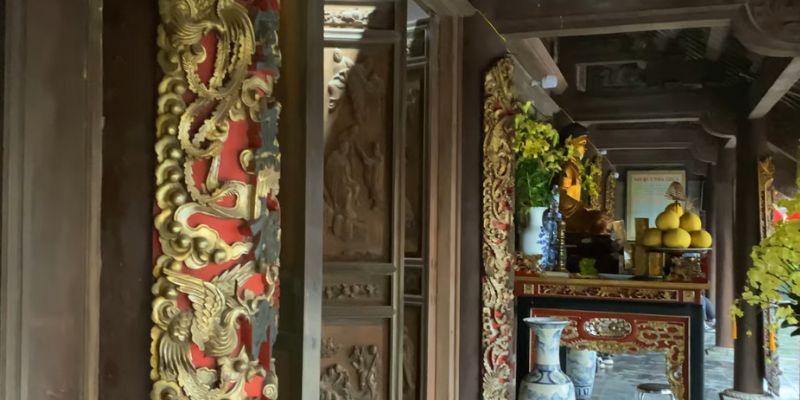
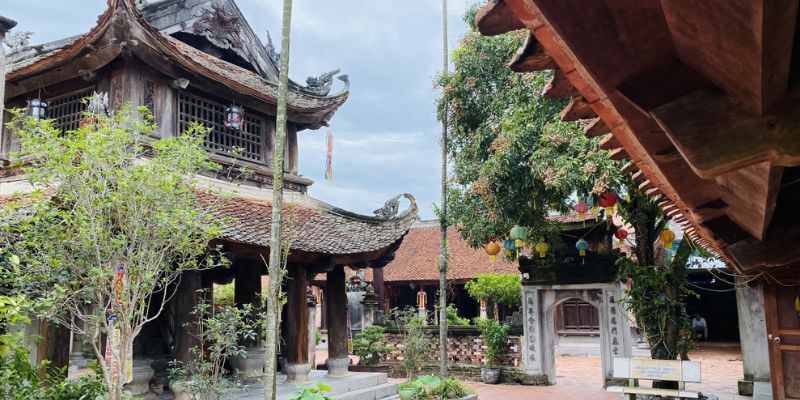
Upon entering, visitors will be struck by the characteristic wooden door. The door is intricately carved with reliefs depicting Bodhisattvas, Arhats, and spiritual symbols. Inside, the system of ornate doors in the worship halls stands out with layers of exquisite gold leaf, reflecting shimmering light, creating a feeling of both solemnity and majesty.
The pillars and beams are meticulously carved with motifs of chrysanthemums, lotuses, and the four sacred creatures, combined with bronze couplets conveying sacred messages. These images make the space feel sacred and perfect.
Every detail is intricately and meticulously carved
In the central hall, above the ornate door hangs a plaque inscribed with the Dai Bi mantra in Sanskrit. On the central lotus throne, five Buddha statues in the Tibetan Vajrayana style stand tall. Surrounding them are statues of Bodhisattva Avalokiteshvara, Bodhisattva Ksitigarbha, and many other Buddha figures. This creates a spiritually rich atmosphere filled with antiquity and solemnity.
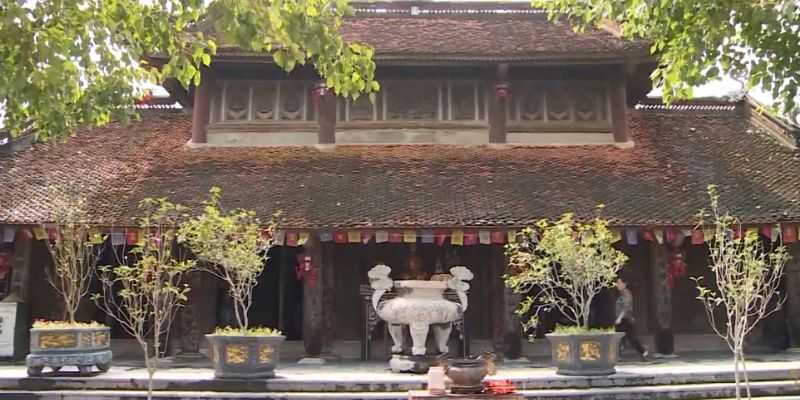
The courtyard of Dai Bi Pagoda features two symmetrical stone stele houses, where six stone steles known as "hau than bia ky" are placed on the backs of turtles, serving as living evidence of the long-standing historical value. The bronze bell in the pagoda was cast by Tran Nhat Duat and offered to the pagoda after the victory over the Mongol Yuan army in the second battle.
The stone stele system is located within the pagoda grounds
Princess Thien Thuy, daughter of King Tran Thanh Tong, was tasked with carving the inscription for the bell. These artifacts hold both aesthetic value and are precious evidence for studying the economic, cultural, and social history of the Tran dynasty. This helps visitors and researchers vividly imagine the spiritual life of ancient Vietnamese people.
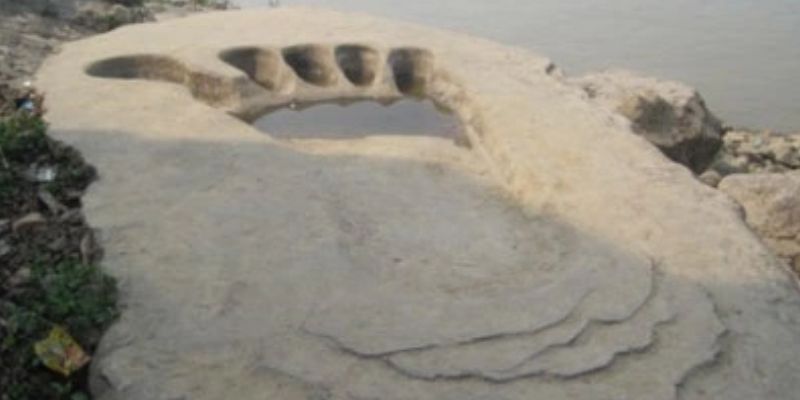
On the left side of the pagoda grounds, a unique feature that delights many is the "giant footprint." Modeled after the foot of ancient Giao Chi people, this relic evokes legends and the history of the land.
According to folklore, there used to be a real giant footprint in this area, but over time it was eroded by rain and floods. During the pagoda's restoration in 2007, craftsmen recreated the footprint in concrete based on the legend. This relic serves as a symbolic value while also creating an attractive highlight for visitors.
The replica of the giant footprint of the Giao Chi people at the pagoda
The Tam Giang - Dai Bi pagoda complex, covering an area of over 1,000m2, has long been a cultural and spiritual symbol of the Ha Hoa region in Phu Tho. This place is not only a religious site but also a center for community cultural activities. Here, local people gather during festivals, worship ceremonies, and traditional rituals.
On June 6, 2010, the pagoda complex was recognized by the Ministry of Culture, Sports and Tourism as a national historical and cultural relic. The pagoda has been acknowledged for its important role in preserving the historical, spiritual, and traditional artistic values of the Phong Chau region.
The pagoda complex has been recognized as a national relic
After nearly 700 years, Dai Bi Pagoda serves as a space for educating and imparting ethical values, community spirit, respect for ancestors, and gratitude to national heroes. Every year, during traditional festival occasions, this place becomes lively with folk cultural activities, traditional games, and spiritual rituals. This reflects the connection between the spiritual life and the tangible and intangible culture of the local people.
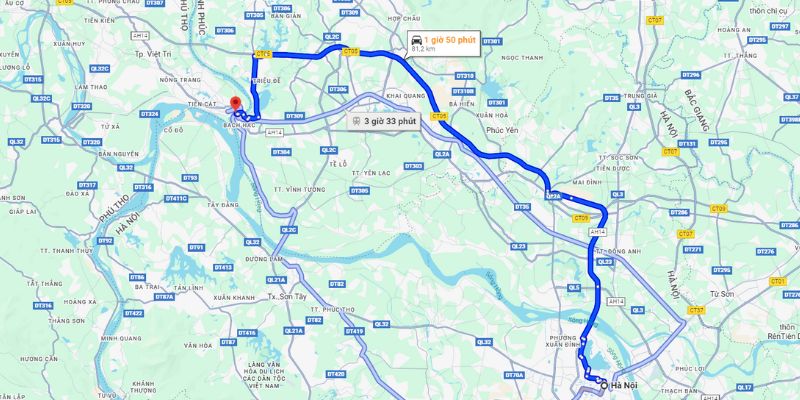
Visitors can travel via Vo Chi Cong road or suitable urban routes to reach Nhat Tan Bridge. After crossing the bridge, everyone continues straight along National Route 2 towards Phu Tho. On National Route 2, everyone goes straight for about 60-70km, the road is wide and easy to observe the signs. Passing through Dong Anh, Soc Son, Vinh Phuc, continue towards Viet Tri, Phu Tho.
Detailed route guidance for visitors to the pagoda
When reaching the center of Viet Tri, everyone looks for Tran Phu street or routes leading to the confluence of the Bach Hac River. Dai Bi Pagoda is located near Viet Tri Bridge, facing the river and at the foot of Nghia Linh Mountain. The travel distance is about 80-90km, taking approximately 1 hour 30 minutes to 2 hours depending on traffic.
To have a complete, safe, and meaningful visit to Dai Bi Pagoda, visitors should be aware of some important points:
A few special notes that visitors need to keep in mind before visiting
Please pay attention to have a wonderful complete trip
Dai Bi Pagoda is a place that preserves cultural and architectural values, and it is also a destination that brings peace and tranquility amidst the hustle and bustle of life. To fully enjoy the journey of exploring the pagoda, please contact to join the Phu Tho travel tour offered by NVK Travel.
Fill out the form and we will contact you