Language
Currency
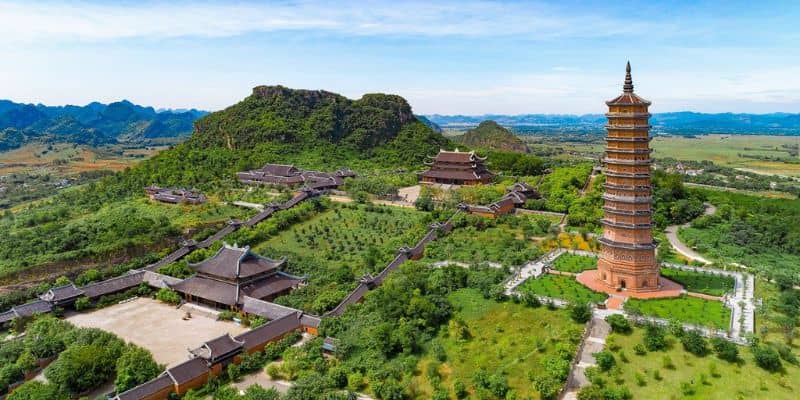
Bai Dinh Pagoda is one of the most prominent architectural landmarks of Buddhism in Vietnam. It possesses a unique beauty and proudly holds many records in the region and across Asia. To learn more interesting information about the pagoda, let's follow the article below from NVK Travel!
Explore the ancient beauty of Bai Dinh Pagoda
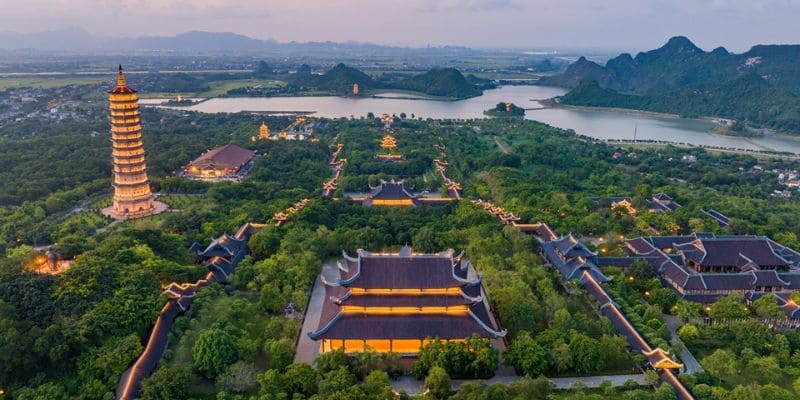
Bai Dinh Pagoda is a prominent complex of temples with many impressive records in Asia and Vietnam. Notable features include the largest gold-plated bronze Buddha statue in Asia, the longest corridor of Arhats in Asia, the largest bronze statue of Maitreya in Southeast Asia,... This is the largest temple complex and holds the most records in Vietnam.
More than a millennium ago, the three feudal dynasties of Dinh, Tien Le, and Ly paid great attention to Buddhism, considering it the national religion. The kings of each dynasty built many ancient temples, including Bai Dinh Pagoda located on the Trang An mountain range. This pagoda originated from the Dinh period but retains many architectural details and artifacts bearing the hallmark of the Ly dynasty.
The pagoda is located in a land that embodies the traditional Vietnamese belief of harmony between geography and human talent. This is the birthplace of kings, saints, and deities. Historically, Trang An mountain was the site where Dinh Tien Hoang Emperor held rain prayer ceremonies, as well as the place where King Quang Trung organized a flag ceremony to encourage soldiers before defeating the Qing army at Thang Long.
Since 1997, Bai Dinh Pagoda has been recognized as a national historical - cultural - revolutionary site. With its special and sacred values, the pagoda attracts many tourists and Buddhists every year.
Bai Dinh Pagoda was built over 1000 years ago
>>> See more: Experience Travel Eo Gio Quy Nhon Details & Specifics
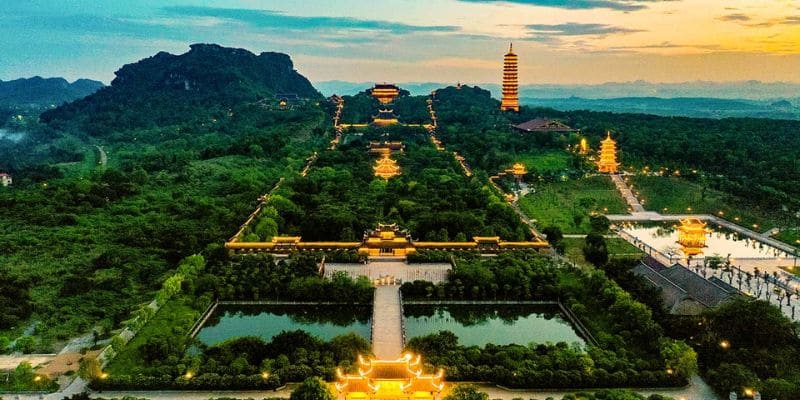
Currently, the temple complex includes an ancient temple area and a new temple area built since 2003. The pagoda is built on the mountainside, surrounded by green lakes and majestic rocky mountains. Notably, it is located right at the western gateway to the ancient capital of Hoa Lu.
After more than 1000 years, the pagoda's architecture still retains the ancient characteristics of the bygone era. The newly constructed area is designed to be grander and more massive, yet it still maintains a harmonious and complete essence of traditional values.
Upon arriving here, you will immediately feel the serene and spacious atmosphere. Passing through the gate, visitors walk along a corridor lined with Arhat statues surrounding the premises. Inside, you will find many small gardens with lush green trees, especially the Bodhi tree brought from Indian temples.
The temple complex today has been renovated and expanded further
>>> See more: Traveling to Quy Nhon When is Beautiful To Enjoy a Complete Trip
Not only a place for religious activities, Bai Dinh Pagoda has become a famous eco-tourism and spiritual destination. It has established a total of 8 impressive records both domestically and regionally, including:
When visiting the temple complex, tourists do not have to pay an entrance fee. However, due to the vast area and its connection with the scenic Trang An, you should consider using utility services at the following fees:
The best time to visit and explore Bai Dinh Pagoda is at the beginning of the new year. The spring weather is clear and warm, allowing tourists to enjoy the beautiful weather while praying for peace for their families and loved ones.
Additionally, during the early days of the new year, you can also participate in important festivals that take place from Tet and last until the end of the 3rd lunar month. These festivals offer tourists interesting experiences in a bustling atmosphere.
However, the festival season is also when a large number of tourists and Buddhists visit the pagoda. Therefore, if you do not like crowded places, you should avoid the time from January to March of the lunar calendar. Instead, you can visit the pagoda from April to August or September, when the weather is drier and more favorable.
Visit the pagoda at the beginning of the year to participate in major festivals
To get to the pagoda, tourists can choose to travel by private vehicle (car, motorbike) or bus as they wish.
Bai Dinh Pagoda is located in the Trang An scenic area, in Gia Sinh commune, Gia Vien district. The pagoda is about 18km from Ninh Binh city center and about 100km from Hanoi.
If traveling by personal vehicle, you can follow the suggested route as follows: go along Giai Phong - National Highway 1A - National Highway 12B and continue for about 90km following the directions. When you are close to the destination, if you encounter difficulties in finding the way, you can ask local residents for guidance. If you prefer public transportation, you can take a bus from Giap Bat/My Dinh bus station to Ninh Binh station or take a train from Hanoi station to Ninh Binh station and then take a bus or taxi to the pagoda.
The Bai Dinh Pagoda complex covers an area of about 1,700ha, divided into many areas. To reach the pagoda gate, you can walk, but it is advisable to use the electric car service to save time and energy.
Visitors will wait for the car at the waiting area, and then the car will take you along a 3.5km long asphalt road to the Tam Quan gate area. When buying an electric car ticket, you should buy a round-trip ticket for convenience on the way back, avoiding the need to queue.
The temple grounds are extremely vast, and visitors should move around by electric car
Since its construction, the temples at Bai Dinh Pagoda have been restored with a total of 21 main items. Notable attractions that tourists cannot miss when visiting include:
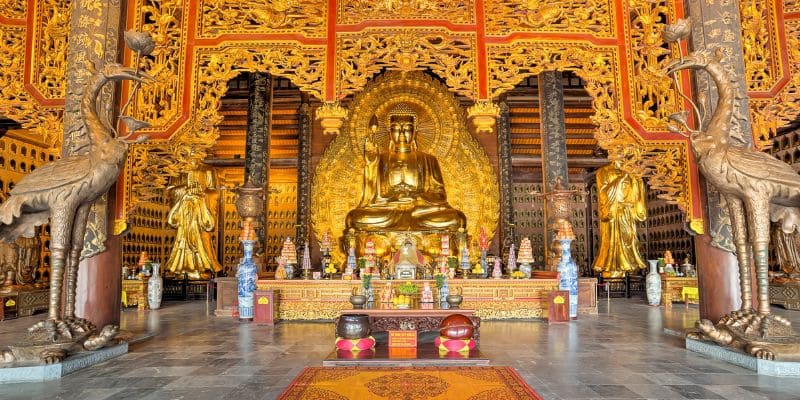
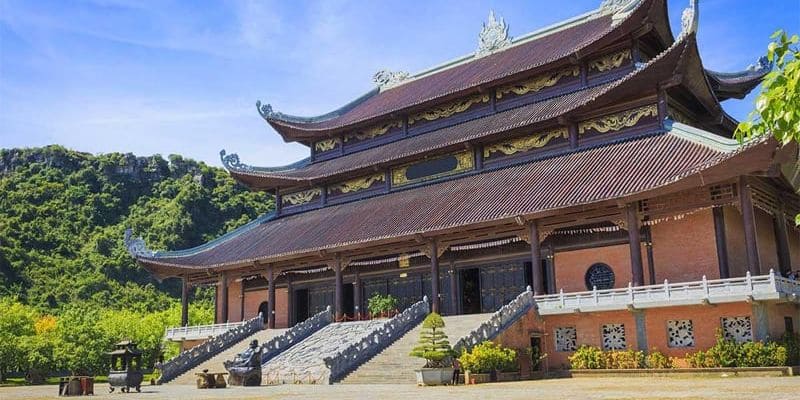
The Phap Chu Hall is one of the most important structures in the entire complex. With its majestic and grand architecture, the interior space is meticulously designed with intricate carved patterns on wood and stone, creating an atmosphere of great solemnity and tranquility. The hall houses a gold-plated bronze statue of Buddha Shakyamuni, standing 9.5 meters tall and weighing 100 tons, which is recognized as the largest bronze Buddha statue in Vietnam.
This is a place where Buddhists and tourists can come to pay homage, pray, and seek peace in their souls. The Phap Chu Hall is both the main symbol of Bai Dinh Pagoda and reflects the development and preservation of the traditional cultural and spiritual values of the Vietnamese people.
Phap Chu Hall - The center of the pagoda
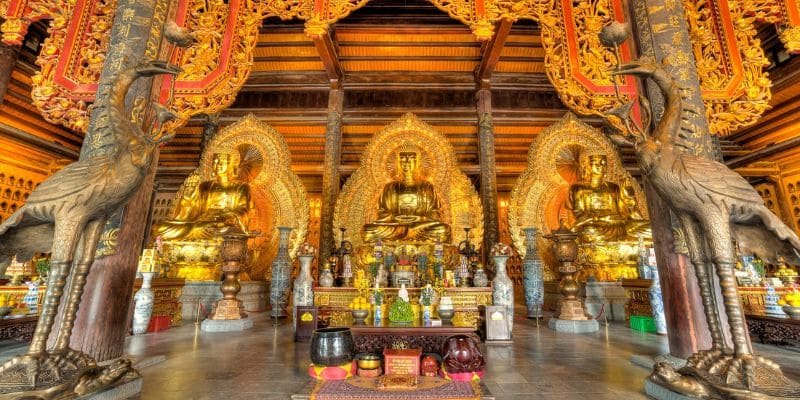
Tam The Hall is the largest worship hall in the complex, featuring three gold-plated bronze statues of the Three Buddhas, each 7.2 meters tall and weighing 50 tons. These statues symbolize the past, present, and future, conveying a profound meaning about the cycle and continuity of life. This place showcases the magnificent beauty of Buddhist architecture, attracting a large number of visitors seeking peace.
Tam The Hall worships three Buddhas symbolizing the past, present, and future
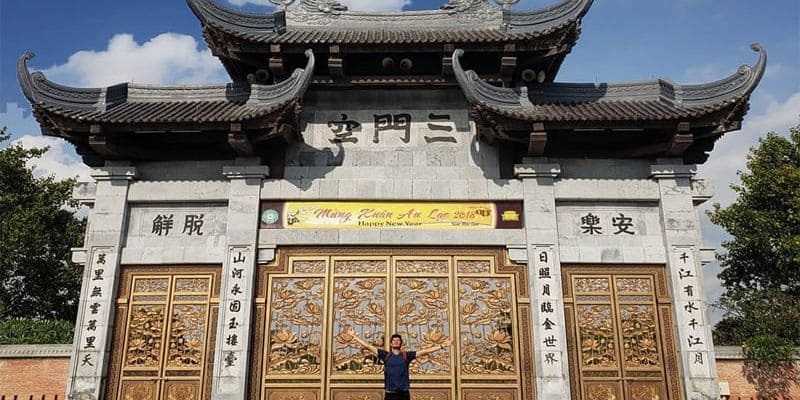
Visitors wishing to enter the inner area of the pagoda must pass through the Tam Quan Gate. This gate consists of three sections: Khong Quan, Trung Quan, and Gia Quan, symbolizing the gate of suffering, the gate of impermanence, and the gate of non-self.
The Tam Quan Gate is 16.5 meters high, 32 meters long, and 13 meters wide, constructed from nearly 550 tons of round wood. In front of the gate are four characters "Minh Dinh Danh Lam", with two stone lions on either side, symbolizing the strength of wisdom.
To enter the pagoda, tourists must pass through the Tam Quan Gate
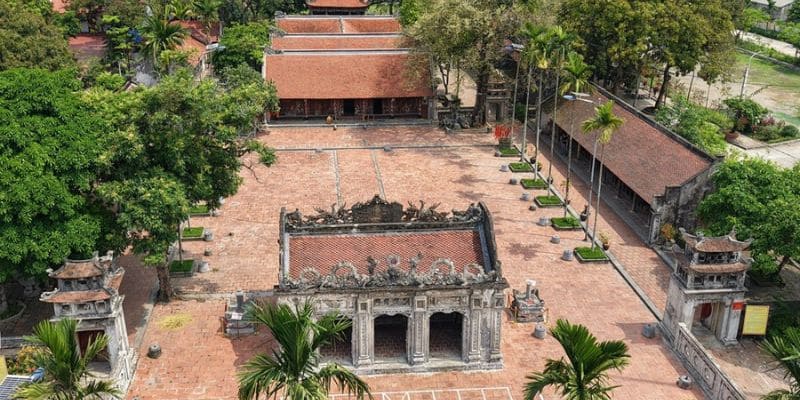
The ancient pagoda area is located on the slope of a high mountain, exuding a majestic, ancient, and timeless beauty. The pagoda has many historical relics such as the Buddha worship cave, the Cao Son deity temple, and the Mother worship cave, all closely linked to spiritual values and legends.
Ancient Bai Dinh Pagoda with many historical relics
Within the entire pagoda complex, there is only one temple built in the style of front hall and back hall, which is dedicated to the monk Nguyen Minh Khong. He is the one who discovered the beautiful caves and built the pagoda to worship Buddha here. He is also famous for his healing talents and has studied the ancient Dong Son civilization of Vietnam, contributing significantly to the revival of the traditional bronze casting craft that had been lost.
The Nguyen Minh Khong Temple is majestic
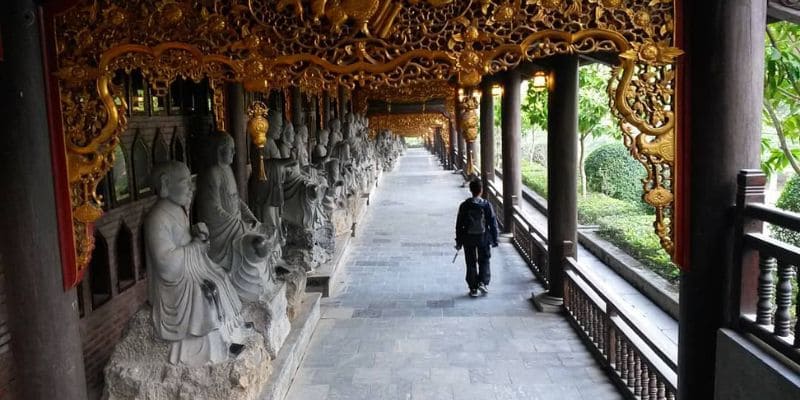
The Arhat Corridor at Bai Dinh Pagoda is one of the most prominent structures in the area, recognized for holding the record as the longest Arhat corridor in Asia. This corridor stretches nearly 3 km and features over 500 Arhat statues carved from solid green stone, each ranging from 2 to 2.5 meters tall, showcasing unique beauty and expressions. These artworks reflect the exquisite craftsmanship of sculpture while symbolizing the connection between Buddhism and human life.
The Arhat Corridor holds the record for the longest in Asia
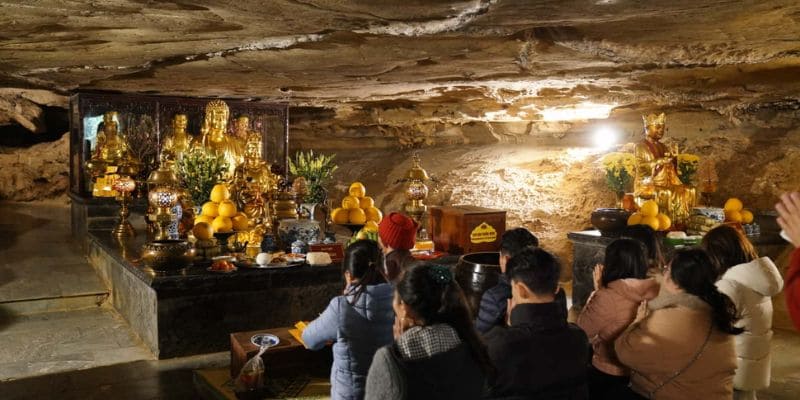
To visit the caves, tourists must climb over 300 stone steps and pass through the Tam Quan gate halfway up the mountain. Upon reaching the top of the slope, you will encounter a fork: to the right is the Bright Cave worshiping Buddha and Deities, and to the left is the Dark Cave worshiping the Mother and Immortals.
Above the entrance to the Bright Cave are four characters "Minh Dinh Danh Lam" carved into the stone, bestowed by King Le Thanh Tong. Minh Dinh Danh Lam means "Preserving the beauty of the landscape," referring to the beautiful scenery recorded in history. Here, the king left a four-line poem in Chinese characters with the following translated meaning:
"Dinh Mountain's reputation is truly far and wide,
Protecting the capital since ancient times,
Talented people and sacred land bring prosperity,
The sacred mountain's beauty stands firm in the landscape."
Visit the Bright Cave to pay homage to the underground Buddha temple
Returning to the fork at the top of the slope, turn left for about 50 meters to reach the Dark Cave, which is larger than the Bright Cave. The cave consists of 4 chambers, including one high cave and deeper caves below, all interconnected through rocky niches. Some caves have relatively flat floors, while others have a rather deep basin-like shape. The ceilings of the caves are covered with stalactites gifted by nature, creating extremely unique shapes that attract visitors to admire and explore.
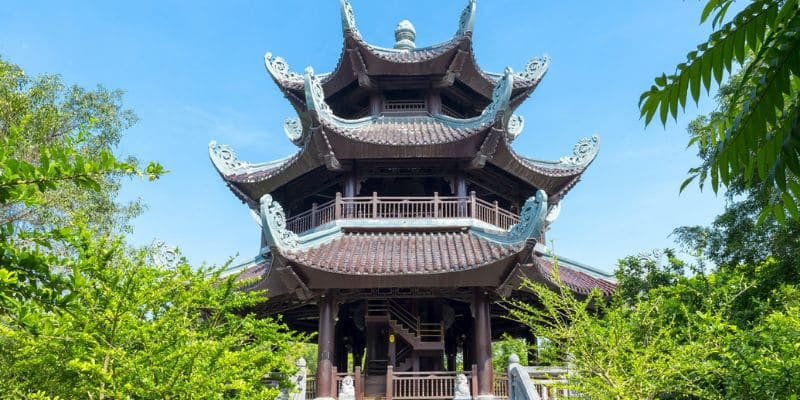
The Bell Tower is the hottest check-in spot in the entire pagoda area, chosen by many tourists to capture memories. The structure is built of concrete with a faux wood finish, shaped like an octagon and featuring three curved roofs, standing 18.25 meters tall and 17 meters wide. The architecture of the tower accurately reflects the style of ancient bell towers - similar to lotus flowers. Inside the tower, there is an ascending and descending pathway for movement. The bronze bell of the tower weighs 36 tons and was cast by artisans in Hue, recognized as the largest bell in Vietnam according to the Vietnam Record Book.
The serene, majestic beauty of the Bell Tower
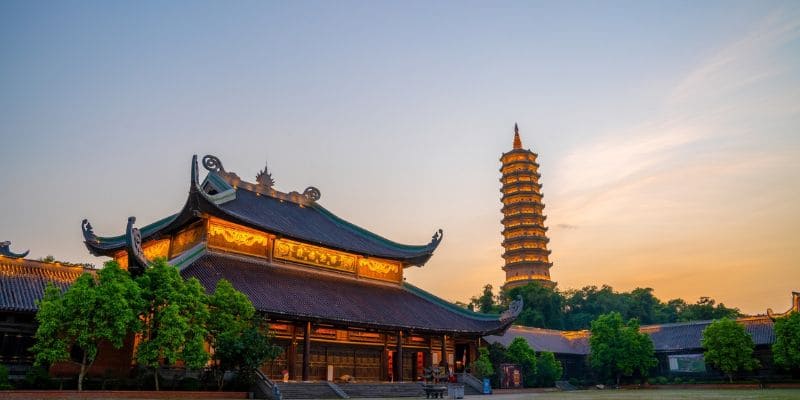
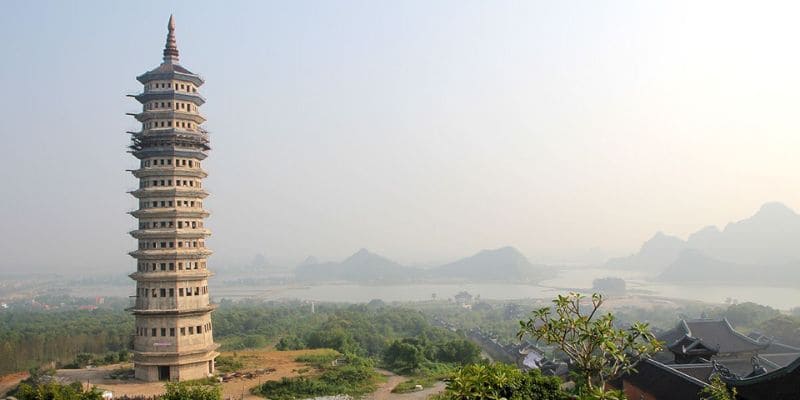
This structure is located to the west of the Tam The Hall of Bai Dinh Pagoda, consisting of 13 floors with a height of up to 99 meters and a hexagonal base. The entire Stupa is covered with Bat Trang baked bricks featuring intricate patterns such as floating clouds, lotus petals, and waves. Surrounding the edges are small stone Buddha statues, adding highlights to the structure.
On the first floor of the Stupa is a gold-plated bronze statue of Buddha Shakyamuni, seated on an intricately carved green stone pedestal with dragons and lotus flowers. The life of the Buddha from birth to enlightenment is also clearly depicted on the six walls surrounding the stupa.
Check in under the Stupa - Preserve memorable moments
To have the most perfect and wonderful visit to Bai Dinh Pagoda, tourists should pay attention to the following:
Follow the temple's regulations for a wonderful and more meaningful trip
Bai Dinh Pagoda - A spiritual tourism destination that travelers cannot miss when coming to Ninh Binh. Here, you can admire artistic architectural works bearing the mark of the era, and pray to Buddha for good luck and smooth sailing. If you need advice and want to learn more about Ninh Binh travel tours - Bai Dinh, please contact NVK Travel for assistance!
Fill out the form and we will contact you