Language
Currency
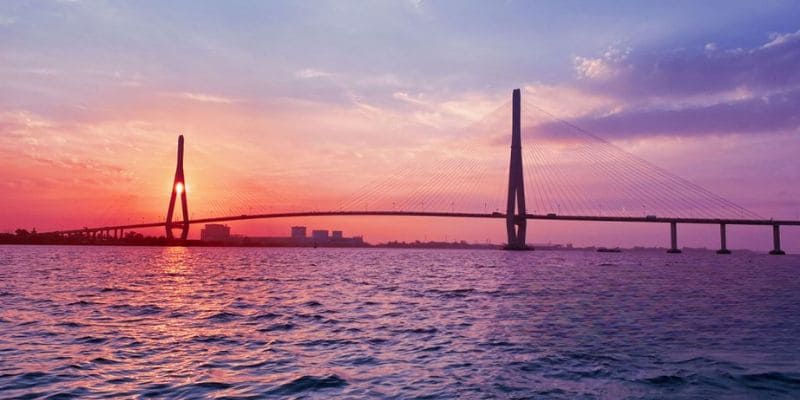
Can Tho Bridge is famous for having the longest main span in Southeast Asia, serving as a symbol of the development of Can Tho city and a popular stop for many tourists. The bridge boasts an attractive beauty, located in a prime position near many other fascinating tourist attractions. To learn more interesting information about the bridge, let's follow the article right below from NVK Travel!
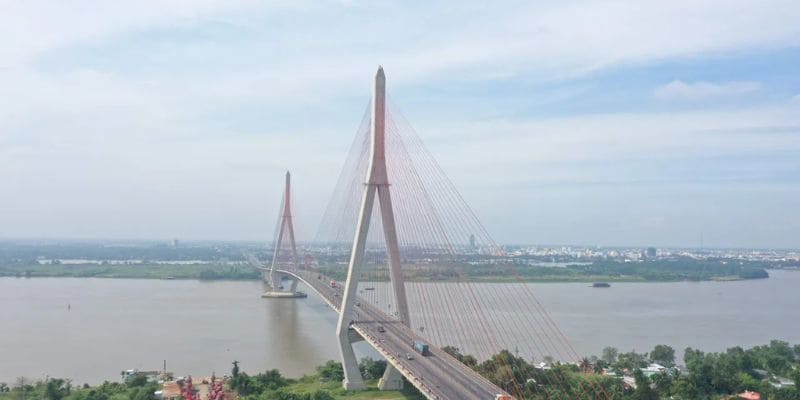
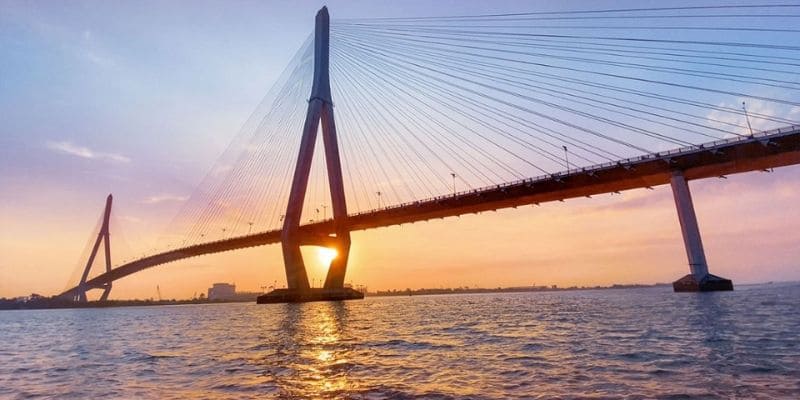
Can Tho Bridge spans the Hau River, connecting Hung Phu Ward in Can Tho city with Cai Von Ward in Vinh Long province. Since its completion in 2010, this bridge has become the cable-stayed bridge with the longest main span in Southeast Asia.
The bridge stretches across the majestic Hau River, linking Can Tho city with Vinh Long province and is an important part of National Highway 1A. With its strategic location, the bridge has significantly shortened the distance from Ho Chi Minh City to the western provinces, thus promoting trade activities and economic development for the entire region.
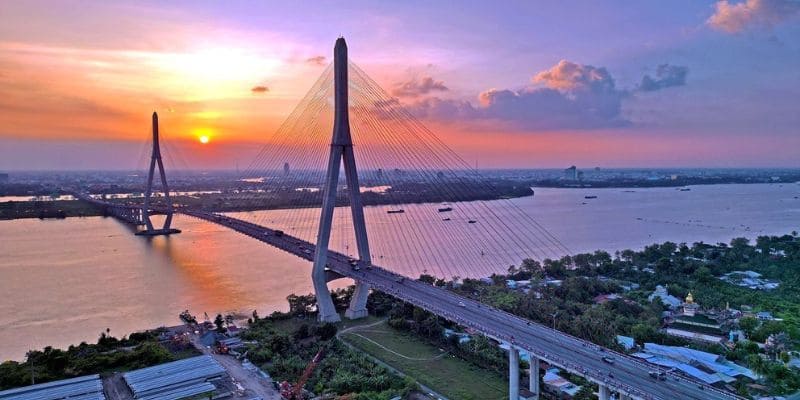
Can Tho Bridge features a unique inverted Y-shaped cable-stayed design. It is not just a transportation project but also a prominent architectural symbol of Tay Do. At the time of its completion, the bridge held the record for the longest main span cable-stayed bridge in Southeast Asia and is considered a national key project, affirming a major step in modernizing the transportation infrastructure of the Mekong Delta.
Can Tho Bridge connects Can Tho city with Vinh Long
>>> See more: Phat Hoc Pagoda Can Tho - Ancient Architecture in Tay Do Land
When night falls, the modern LED lighting system installed along the bridge is turned on, creating a sparkling scene that reflects on the surface of the Hau River. This is an ideal destination for check-in enthusiasts when visiting Can Tho.
Before the bridge was built, locals had to use ferries to cross the Hau River. However, Can Tho ferry could not meet the increasing demand for the transportation of goods and passengers, leading to severe congestion, especially during holidays.
The construction process of Can Tho Bridge went through several important stages as follows:
The project is the result of international cooperation between Vietnam and Japan
>>> See more: Can Tho Museum - An Attractive Historical Tourist Destination
This project was carried out under international cooperation between Vietnam and Japan, using about 70% of ODA funding from the Japanese government and the remainder from the Vietnamese budget. The total investment for the project reached 342.6 million USD, equivalent to about 4,842 billion VND at the exchange rate at that time. Throughout the construction process, top engineers and experts from Japan participated to overcome the challenges posed by the complex geological conditions of the Mekong Delta.
This bridge is evaluated as a modern engineering project, demonstrated through impressive specifications including:
In addition, the bridge also features notable design elements such as:
The bridge spans over 15.85km built with modern techniques
Compared to My Thuan Bridge (the first cable-stayed bridge in Vietnam), Can Tho Bridge is larger in scale and applies more advanced technologies. This bridge represents progress in the design and construction capabilities of complex transportation projects in Vietnam.
To have the best experience when visiting Can Tho Bridge, tourists need to choose the right time to visit. The dry season from December to April is the ideal time, with pleasant weather, little rain, favorable for exploration and photography. Especially, in late December, before the Lunar New Year, the bridge is decorated with brilliant flower lights, creating a very vibrant and captivating atmosphere.
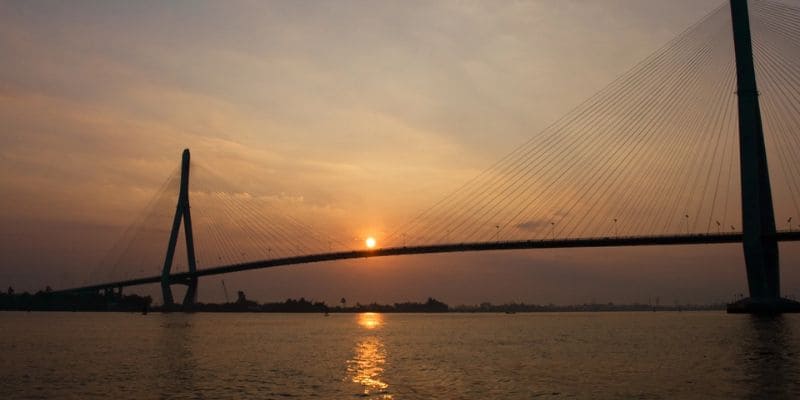
Tourists can visit the bridge at any time of the day, but it is best to prioritize visiting around 5:00 to 6:00 AM to watch the sunrise. When the sunlight shines through the bridge, it creates a beautiful picture that many people wish to admire. At this time, the tranquility of the early morning blends with the enchanting beauty of nature to cleanse the soul, washing away the worries of life.
Visiting here at sunrise or sunset is the most beautiful
Additionally, you can also come in the late afternoon to admire the romantic sunset scenery. Or consider coming here at night when the LED lighting system sparkles, turning the bridge into an artistic masterpiece shining in the night.
Can Tho Bridge features a unique cable-stayed architecture with the longest main span in Southeast Asia. It is both an important transportation project and an artistic masterpiece attracting many tourists.
To take lifetime photos with the bridge, you can go to the area of Con Au. This place has an open view, tourists will be able to capture a perfect photo of the bridge in the morning light, when the sunlight shines through the cables in a very magical way. Or you can go to the vacant land on the Vinh Long side, looking directly at the bridge, which offers the most comprehensive view.
Admire the poetic beauty of the bridge spanning the Hau River
Tourists should also experience riding a boat on Hau River to capture unique shots from below. From the Hau River, the bridge appears with majestic beauty, surrounded by cool waters and a deep blue sky.
To get the best photos, guests should equip a wide-angle lens for panoramic shots and a telephoto lens to capture details from afar. The best lighting occurs about 30 minutes before sunrise and 30 minutes before sunset, when your photos will have wonderful contrast and sharpness.
After checking in at the bridge, tourists can also visit nearby tourist spots such as:
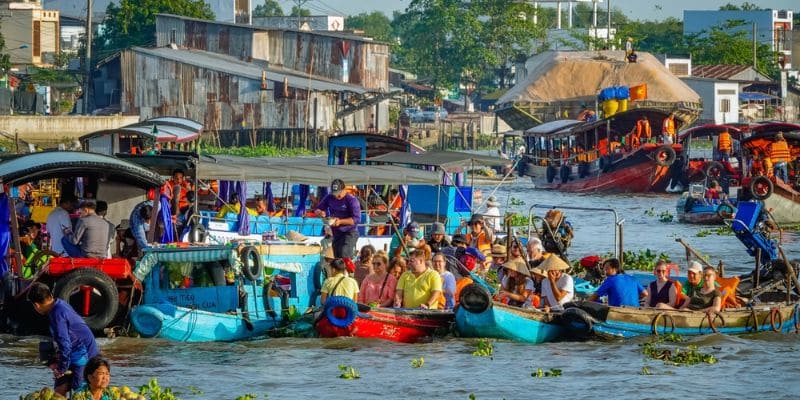
Cai Rang Floating Market is one of the famous wholesale markets specializing in trading fruits and vegetables on Can Tho River, serving as a distinctive attraction of Cai Rang Ward, Can Tho City.
Experience the super interesting Cai Rang Floating Market
The market starts operating from around 2 to 3 AM and is busiest from 4 to 6 AM. As a wholesale market, goods here are concentrated in large quantities, with each item uniformly categorized by quality and size.
The stall owners here use wooden boats as the main means of transportation and goods transport. In 2016, Cai Rang Floating Market was recognized by the Ministry of Culture, Sports and Tourism as a National Intangible Cultural Heritage.
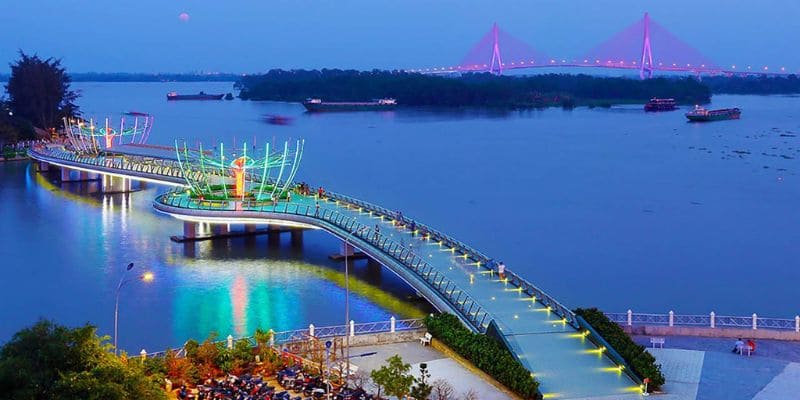
Ninh Kieu Wharf is only about 15km from Can Tho Bridge, equivalent to a 20-minute drive. Currently, the wharf has been renamed Ninh Kieu Park - a cultural tourism destination of Can Tho City, with a history dating back to the 19th century. Located on the right bank of Hau River, the wharf is situated at the confluence of Hau River and Can Tho River, adjacent to Hai Ba Trung Street, in Ninh Kieu Ward.
Explore the beautiful Ninh Kieu Wharf
Ninh Kieu Wharf has long been an attractive tourist destination with picturesque natural scenery and a convenient location overlooking Hau River. It has become a symbol of the poetic beauty along Hau River in Can Tho City, attracting a large number of visitors and mentioned in many poetic works.
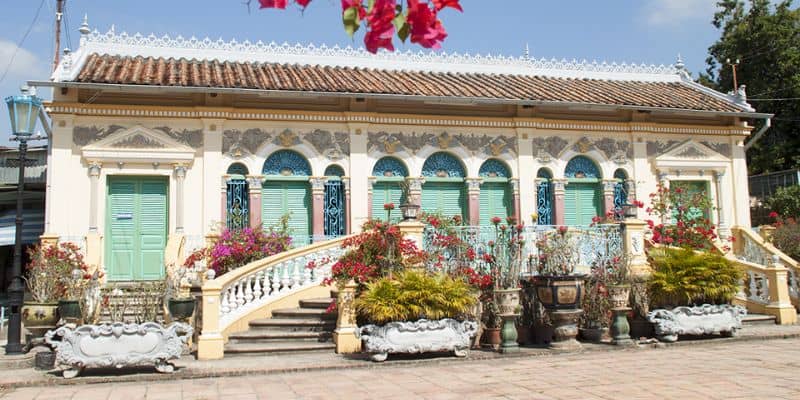
Binh Thuy Ancient House is officially named Duong Clan Worship House or Duong Clan Church. This house is located at 142-144 Bui Huu Nghia Street, Binh Thuy Ward, Binh Thuy District, Can Tho City.
Visit Binh Thuy Ancient House with its old beauty
The first house of the Duong family was built in 1870 on land in the Binh Thuy area, which was then the center of the ancient Long Tuyen village. By 1904, Mr. Duong Chan Ky renovated the old house, and by 1911, the project was officially completed with its current appearance. This is considered one of the typical constructions of Indochinese architectural style in Southern Vietnam in the early 20th century.
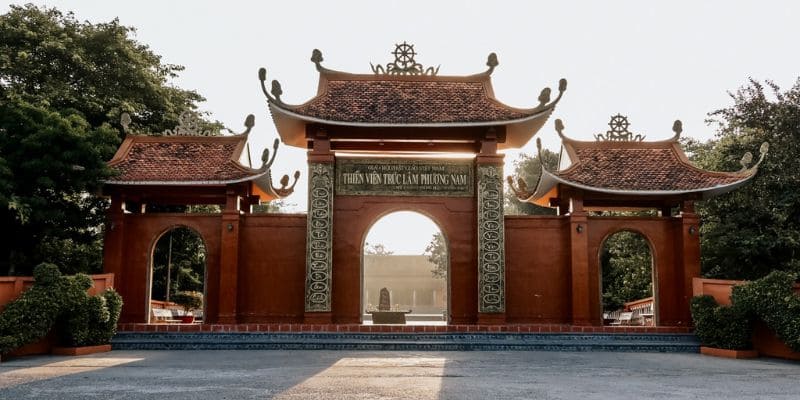
From Can Tho Bridge, tourists travel an additional 30km to reach the spiritual tourist destination of Truc Lam Phuong Nam Zen Monastery. This is one of the largest Zen monasteries in the Mekong Delta as of 2014.
Truc Lam Phuong Nam Zen Monastery - A must-visit spiritual tourist destination
The project was started on July 16, 2013 (June 19 of the Year of the Snake) with an area of up to 38,016m2. After several months of construction, the monastery was officially inaugurated on May 17, 2014 (April 19 of the Year of the Horse). Visitors here not only have the opportunity to worship the deities but also to explore the serene beauty of the temple and the tranquil atmosphere for relaxation and soul purification.
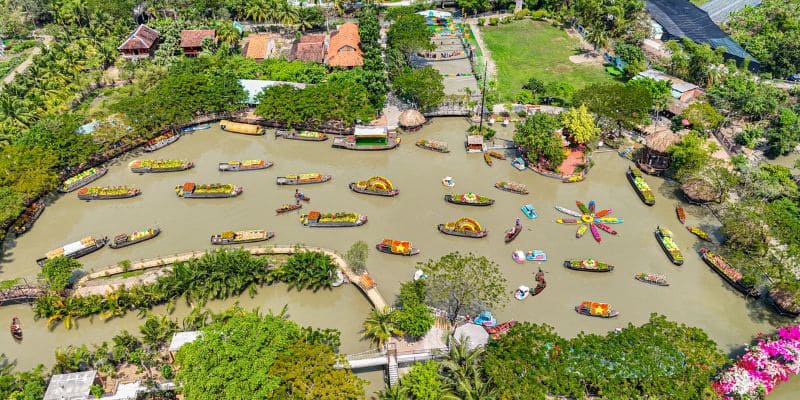
The tourist area spans over 50,000 m2, providing a spacious and extremely pleasant environment. It is surrounded by fruit orchards, winding small canals, and traditional ancient houses, creating a simple picture of the riverside garden.
When visiting My Khanh, tourists will have the opportunity to participate in many interesting activities such as visiting fruit orchards, experiencing folk cultural features, and listening to the sweet melodies of Don Ca Tai Tu that evoke the culture of the South. Additionally, you will also have the chance to enjoy the famous specialties of the Mekong Delta.
A complete relaxation trip at the vast My Khanh tourist area
With its unique architecture and essential connecting role, Can Tho Bridge is truly a pride of the people of Tay Do and of the entire country of Vietnam. If you wish to learn more about complete Can Tho tourism, please contact NVK Travel for dedicated advice and to book tours at preferential prices!
Fill out the form and we will contact you